 By
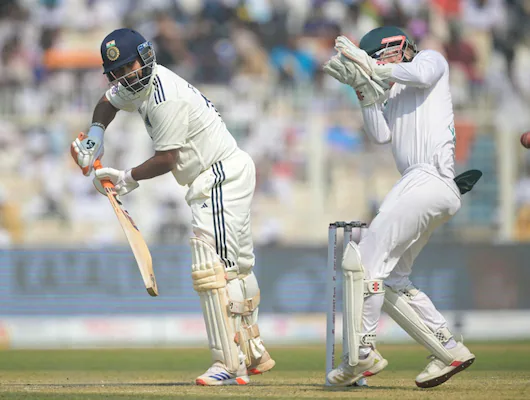
By India’s dramatic collapse on Day 5 of the IND vs SA 2nd Test has sparked widespread debate across the cricketing world, with Rishabh Pant’s unwavering commitment to his aerial strokeplay emerging as one of the biggest talking points of the match. Despite the high-pressure situation and India’s urgent need for partnerships, Pant continued with his naturally aggressive approach at the crease, raising serious questions about shot selection, adaptability, and responsibility in the longest format. As India stared at defeat and the possibility of a humiliating end to the Test match, fans, former players, and analysts took to social media and television panels to dissect the tactical decisions that contributed to India’s downfall. The 2nd Test, which had already seen significant momentum shifts, reached its breaking point when India’s batting order faltered yet again under challenging conditions on the final day.
South Africa’s bowlers exploited the surface expertly, mixing seam, bounce, and movement to keep India under constant pressure. While the pitch had deteriorated over the course of four days, the Proteas showed remarkable discipline with their line and lengths. India, on the other hand, struggled to stitch meaningful partnerships, and the lack of stability in the middle order became painfully obvious as wickets continued to tumble. In the midst of this collapse stood Rishabh Pant, a player known for turning matches with his fearless batting but also criticized for occasional recklessness. As India’s hopes began to fade, Pant chose to counterattack, opting for lofted shots against the South African pacers—a decision that many felt was unnecessary given the match situation.
Pant’s dismissal, resulting from one such aerial attempt, fueled the ongoing debate about his role in the Test side. Supporters argued that Pant’s natural game is what makes him a match-winner and that his aggressive style cannot simply be switched off. Critics, however, emphasized the importance of game awareness and shot selection, insisting that Test cricket demands situational intelligence and the ability to adapt one’s approach based on the team’s needs. With India desperately needing someone to hold the innings together, Pant’s dismissal was seen as a turning point that further accelerated the team’s slide toward defeat.
As the collapse continued, India’s batting failures became a topic of concern beyond just individual performances. The top and middle order—expected to provide resilience on a challenging pitch—failed to build the foundation required to chase or defend a competitive total. The absence of application against disciplined bowling once again exposed India’s recurring weakness in overseas conditions where extra pace and bounce test both technique and temperament. While the lower order fought briefly, the damage had already been done, and India eventually found themselves in a position from which recovery became nearly impossible.
Across expert panels, former cricketers pointed out that the team lacked a clear plan on the final day. Questions were raised about whether the coaching staff and leadership group had conveyed the appropriate messaging regarding approach and partnerships. Many analysts argued that India needed a more defensive, grind-it-out attitude to survive the hour-by-hour challenges posed by South Africa’s bowlers. Instead, poor shot choices, lapses in concentration, and a lack of patience collectively contributed to the team’s imminent defeat.
As the match moved toward its inevitable conclusion, India’s performance invited broader discussions about team selection, batting temperament, and the balance between aggression and responsibility. Rishabh Pant, despite being one of India’s most explosive talents, now finds himself at the center of a debate that will likely continue long after the Test series ends. With India on the brink of a humiliating loss, the team faces tough questions about its mindset, preparation, and execution in high-pressure overseas matches.