


 By
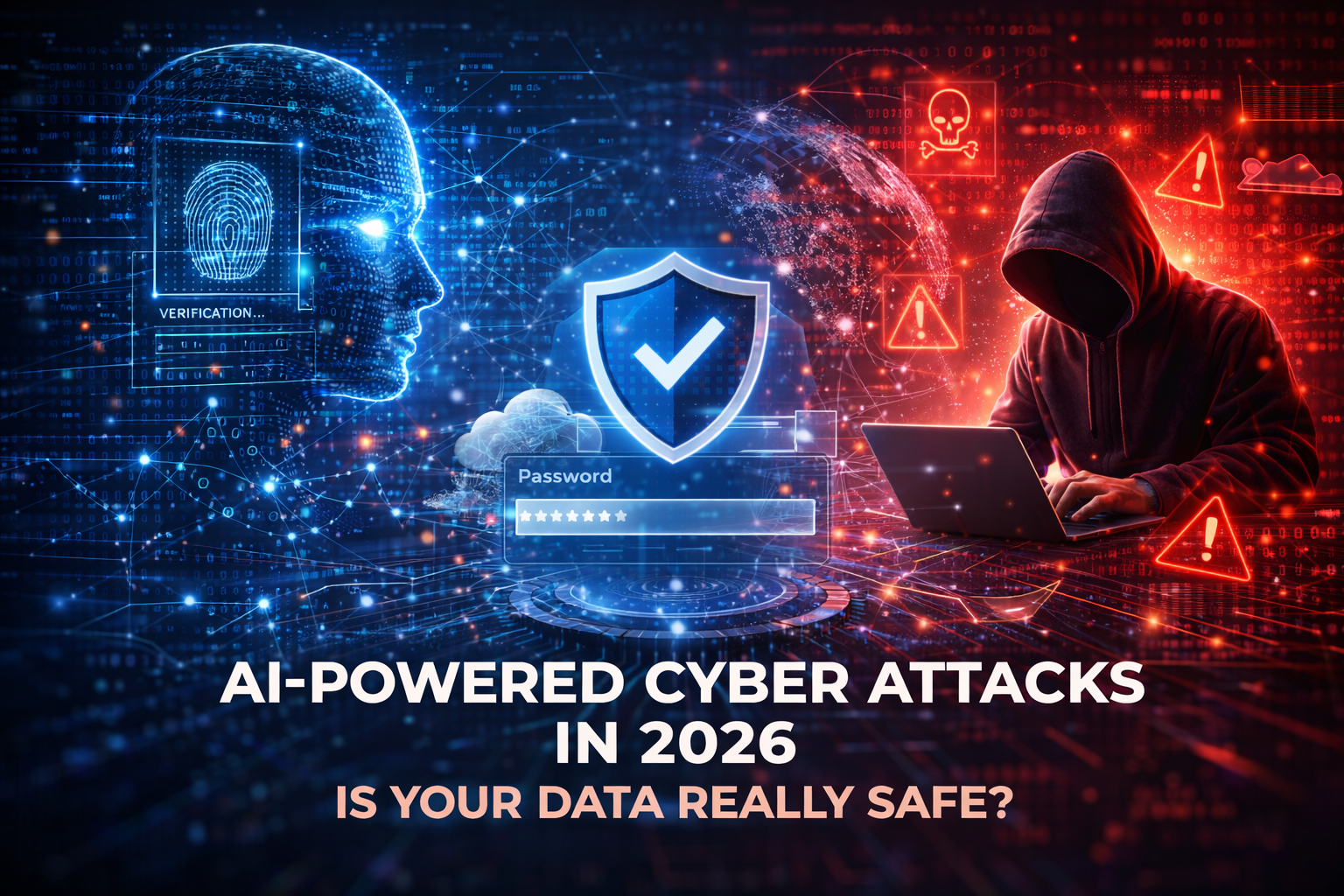
By AI-Powered Cyber Attacks in 2026: Is Your Data Really Safe?
Cybersecurity is evolving faster than ever, and 2026 is proving to be a defining year. While artificial intelligence (AI) has transformed industries with automation and innovation, it has also empowered cybercriminals with smarter, faster, and more dangerous tools. Today’s cyber attacks are no longer basic phishing emails or simple malware scripts — they are intelligent, adaptive, and highly targeted.
One of the most alarming trends in 2026 is the rise of AI-generated phishing attacks. Unlike traditional phishing attempts filled with spelling errors and suspicious formatting, AI-driven phishing emails are nearly indistinguishable from legitimate communication. These messages analyze writing patterns, company structures, and even recent news to craft highly convincing content. Employees often struggle to differentiate between genuine and malicious emails, increasing the risk of data breaches.
Deepfake technology is another growing concern. Cybercriminals are using AI-generated voice and video clones to impersonate CEOs, managers, or financial officers. There have already been cases where companies transferred large sums of money after receiving realistic voice calls from what appeared to be their executives. As deepfake tools become more accessible, identity verification processes must become more sophisticated.
Ransomware has also evolved significantly. Modern ransomware attacks use AI to scan networks, identify high-value targets, and bypass traditional security defenses. Instead of randomly encrypting files, attackers now carefully select critical systems to maximize disruption and increase the likelihood of ransom payments. Some groups even use data analytics to determine how much a company can afford to pay before demanding a ransom.
Another emerging threat is AI-powered automated hacking. These systems continuously scan the internet for vulnerabilities, misconfigured cloud storage, outdated software, and weak passwords. Once a vulnerability is identified, the attack is launched automatically without human intervention. This dramatically reduces response time and increases the scale of attacks.
Cloud security is also under pressure. As businesses increasingly rely on cloud platforms for data storage and application hosting, attackers are shifting focus toward cloud misconfigurations and API vulnerabilities. In many cases, breaches occur not because of advanced hacking techniques, but due to simple configuration mistakes.
So, what can individuals and organizations do to protect themselves?
First, cybersecurity awareness training is essential. Employees should be trained to recognize advanced phishing techniques, suspicious attachments, and social engineering tactics. Regular simulation exercises can significantly reduce human error.
Second, multi-factor authentication (MFA) should be mandatory across all systems. Even if passwords are compromised, MFA adds an additional layer of protection that can prevent unauthorized access.
Third, organizations must adopt AI-driven defense systems. Just as attackers are using AI to automate threats, security teams can deploy AI-based monitoring tools to detect unusual behavior, analyze network traffic, and respond to incidents in real time.
Zero Trust architecture is also gaining popularity in 2026. Instead of assuming that users inside a network are trustworthy, Zero Trust continuously verifies identity, device health, and access permissions. This reduces the risk of insider threats and lateral movement within networks.
Regular software updates and patch management remain critical. Many cyber attacks exploit known vulnerabilities that already have available fixes. Keeping systems updated significantly reduces exposure.
Finally, incident response planning is no longer optional. Companies must have a clear action plan outlining steps to isolate affected systems, notify stakeholders, and recover data quickly. A well-prepared organization can minimize downtime and financial losses.
Cybersecurity in 2026 is not just about firewalls and antivirus software — it is about resilience, adaptability, and proactive defense. As AI continues to evolve, both attackers and defenders will become more sophisticated. The key difference will be preparedness.
The question is no longer whether cyber attacks will happen, but how ready we are when they do. Businesses and individuals who invest in smart security strategies today will be better equipped to face tomorrow’s digital threats.