 By
By Cloud Security: Protecting Data, Applications & Services in the Cloud Era
In today’s digital-first world, businesses are rapidly migrating to cloud platforms like Amazon Web Services, Microsoft Azure, and Google Cloud to improve scalability, flexibility, and cost efficiency. However, as cloud adoption grows, so do cyber threats. From data breaches to ransomware attacks, organizations face increasing risks in protecting sensitive information hosted in the cloud.
This is where Cloud Security becomes essential.
Cloud security refers to the technologies, policies, controls, and services that protect cloud-based systems, data, and infrastructure. It ensures confidentiality, integrity, and availability of digital assets stored in cloud environments.
Why Cloud Security Matters More Than Ever
According to recent cybersecurity trends, cloud environments are prime targets for attackers due to misconfigurations, weak credentials, and insufficient monitoring. As remote work and SaaS adoption increase, companies must secure not just their physical infrastructure but also virtual servers, databases, APIs, and user identities.
Without proper cloud security measures, businesses risk:
- Data breaches
- Financial loss
- Reputational damage
- Regulatory penalties
- Operational downtime
Strong cloud security practices help organizations prevent unauthorized access, detect suspicious activity, and respond quickly to incidents.
Key Components of Cloud Security
1. Cloud Encryption
Encryption is the foundation of cloud security. It protects sensitive data by converting it into unreadable code unless accessed with the correct decryption key.
There are two main types of cloud encryption:
- Data at Rest Encryption – Protects stored data in cloud databases and storage.
- Data in Transit Encryption – Secures data while it moves between systems using protocols like SSL/TLS.
Modern cloud providers offer built-in encryption tools, but organizations should also manage their encryption keys securely using Key Management Systems (KMS). Encryption ensures that even if data is intercepted, it remains unusable to attackers.
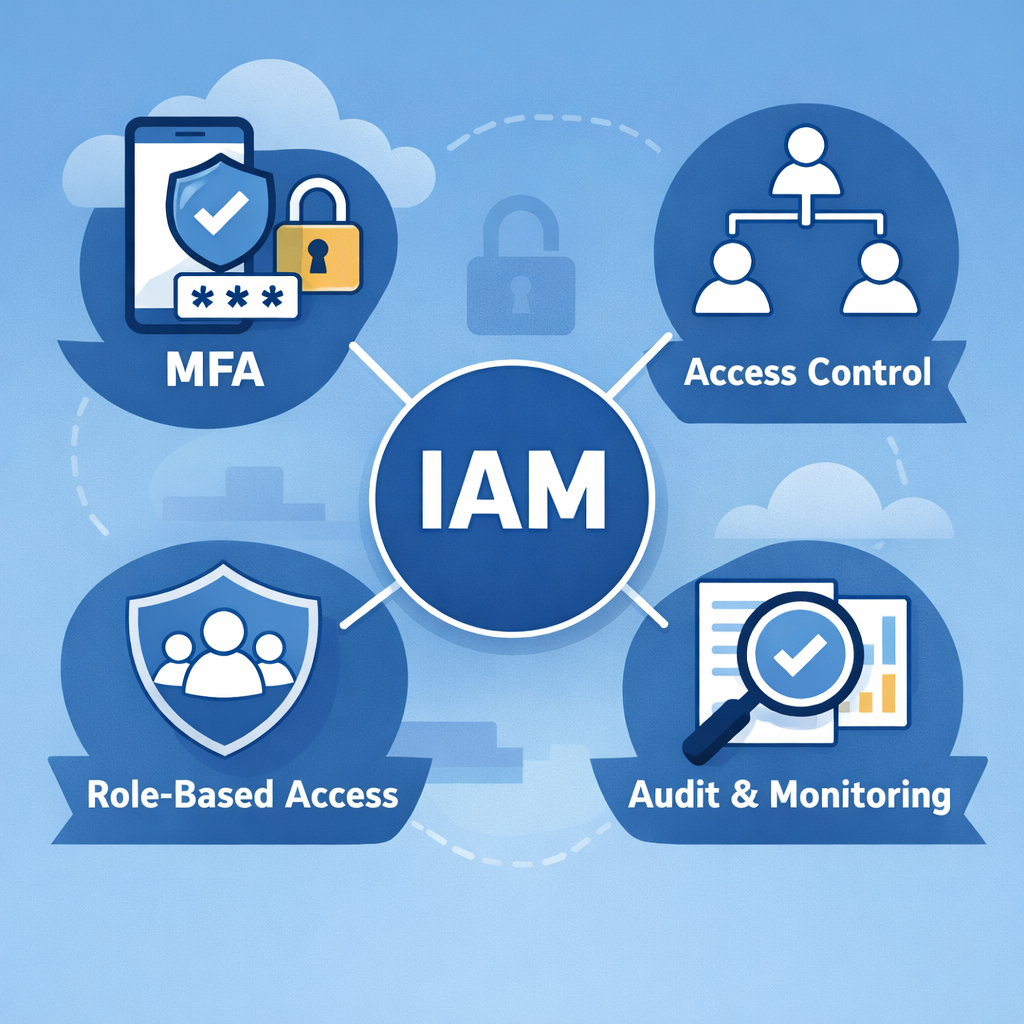
2. Identity and Access Management (IAM)
One of the most critical aspects of cloud security is Identity and Access Management (IAM). IAM ensures that only authorized users can access specific resources.
Best IAM practices include:
- Multi-Factor Authentication (MFA)
- Role-Based Access Control (RBAC)
- Least Privilege Principle
- Strong password policies
- Regular access reviews
For example, an employee in marketing should not have administrative access to financial systems. Proper IAM policies minimize insider threats and credential-based attacks.
3. Monitoring Cloud Infrastructure for Breaches
Real-time monitoring and threat detection are essential for proactive security. Cloud environments generate large volumes of logs and activity data that can reveal suspicious behavior.
Key monitoring strategies include:
- Security Information and Event Management (SIEM)
- Intrusion Detection Systems (IDS)
- Continuous vulnerability scanning
- Automated alert systems
Advanced monitoring tools use AI-driven analytics to detect anomalies, such as unusual login attempts or data transfers. Immediate response to alerts can prevent minor incidents from becoming major breaches.
Emerging Cloud Security Trends in 2026
As technology evolves, cloud security strategies are also advancing. Some major trends include:
Zero Trust Architecture
Zero Trust operates on the principle of “never trust, always verify.” Every access request is authenticated and authorized, regardless of location.
AI-Powered Threat Detection
Artificial Intelligence helps detect patterns and predict cyberattacks before they cause damage.
Cloud Security Posture Management (CSPM)
CSPM tools automatically detect misconfigurations and compliance risks in cloud infrastructure.
DevSecOps Integration
Security is integrated into the software development lifecycle rather than added at the end.
Best Practices for Strengthening Cloud Security
To build a strong cloud security framework, organizations should:
✔ Enable encryption by default
✔ Implement strict IAM policies
✔ Regularly update and patch systems
✔ Monitor network traffic continuously
✔ Conduct security audits and compliance checks
✔ Train employees on cybersecurity awareness
Security is a shared responsibility between cloud providers and customers. While providers secure the infrastructure, organizations must secure their data, configurations, and user access.