

 By
By Computers & Electronics
Information Technology (IT) has become one of the most important fields in the modern world. It plays a crucial role in storing, processing, and transmitting information using computers and electronic devices. From smartphones and laptops to large data centers and cloud computing systems, information technology powers almost every aspect of modern life. Businesses, educational institutions, governments, and individuals rely heavily on IT systems to manage information efficiently and communicate quickly.
Computers and electronics are the foundation of information technology. These technologies enable people to perform complex calculations, manage large databases, automate tasks, and connect with others across the globe. As technology continues to advance, the role of IT in society continues to expand.
What is Information Technology?
Information Technology refers to the use of computers, electronic devices, networks, and software to store, process, retrieve, and transmit information. IT systems allow organizations and individuals to manage data efficiently and perform tasks more accurately and quickly.
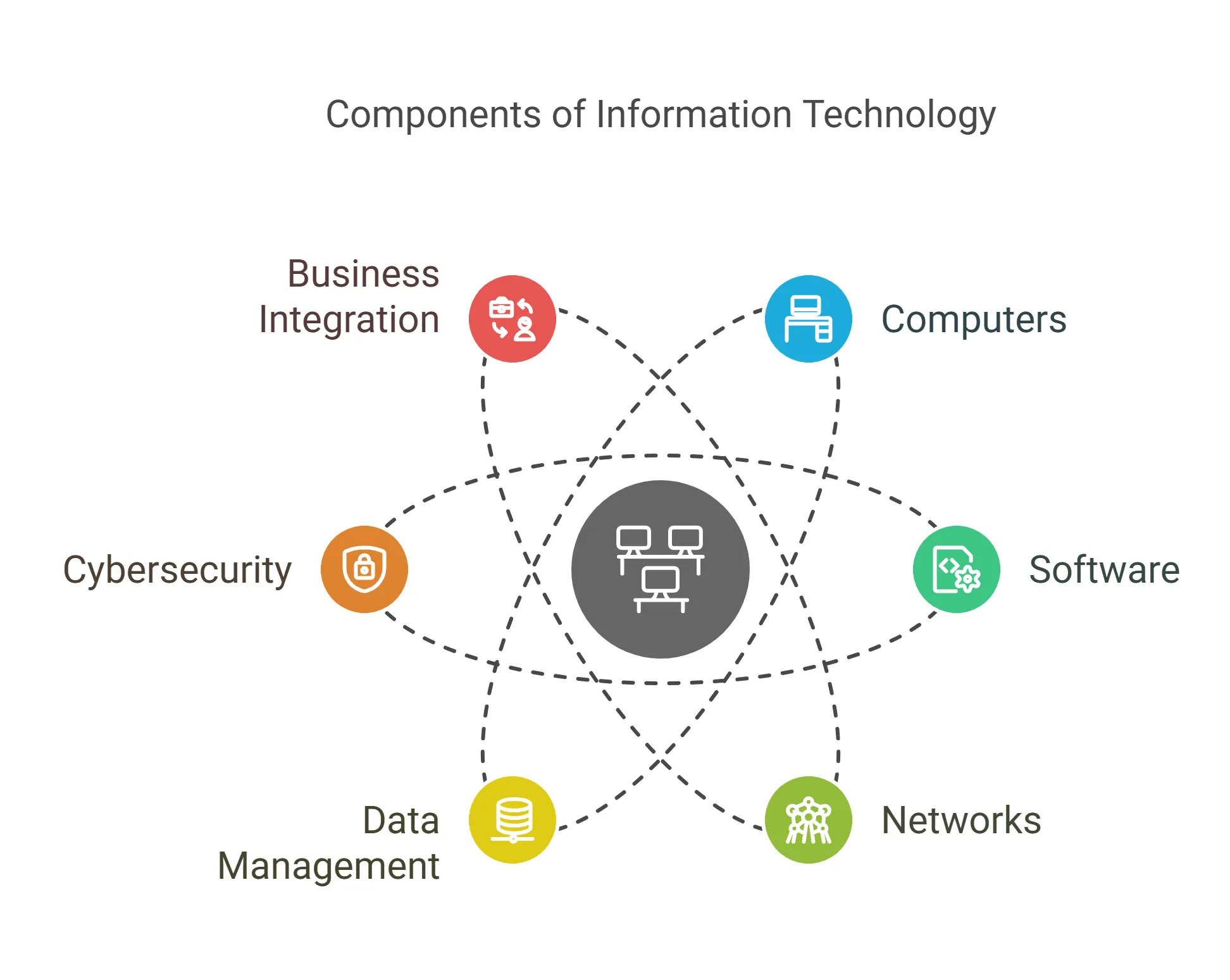
Information technology includes several components such as computer hardware, software applications, networking systems, databases, and cybersecurity tools. Together, these elements create powerful systems that help businesses operate smoothly and improve productivity.
In today’s digital world, IT is used in many areas including banking, healthcare, education, e-commerce, communication, entertainment, and scientific research.
Role of Computers in Information Technology
Computers are the central component of information technology systems. A computer is an electronic machine that can process data and convert it into meaningful information. It performs tasks based on instructions given through software programs.
Computers consist of several important components such as the Central Processing Unit (CPU), memory, storage devices, input devices, and output devices. The CPU acts as the brain of the computer and controls all operations. Memory stores temporary data while storage devices keep information permanently.
Modern computers are capable of performing millions of calculations per second. They are used for various purposes such as data analysis, software development, graphic design, web development, and business management.
Importance of Electronics in Information Technology
Electronics form the backbone of modern information technology. Electronic components such as transistors, integrated circuits, microprocessors, and sensors enable computers and other digital devices to function effectively.
Electronic technology makes it possible to design smaller, faster, and more efficient devices. For example, smartphones contain powerful microprocessors that allow users to perform tasks such as browsing the internet, sending emails, editing documents, and watching videos.
Electronics are also used in networking equipment such as routers, switches, and communication devices that connect computers to the internet. Without electronic components, modern IT systems would not exist.
Applications of Information Technology
Information technology has a wide range of applications in different industries and sectors. One of the most important areas where IT is used is business. Companies use computer systems to manage customer data, process transactions, and improve communication within the organization.
In the field of education, IT has transformed the learning experience through online classes, digital libraries, and educational software. Students can access learning materials from anywhere in the world using computers and the internet.
Healthcare is another sector that benefits greatly from information technology. Hospitals use computerized systems to maintain patient records, perform medical research, and operate advanced medical equipment.
Information technology also plays an important role in banking and finance. Online banking, digital payments, and financial management systems depend heavily on secure IT infrastructure.
Advantages of Information Technology
Information technology provides numerous benefits to individuals and organizations. One of the major advantages is speed. Computers can process large amounts of data within seconds, which saves time and increases efficiency.
Another advantage is accuracy. Automated systems reduce human errors and ensure that data is processed correctly. IT systems also improve communication through emails, messaging platforms, and video conferencing tools.
Information technology also helps in data storage and management. Large volumes of data can be stored in digital formats and accessed whenever needed. Cloud computing has further improved the way organizations manage and share data.
Challenges in Information Technology
Despite its many benefits, information technology also presents certain challenges. One of the biggest concerns is cybersecurity. As more information is stored online, the risk of hacking, data theft, and cyber attacks increases.
Another challenge is the rapid pace of technological change. Organizations must constantly update their systems and train employees to keep up with new technologies.
Additionally, excessive dependence on technology can sometimes lead to system failures or disruptions that affect business operations.
Future of Information Technology
The future of information technology looks extremely promising. Emerging technologies such as artificial intelligence, machine learning, cloud computing, blockchain, and the Internet of Things are transforming the digital landscape.
These technologies will enable smarter systems that can analyze data, make decisions, and automate complex processes. Smart cities, autonomous vehicles, and advanced robotics are examples of innovations powered by IT and electronics.
As technology continues to evolve, information technology will play an even greater role in shaping the future of society and improving the quality of life.
Conclusion
Information technology, supported by computers and electronics, has revolutionized the way people live and work. It enables efficient data management, fast communication, and automation of complex tasks across various industries. From education and healthcare to business and entertainment, IT systems have become an essential part of modern life.
With continuous advancements in electronic technology and computing power, information technology will continue to drive innovation and development in the years to come. Understanding the importance of computers and electronics in IT helps us appreciate the technology that powers our digital world.
do u follow instagram