


 By
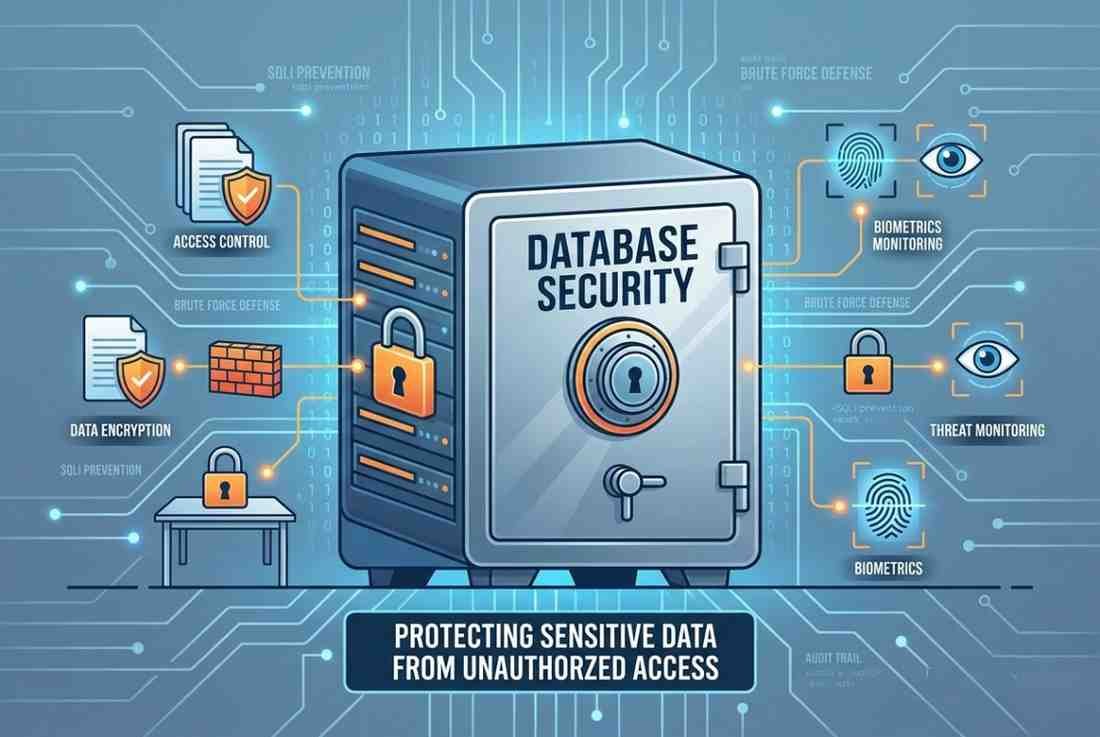
By In today’s data-driven world, databases are at the heart of nearly every application, from e-commerce platforms to banking systems. As organizations collect and store vast amounts of sensitive information, ensuring robust database security has become more critical than ever. Database security refers to the set of tools, processes, and practices designed to protect databases from unauthorized access, data breaches, theft, or corruption.
With cyber threats growing more sophisticated in 2026, businesses must adopt a proactive approach to securing their databases. This involves not only implementing technical safeguards but also fostering a security-first mindset across teams.
Why Database Security Matters
Data is one of the most valuable assets a company owns. Customer records, financial details, intellectual property, and operational data are all stored in databases. A single breach can lead to financial loss, reputational damage, legal consequences, and loss of customer trust.
Modern attackers target databases directly because they contain structured, high-value information. Without proper protection, vulnerabilities can be exploited to gain unauthorized access or manipulate data.
Common Database Threats
Understanding threats is the first step toward prevention. Some of the most common risks include:
- SQL Injection Attacks: Hackers insert malicious SQL queries into input fields to manipulate databases.
- Insider Threats: Employees or contractors misusing their access privileges.
- Weak Authentication: Poor password practices or lack of multi-factor authentication.
- Unpatched Vulnerabilities: Outdated database systems with known security flaws.
Among these, SQL injection remains one of the most dangerous and widely exploited attack vectors.
SQL Injection Prevention
SQL injection occurs when attackers exploit poorly validated input fields to execute unauthorized database commands. Preventing this requires a combination of secure coding practices and system-level protections.
Developers should use parameterized queries or prepared statements instead of directly embedding user inputs into SQL queries. Input validation and sanitization are also essential to ensure that only expected data is processed.
Additionally, deploying web application firewalls (WAFs) can help detect and block suspicious database queries in real time. Regular security testing, including penetration testing, ensures that vulnerabilities are identified before attackers can exploit them.
Role-Based Access Control (RBAC)
Not every user needs full access to a database. Role-Based Access Control (RBAC) is a critical security strategy that restricts access based on a user’s role within an organization.
For example, a customer support representative may only need read access to customer data, while a database administrator requires full control. By assigning permissions based on roles, organizations minimize the risk of accidental or intentional misuse of data.
RBAC follows the principle of least privilege, ensuring users only have access to what they absolutely need. This significantly reduces the attack surface and limits potential damage in case of compromised credentials.
Encryption of Data at Rest
Even if attackers gain access to a database, encryption ensures that the data remains unreadable without the proper keys. Encryption of data at rest is a fundamental component of database security.
Modern databases use strong encryption standards such as AES (Advanced Encryption Standard) to protect stored data. Encryption should also extend to backups, ensuring that all copies of data remain secure.
Key management is equally important. Organizations must securely store and manage encryption keys, ideally using dedicated key management services or hardware security modules (HSMs).
Additional Best Practices
Beyond these core techniques, organizations should adopt a layered security approach:
- Regular Updates and Patch Management: Keep database software up to date to fix known vulnerabilities.
- Monitoring and Auditing: Track database activity to detect unusual behavior or unauthorized access.
- Backup and Recovery Plans: Ensure data can be restored quickly in case of corruption or ransomware attacks.
- Multi-Factor Authentication (MFA): Add an extra layer of protection for database access.
- Network Security: Use firewalls and restrict database access to trusted IP addresses.
The Future of Database Security
As technology evolves, so do cyber threats. Emerging trends such as AI-driven attacks and cloud-native databases are reshaping the security landscape. Organizations must invest in automated security tools, continuous monitoring, and zero-trust architectures to stay ahead.
Database security is no longer optional—it is a necessity. By implementing strong protections like SQL injection prevention, role-based access control, and encryption, businesses can safeguard their most valuable asset: data.
In a world where data breaches make headlines almost daily, prioritizing database security is not just about compliance—it’s about survival and trust.