


 By
By IoT Security in 2026: Protecting the Billions of Connected Devices Shaping Our Future
The Internet of Things (IoT) has transformed how people live, work, and interact with technology. From smart home assistants and fitness trackers to connected factory equipment and intelligent transportation systems, IoT devices have become an integral part of everyday life. As the number of connected devices continues to grow rapidly, securing them has become one of the most significant cybersecurity challenges of 2026.
IoT Security refers to the strategies, technologies, and best practices used to protect internet-connected devices and the networks they operate on. Since many IoT devices collect, process, and transmit sensitive data, they have become attractive targets for cybercriminals seeking unauthorized access, data theft, or system disruption.
Why IoT Security Is More Important Than Ever
Industry experts estimate that billions of IoT devices are currently connected worldwide, with new devices being added every day. These devices improve efficiency, automate tasks, and provide valuable real-time insights. However, every connected device also creates a potential entry point for cyberattacks.
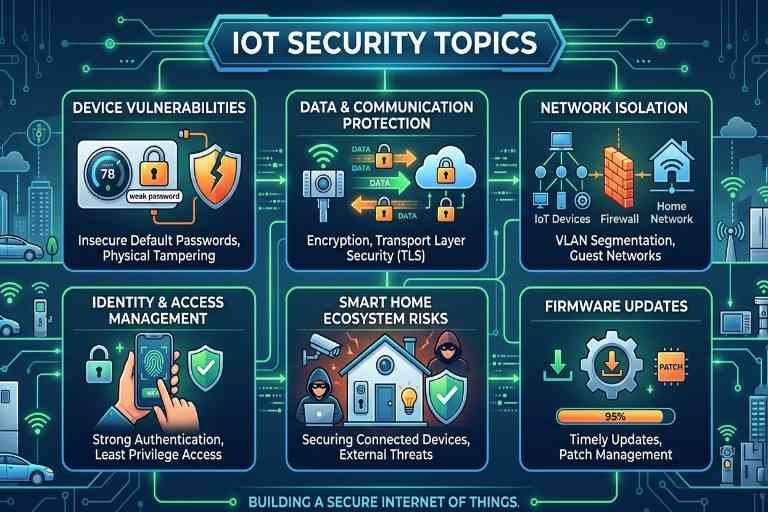
Many IoT devices were originally designed with functionality and convenience as primary goals, often leaving security as a secondary consideration. Weak passwords, outdated firmware, insecure communication protocols, and limited security controls can make devices vulnerable to attacks.
A compromised IoT device can expose personal information, disrupt business operations, or even serve as a gateway into larger networks. As a result, organizations and consumers alike must prioritize IoT security to reduce risk and maintain trust.
Securing Smart Home Devices
Smart home technology continues to gain popularity in 2026. Devices such as smart speakers, security cameras, door locks, lighting systems, thermostats, and home automation hubs provide convenience and enhanced control over living environments.
However, these devices often store personal data and remain connected to home networks around the clock. If compromised, attackers may gain access to sensitive information or control connected systems.
Best practices for smart home security include:
- Changing default usernames and passwords immediately.
- Enabling multi-factor authentication whenever available.
- Keeping device firmware updated.
- Using secure Wi-Fi networks with strong encryption.
- Disabling unnecessary features and remote access capabilities.
By following these simple measures, homeowners can significantly reduce the likelihood of cyberattacks targeting connected devices.
Protecting Wearable Technology
Wearable devices such as fitness trackers, smartwatches, health monitors, and connected medical devices continue to expand in popularity. These devices collect valuable information, including health metrics, location data, and personal activity records.
Because wearables often handle sensitive personal information, they present unique privacy and security challenges.
Organizations and users should focus on:
- Encrypting stored and transmitted data.
- Reviewing application permissions carefully.
- Updating software regularly.
- Using trusted applications and device ecosystems.
- Monitoring connected accounts for suspicious activity.
As healthcare and wellness technologies become increasingly connected, protecting wearable device data will remain a major cybersecurity priority.
Securing Connected Industrial Machines
Industrial IoT (IIoT) is revolutionizing manufacturing, energy production, logistics, and infrastructure management. Connected sensors, machines, and automation systems help organizations improve efficiency, reduce costs, and enhance operational visibility.
However, industrial environments face unique security risks because cyberattacks can affect both digital systems and physical operations.
Effective Industrial IoT security strategies include:
- Network segmentation between operational technology (OT) and IT systems.
- Strong authentication for connected devices.
- Continuous monitoring of industrial networks.
- Secure device provisioning and configuration management.
- Regular vulnerability assessments and security audits.
Protecting industrial IoT environments helps organizations prevent operational disruptions, equipment damage, and potential safety incidents.
Emerging IoT Security Trends in 2026
As IoT ecosystems continue to evolve, several key security trends are shaping the future of connected device protection.
AI-Powered Threat Detection
Artificial intelligence is increasingly being used to analyze device behavior and detect anomalies that may indicate cyberattacks. AI-driven security tools can identify threats faster than traditional monitoring methods.
Zero Trust for IoT
Zero Trust security models are becoming more common in IoT environments. Every device, user, and connection must continuously verify its identity before gaining access to resources.
Secure-by-Design Development
Manufacturers are beginning to prioritize security during the product development process rather than adding protections after devices are deployed.
Enhanced Regulatory Compliance
Governments worldwide are introducing stricter regulations requiring IoT manufacturers and organizations to implement stronger security controls and transparency measures.