


 By
By Many people today complain about feeling mentally tired, forgetful, or unable to focus, even after getting enough sleep. This condition, commonly known as “brain fog,” is becoming increasingly common among students, office workers, and professionals.
Although brain fog is not a medical diagnosis, it is a term used to describe problems with concentration, memory, mental clarity, and focus. Experts believe that modern lifestyles may be contributing to this growing issue.
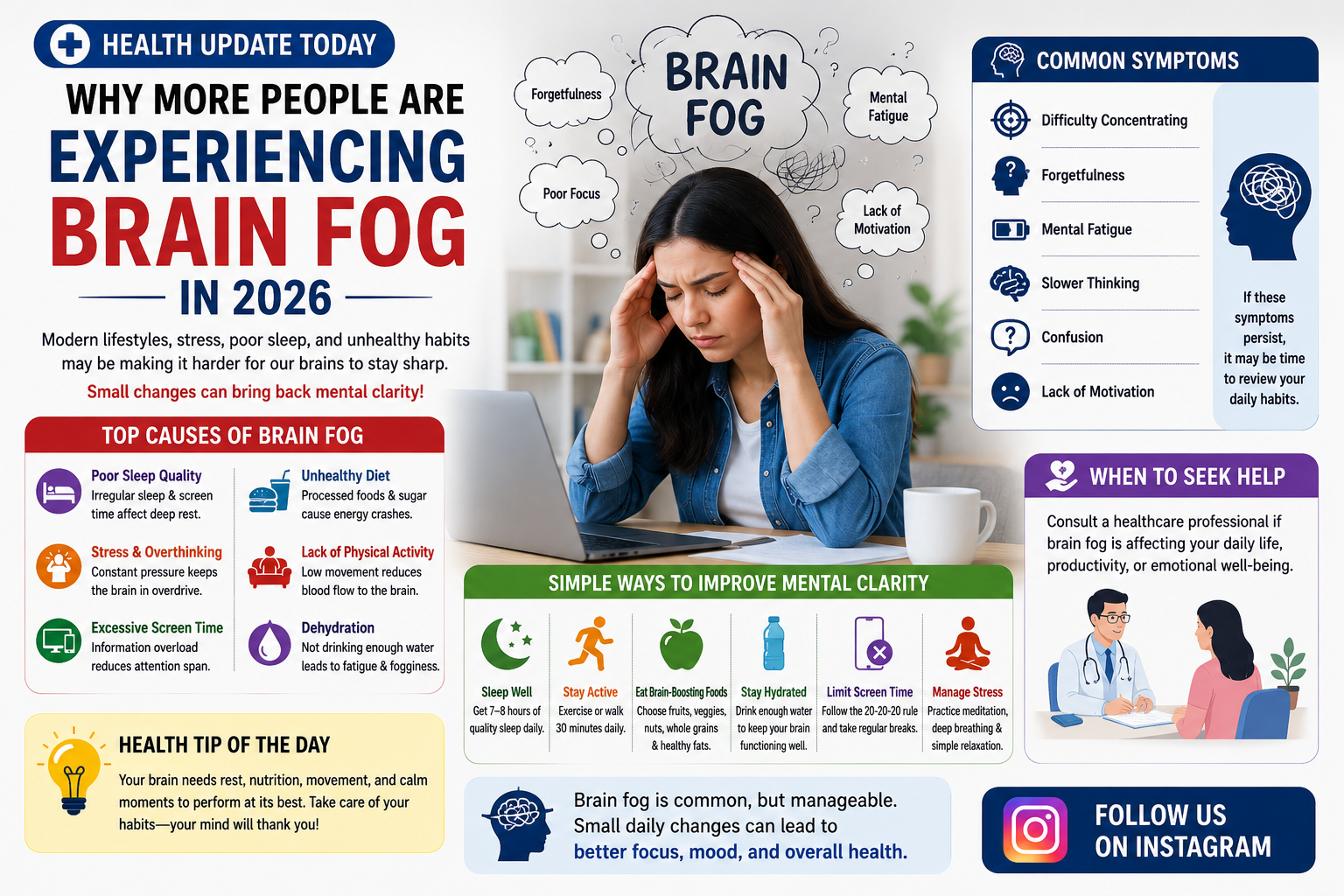
One of the main causes of brain fog is poor sleep quality. While many people spend enough hours in bed, they may not get deep, restorative sleep. Excessive screen time before bedtime, irregular sleep schedules, and stress can all affect sleep quality and leave the brain feeling exhausted the next day.
Stress is another major contributor. Constant work pressure, deadlines, financial concerns, and personal responsibilities can keep the brain in a state of continuous alertness. Over time, this mental overload can make it difficult to focus and process information efficiently.
Technology also plays a role. Many individuals spend several hours each day switching between emails, social media, messages, and work-related tasks. This constant stream of information can overwhelm the brain and reduce attention span.
Nutrition is equally important. Diets high in processed foods, sugary snacks, and fast food may affect energy levels and cognitive performance. The brain requires a steady supply of nutrients to function properly. Deficiencies in vitamins, minerals, and healthy fats can contribute to mental fatigue and poor concentration.
Physical inactivity can also impact brain health. Regular exercise improves blood flow throughout the body, including the brain. People who remain sedentary for long periods may experience lower energy levels and reduced mental sharpness.
Common symptoms of brain fog include difficulty concentrating, forgetfulness, mental fatigue, slower thinking, confusion, and lack of motivation. While occasional symptoms are normal, persistent brain fog may indicate lifestyle factors that need attention.
Fortunately, several simple habits can help improve mental clarity. Getting seven to eight hours of quality sleep each night is one of the most effective strategies. Maintaining a consistent sleep schedule can support healthy brain function.
Regular physical activity is also beneficial. Even a 30-minute walk can improve blood circulation and boost mental performance. Exercise helps reduce stress while improving mood and concentration.
A healthy diet rich in fruits, vegetables, whole grains, nuts, seeds, and lean proteins provides essential nutrients that support brain health. Drinking enough water throughout the day can also improve focus and reduce fatigue.
Taking breaks from screens is another important step. Experts recommend following the 20-20-20 rule and scheduling regular breaks during work hours to avoid mental exhaustion.
Mindfulness practices such as meditation, deep breathing, and relaxation exercises can help reduce stress and improve focus. Spending time outdoors and engaging in hobbies may also support mental well-being.
Brain fog has become a common challenge in modern life, but it is often manageable through healthy lifestyle changes. By prioritizing sleep, nutrition, exercise, and stress management, individuals can improve mental clarity and maintain better overall health.
As awareness grows, health experts continue encouraging people to take care of both their physical and mental well-being. Small daily improvements can lead to significant benefits for brain health and productivity.
Follow Us On Instagram