 By
By AI Is Making Electronics More Expensive in 2026: The Chip Shortage Explained
The electronics industry is entering a new phase in 2026. Artificial intelligence is no longer limited to software and cloud services—it is now reshaping the semiconductor industry, memory market, smartphones, laptops, and consumer gadgets.
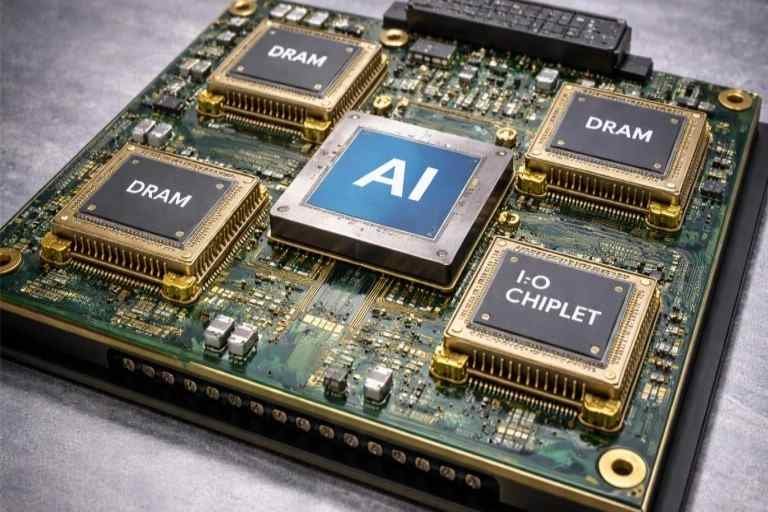
One of the biggest electronics trends right now is the growing pressure on AI chips and memory components. The rapid expansion of AI data centers is consuming huge quantities of advanced processors and high-bandwidth memory (HBM), creating supply pressure that is beginning to affect the wider electronics market.
AI Is Changing the Semiconductor Market
Modern AI systems require enormous computing power. Data centers need specialized processors and large amounts of high-speed memory to train and operate increasingly capable AI models.
This demand has made advanced memory one of the most important components in the technology industry. According to recent market analysis, memory products have become a much larger share of semiconductor industry revenue as AI infrastructure expands.
Companies are therefore prioritizing high-value AI customers and data-center hardware. That creates a difficult situation for manufacturers of traditional consumer electronics, which also depend on memory chips and other semiconductors.
What Is “Chipflation”?
The term chipflation describes the increase in electronic-device prices caused partly by rising semiconductor and memory costs.
Recent reports suggest that the shortage is already affecting smartphones, computers, gaming devices, and other consumer electronics. Memory prices have increased sharply, putting pressure on manufacturers to either increase prices, reduce specifications, or absorb higher production costs.
For consumers, this could mean that upgrading to a new smartphone or laptop may become more expensive than expected.
Smartphones Are Feeling the Pressure
Smartphones are particularly sensitive to memory and processor costs because modern devices require increasingly powerful hardware.
At the same time, AI is becoming a major selling point for new phones. Manufacturers are adding features such as generative photo editing, real-time translation, transcription, visual search, and on-device AI assistants.
However, consumers still care about traditional specifications such as processor performance, battery life, and camera quality. Recent research reported in India shows that performance remains a major factor when people choose their next smartphone, while AI features are becoming an increasingly important part of the purchasing decision.
This creates an interesting challenge: manufacturers need to deliver more AI capabilities while controlling the cost of increasingly expensive components.
AI Is Also Driving New Chip Partnerships
The competition for AI hardware is expanding beyond traditional GPU manufacturers.
For example, Qualcomm recently announced a major partnership with Amazon to develop AI data-center chips, demonstrating how semiconductor companies are increasingly targeting the rapidly expanding AI infrastructure market.
Meanwhile, OpenAI and Samsung have announced deeper cooperation involving next-generation semiconductor development and memory supply for AI infrastructure.
These developments show that AI is becoming a central force in the semiconductor industry—not simply another feature added to electronics products.
What Does This Mean for Consumers?
The short-term impact could be higher prices and slower upgrades. Consumers may keep their smartphones, laptops, and gaming devices for longer instead of replacing them every few years.
Manufacturers, meanwhile, may redesign products to use memory more efficiently or prioritize premium models where higher component costs can be absorbed more easily.
The situation could also encourage greater investment in semiconductor manufacturing. India, for example, is increasingly focusing on domestic electronics components and manufacturing rather than relying primarily on final device assembly.
The Future of Electronics
The electronics industry is moving toward a future where AI, semiconductor technology, memory, and edge computing are closely connected.
AI-powered smartphones, laptops, cameras, vehicles, robots, and IoT devices will require increasingly capable processors and efficient local computing. At the same time, the industry must solve challenges involving chip supply, energy consumption, manufacturing capacity, and cost.
For consumers, 2026 could therefore become a turning point. AI may make electronics significantly smarter—but the race to build those intelligent devices could also make the hardware behind them more expensive.
The biggest electronics story of 2026 may not be a single new gadget. It could be the transformation of the chips inside almost every gadget we use.