 By
By AI PCs Take Center Stage in 2026: How the New Generation of Computers Is Changing Technology
September 13, 2026 — The computer industry is going through one of its biggest transformations in years, and artificial intelligence is at the center of it. In 2026, AI is no longer limited to cloud applications and online chatbots. Computer manufacturers are increasingly putting dedicated AI processing directly into laptops, desktops and compact PCs.
The latest developments from companies including NVIDIA, Lenovo and other major PC makers show that the next generation of computers is being designed around local AI processing, improved efficiency and intelligent software. NVIDIA, for example, has announced new compact RTX-powered AI PCs expected to launch in October, designed to run AI workloads locally rather than relying entirely on cloud services.
AI Is Becoming a Standard PC Feature
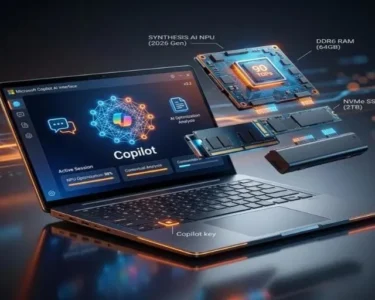
Traditional computers primarily depend on the CPU and GPU for everyday applications. Modern AI PCs add another important component: the Neural Processing Unit (NPU).
An NPU is specifically designed to handle artificial-intelligence workloads efficiently. This allows compatible computers to perform tasks such as image enhancement, voice processing, transcription, video effects and AI assistants with less dependence on remote servers.
The result is a computer that can potentially respond faster while consuming less power for certain AI operations.
This trend is also spreading across different types of computers. From premium laptops to desktops and small-form-factor machines, manufacturers are increasingly building hardware specifically for AI workloads.
Local AI Could Change How We Use Computers
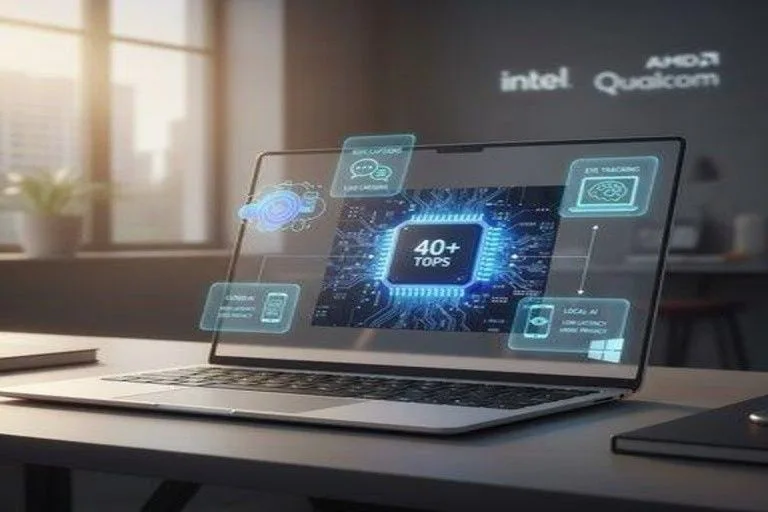
One of the most interesting trends in 2026 is the move toward on-device or local AI.
Instead of sending every request to a cloud-based AI service, a computer can perform some tasks directly on its own processor. NVIDIA says its latest AI PC strategy is designed to make it easier to run AI agents locally, offering potential benefits such as faster responses, privacy and reduced dependence on cloud processing.
For users, this could make AI feel more like a natural part of the operating system.
A future laptop could organize documents, summarize meetings, search personal files, assist with coding or edit photos without constantly uploading information to an external server.
New AI Hardware Is Arriving
Hardware manufacturers are also developing more powerful computers specifically for AI workloads.
At IFA 2026, Lenovo introduced new Yoga computers focused on high-performance local computing, including systems powered by NVIDIA RTX technology. The company highlighted applications involving creative work, development and natural interaction across devices.
NVIDIA is also preparing its RTX Spark platform for compact Windows AI PCs. The first systems from manufacturers including Lenovo and Acer are expected in October 2026.
These developments indicate that powerful AI computing is moving beyond traditional high-end workstations.
AI Is Also Affecting Computer Prices
There is another important story behind the 2026 computer market: hardware prices are rising.
On September 13, reports from Singapore indicated that PC prices had increased substantially over the previous year as strong AI infrastructure demand contributed to shortages involving memory, storage and graphics components.
The pressure is not limited to one country. AI data centers require enormous quantities of advanced processors and memory, creating competition for components that are also used in consumer computers.
Analysts have consequently warned that consumers may face higher prices for PCs, particularly machines equipped with larger amounts of memory and powerful graphics hardware.
Gaming PCs Continue to Evolve
Gaming remains another major driver of computer hardware innovation.
Demand for powerful graphics cards remains strong, with desktop discrete GPU shipments reaching a four-year high of 12.5 million units in Q2 2026, according to reported industry figures. NVIDIA accounted for the overwhelming majority of those shipments.
Modern gaming GPUs are also becoming increasingly important for AI because the same high-performance hardware can accelerate both graphics and AI workloads.
This means the line between a gaming PC and an AI workstation is becoming less distinct.
What Should Buyers Look for in a 2026 PC?
For someone purchasing a new computer today, processor speed is no longer the only specification worth considering.
Buyers should look at NPU capability, CPU performance, GPU power, RAM capacity, SSD storage, battery life and software compatibility. For everyday users, an efficient AI laptop may be more practical than an extremely powerful workstation.
Creators, developers and gamers, meanwhile, may benefit from a dedicated high-performance GPU and larger memory capacity.
Consumers should also consider whether the AI features they are paying for are genuinely useful for their daily work rather than simply choosing a computer because it carries an “AI PC” label.
The Future of Computing
The biggest change happening in computers during 2026 is that AI is moving from an application into the hardware itself.
Laptops and desktops are becoming more capable of understanding natural language, processing information locally and assisting users with everyday tasks. At the same time, manufacturers are experimenting with smaller, more powerful machines capable of running increasingly sophisticated AI models.
The result could be a new generation of personal computers that are not simply faster, but more intelligent, more responsive and more personalized.
Final Thoughts
September 2026 demonstrates that AI PCs are no longer just a technology trend. They are becoming an important direction for the entire computer industry.
With local AI, dedicated NPUs, powerful GPUs and new compact AI systems arriving, the traditional PC is evolving into something much more capable. However, rising component costs mean consumers will also need to carefully evaluate whether new AI capabilities justify the higher price.
The next era of computing has clearly begun—and AI is becoming one of the most important parts of the PC itself.