

 By
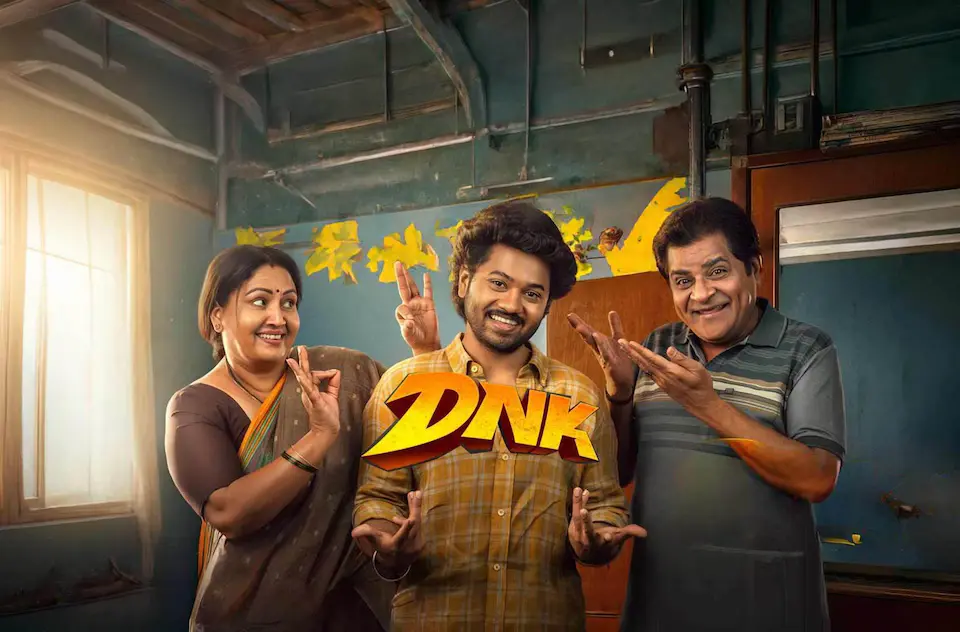
DNK (Donga Naa Koduku) (2026) is a Telugu crime-comedy entertainer starring Mouli Tanuj Prashanth and Sushmitha Shetty in the lead roles. Directed by Sreenu Kambala, the film attempts to mix comedy, crime, family drama and unexpected twists.
The film was initially announced as Donga Naa Koduku, but its title was changed to DNK following objections from the Central Board of Film Certification (CBFC).
The movie was released in theatres on November 13, 2026, with a runtime of approximately 2 hours and 11 minutes. Apart from Mouli and Sushmitha Shetty, the film features Ali, Raghu Babu, Rajitha, Babloo, Priya, Bhadram, Gundu Sudarshan and Nanda Gopal in important roles.
The film is produced by Naveen Yerneni and Y. Ravi Shankar under the Mythri Movie Makers banner. Sinjith Yerramilli composed the music, Suriya Balaji handled cinematography, and Sreedhar Sompally worked as the editor.
After the success of 90s – A Middle Class Biopic and Little Hearts, Mouli has gained considerable popularity among Telugu audiences, especially youngsters. Naturally, expectations are high for his next film. But does DNK continue his success streak? Let’s take a look.
Story & Concept
The story revolves around Eeshwar (Mouli Tanuj Prashanth), a careless youngster from Visakhapatnam who gets trapped in financial problems because of his online betting habits.
Instead of finding a proper solution to his growing debts, Eeshwar continues making poor financial decisions. As the pressure increases, he comes up with a plan to escape his problems. However, things take an unexpected turn when he and his friend Babloo get involved in a jewellery shop robbery.
What initially appears to be a simple plan gradually turns into a complicated situation, bringing Eeshwar’s family into trouble as well.
Who is actually behind the robbery? Why does Eeshwar get caught up in these unexpected incidents? Will he manage to escape from the problems created by his own decisions?
The basic concept of connecting online betting, financial struggles, robbery and family complications has potential. The film tries to build a crime comedy around these elements, using unexpected developments and situational humour.
However, the execution is not always effective. Although the premise provides enough opportunities for comedy and suspense, the screenplay struggles to bring everything together naturally.
Performance
Mouli Tanuj Prashanth is the biggest attraction of the film. After entertaining audiences with his natural performance in Little Hearts, he takes on a somewhat different character in DNK.
As Eeshwar, he brings energy, expressions and his familiar comic timing to several scenes. His interactions with Babloo and the situations involving his financial problems provide some entertaining moments.
However, the character also requires a different kind of performance, particularly during the mass elevation and serious sequences. Those portions do not always work as expected. His natural comic strengths are more effective than the conventional hero-style moments.
Sushmitha Shetty plays Deepu, the female lead. She looks pleasant on screen and performs reasonably well within the limitations of her character. However, her screen time is limited, and the writing does not give her enough scope to make a strong impression.
Babloo contributes some enjoyable moments as Eeshwar’s friend and sidekick. His combination scenes with Mouli work in a few places.
Ali, Raghu Babu and Rajitha provide supporting performances, while Gundu Sudarshan, Bhadram and Nanda Gopal also contribute to the narrative. However, several supporting characters could have been utilised more effectively.
Screenplay & Direction
Director Sreenu Kambala chooses a crime-comedy setup with an interesting central idea. The attempt to turn a young man’s financial problems into a series of unexpected incidents involving his entire family provides a good foundation.
The first half introduces the characters, Eeshwar’s financial problems and the circumstances that lead to the robbery. Some situations generate laughs, and the interval twist creates curiosity about what happens next.
However, the major problem is the screenplay. Instead of allowing the comedy and crime elements to develop naturally, the film relies heavily on multiple twists and situational gags.
A crime comedy needs a balance between humour, suspense and logical storytelling. Here, some developments feel unnecessarily complicated, and the excessive twists make the narrative confusing in places.
The director has a few interesting ideas, but stronger writing and better execution could have made the film considerably more engaging.
Comedy & Entertainment
Comedy is one of the main reasons audiences would be interested in watching DNK, especially after Mouli’s performance in Little Hearts.
The film has a few genuinely entertaining moments, particularly in the first half. Mouli’s expressions, dialogue delivery and interactions with Babloo provide occasional laughs.
Some of the family-related situations also create humour because of the unexpected trouble Eeshwar brings into everyone’s lives.
However, the comedy is inconsistent. Not every joke works, and some scenes rely on forced or awkward humour rather than naturally developed situations.
The film also includes a few adult-oriented jokes that may not appeal to every section of the audience.
Overall, the comedy works in parts, but it does not maintain the same energy throughout the film.
Crime Elements & Twists
The robbery angle is an important part of the story. The film attempts to combine comedy with crime-related developments, creating confusion and unexpected situations around Eeshwar and his family.
The interval twist creates some curiosity, and a few developments in the second half provide moments of suspense.
However, the excessive number of twists becomes a weakness. Rather than making the story more interesting, some revelations make the screenplay feel unnecessarily complicated.
The film could have benefited from a stronger central mystery and a more convincing connection between its characters and the robbery.
Family & Emotional Elements
Although DNK is primarily presented as a crime comedy, the consequences of Eeshwar’s decisions become a problem for his family.
The film attempts to show how one person’s irresponsible financial behaviour can affect the people around him. His online betting habits and attempts to escape debt create situations that involve his parents and other family members.
This is a relatable subject, especially considering the growing concerns surrounding online betting and financial irresponsibility.
However, the emotional portions are not explored deeply enough. Some family-related scenes work as comedy, but they could have carried more emotional weight if the characters had been developed better.
Music & Technical Aspects
Sinjith Yerramilli handles the music and background score. The songs do not create a particularly strong impact, although the background score supports a few scenes effectively.
Suriya Balaji’s cinematography is functional and suits the film’s crime-comedy setting. The visuals are adequate for the narrative, but there are not many technically outstanding moments.
Sreedhar Sompally’s editing is reasonably effective in some portions, but the second half could have been trimmed further. A tighter edit would have helped maintain the film’s pace and reduced the impact of unnecessarily extended scenes.
The production values are adequate. Overall, the technical departments support the film without becoming major highlights.
First Half & Second Half
The first half introduces Eeshwar, his financial problems, his relationship with the other characters and the circumstances that lead to the robbery.
Mouli’s comic timing helps several scenes work, and the interval twist creates curiosity. However, the entertainment is not consistent, and some portions feel ordinary.
The second half focuses more on the robbery, unexpected developments and the consequences of Eeshwar’s decisions. It offers a few interesting twists and some entertaining moments.
However, the screenplay becomes complicated in places. The comedy loses consistency, and the climax does not deliver the strong impact expected from the setup.
The film has enough interesting ideas, but the execution prevents it from becoming a completely satisfying entertainer.
What Works
- Mouli Tanuj Prashanth’s energetic performance.
- His comic timing in selected scenes.
- Babloo’s supporting performance.
- A few entertaining situational comedy sequences.
- The interesting robbery setup.
- The interval twist creates curiosity.
- Some unexpected developments in the second half.
- A relevant underlying subject involving online betting and financial problems.
What Doesn’t Work
- Weak and inconsistent screenplay.
- Too many twists make the narrative confusing.
- Forced comedy and awkward jokes.
- Limited screen time for Sushmitha Shetty.
- Supporting characters are not fully developed.
- Unnecessary mass elevations.
- Pacing issues, particularly in the second half.
- Underwhelming climax.
- The film does not fully utilise Mouli’s natural comic strengths.
Final Verdict
DNK is a crime comedy that starts with an interesting idea but struggles to convert that idea into a consistently entertaining film.
Mouli Tanuj Prashanth makes a genuine effort to carry the film with his energetic performance and familiar comic timing. His combination scenes with Babloo provide some enjoyable moments, and the robbery-related developments create occasional curiosity.
However, the film’s biggest weakness is its writing. The excessive twists, forced comedy and inconsistent screenplay prevent the story from developing naturally. Sushmitha Shetty looks pleasant, but her character does not receive enough importance. The supporting cast also has limited opportunities to create a stronger impact.
The first half offers a few laughs, while the second half tries to balance crime, comedy and suspense. Unfortunately, the climax does not deliver the expected satisfaction.
Overall, DNK is a below-average crime comedy with a few entertaining moments. After the success of Little Hearts, audiences expected another strong performance and an engaging story from Mouli. Unfortunately, the film does not completely meet those expectations.
Mouli’s fans may find a few enjoyable scenes, but audiences expecting a well-written crime comedy may feel disappointed.
Overall Rating: 2.5/5
Category-wise Rating:
- Story & Concept: ⭐⭐⭐☆☆
- Screenplay & Direction: ⭐⭐☆☆☆
- Acting & Performances: ⭐⭐⭐☆☆
- Comedy & Entertainment: ⭐⭐½☆☆
- Crime Elements & Twists: ⭐⭐½☆☆
- Family & Emotional Elements: ⭐⭐☆☆☆
- Music & Background Score: ⭐⭐½☆☆
- Cinematography & Visuals: ⭐⭐⭐☆☆
- Overall Entertainment: ⭐⭐½☆☆
Final Verdict: DNK is a crime comedy with a promising setup and a few entertaining moments from Mouli, but weak writing, forced humour and an underwhelming climax make it an average-to-below-average watch.