


 By
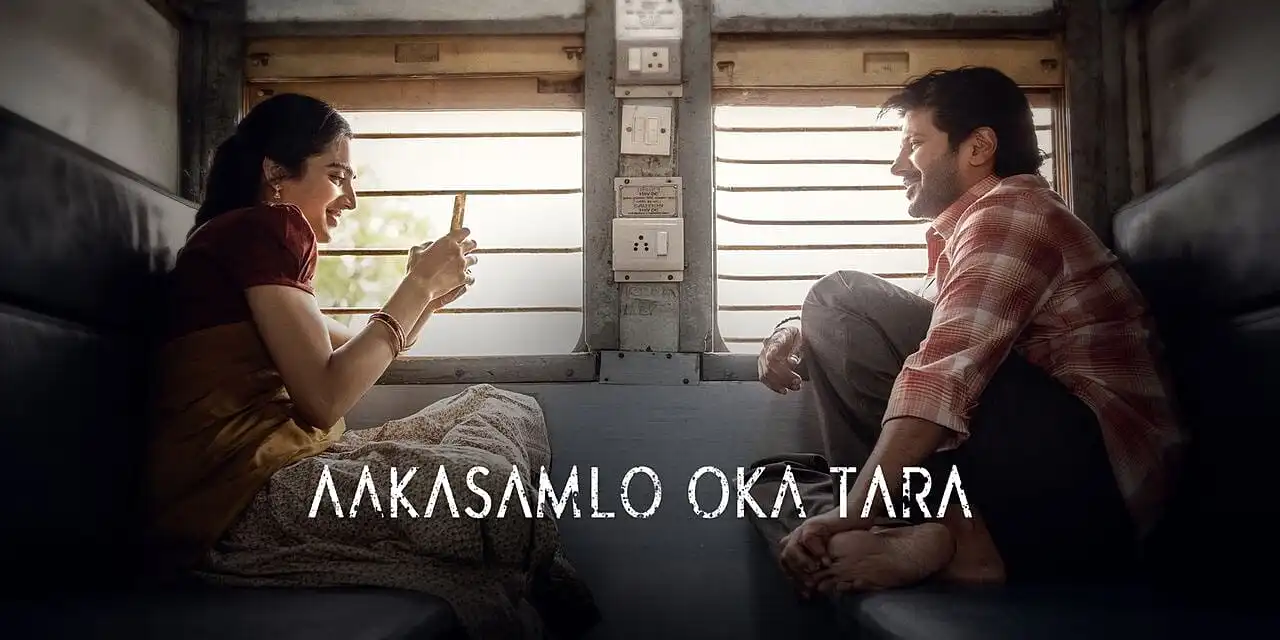
Aakasamlo Oka Tara (2026) is a Telugu emotional romantic drama starring Dulquer Salmaan and debutante Satvika Veeravalli in the lead roles. Directed by Pavan Sadineni, the film explores the importance of dreams, women’s education, family relationships and the power of having someone who genuinely supports your ambitions.
The movie was released in theatres on November 20, 2026, with a runtime of approximately 2 hours and 39 minutes. Along with Dulquer Salmaan and Satvika Veeravalli, the film features Shruti Haasan, Ruhani Sharma, Swasika, Murali Sharma, Gautham Vasudev Menon, Nassar, Kota Jayaram and others in important roles.
Sandeep Gunnam and Ramya Gunnam produced the film under the Geetha Arts, Swapna Cinema and Light Box Media banners. G. V. Prakash Kumar composed the music, Sujith Sarang handled cinematography, and Praveen K. L. worked as the editor. Gunnam Gangaraju contributed to the screenplay and dialogues.
The film revolves around Kalpana, a village girl who dreams of becoming an astronaut despite facing financial difficulties and opposition from her family. Her life takes an unexpected turn when she gets married at a young age to Krishna, a middle-class man who gradually understands her ambitions and decides to stand beside her.
The film’s central idea focuses on a woman’s right to dream, the importance of education and the beauty of a relationship in which both individuals respect each other’s aspirations.
But does Aakasamlo Oka Tara successfully turn this emotional concept into a memorable cinematic experience? Let’s take a look.
Story & Concept
The story revolves around Kalpana (Satvika Veeravalli), a young girl from a financially struggling village family who dreams of becoming an astronaut from childhood.
Despite facing several difficulties and limited opportunities, she concentrates on her education and works hard to achieve good marks. She eventually secures the top position in her district in the tenth standard.
However, her dreams receive a major setback when her family arranges her marriage at the age of 16 without considering her ambitions.
Krishna (Dulquer Salmaan), a middle-class man working as a mechanic and aspiring to build his own future, marries Kalpana. After discovering her age and understanding her passion for education and becoming an astronaut, he begins to realise how much her dreams mean to her.
Instead of becoming another obstacle in her life, Krishna decides to support her ambitions. He puts aside some of his personal dreams and works hard to provide her with opportunities to continue her education.
Their journey eventually brings them closer to Rohini (Shruti Haasan), who runs a private space organisation called Skyway.
The remaining story explores whether Kalpana can overcome the challenges in her journey, achieve her dream of becoming an astronaut and make her place in the world.
The basic concept is not entirely new, as stories about determination, ambition and overcoming obstacles have been explored in several films. However, the emotional relationship between Krishna and Kalpana gives the narrative a different dimension.
The film’s biggest strength is its attempt to show that supporting someone’s dream does not mean taking credit for their success. Sometimes, simply refusing to become an obstacle in another person’s journey is the greatest form of support.
Performance
Dulquer Salmaan is one of the biggest strengths of the film. Playing Krishna, he delivers a mature, natural and emotionally convincing performance.
His character does not depend on loud dialogues or unnecessary hero elevations. Instead, he expresses his love, responsibility and support through small gestures and meaningful conversations.
Dulquer handles the emotional portions beautifully, particularly the scenes where Krishna understands Kalpana’s ambitions and makes personal sacrifices for her future.
His expressions and subtle acting make the character relatable. Once again, he proves why he is particularly effective in emotional and content-oriented films.
Satvika Veeravalli makes an impressive debut as Kalpana. She gets a challenging character that requires her to portray innocence, determination, emotional struggles and ambition.
She performs naturally and handles the emotional sequences with good confidence. Her expressions and screen presence make Kalpana’s journey believable.
The chemistry between Dulquer and Satvika is another positive. Their relationship develops gradually, and both actors bring natural warmth to their characters.
Shruti Haasan plays Rohini, an important character connected to Kalpana’s professional journey. She makes a noticeable impact, particularly in the second half.
Ruhani Sharma performs well as Bijili, while Swasika gets an important supporting role. Murali Sharma and Gautham Vasudev Menon contribute adequately.
Kota Jayaram makes a strong impression in the role of Kalpana’s father. His character plays an important part in establishing the challenges she faces.
Overall, the performances are among the film’s biggest positives, with Dulquer Salmaan and Satvika Veeravalli leading from the front.
Screenplay & Direction
Director Pavan Sadineni chooses a meaningful subject that combines emotional relationships with an inspirational story about women’s education and ambition.
The screenplay focuses not only on Kalpana’s dream of becoming an astronaut but also on the people and relationships that influence her journey.
One of the interesting aspects of the writing is the way Krishna’s character is presented. He is not portrayed as a traditional saviour who takes control of Kalpana’s ambitions. Instead, he understands her potential and gives her the freedom and support to pursue her own dreams.
This approach makes the relationship more meaningful.
The director also gives importance to family relationships, particularly the bond between a father and daughter, a brother and sister, and a husband and wife.
The second half is particularly effective, with several emotional sequences that connect well with the audience.
However, the screenplay follows a familiar inspirational-drama structure. The obstacles, failures and eventual progress in Kalpana’s journey are relatively predictable.
The first half also takes time to establish the characters and their relationships.
Despite these limitations, Pavan Sadineni succeeds in presenting a sincere emotional drama with a positive message.
Romance & Relationship Elements
Romance is one of the important foundations of Aakasamlo Oka Tara, but the film approaches it differently from conventional romantic dramas.
The relationship between Krishna and Kalpana develops through understanding, respect and emotional support.
Their relationship begins under difficult circumstances, particularly because Kalpana is only 16 when she is married. The film also highlights the social problem of child marriage and the restrictions placed on girls’ education.
What makes their relationship interesting is Krishna’s gradual understanding of Kalpana’s ambitions.
He realises that her dream of becoming an astronaut is not simply a childhood fantasy but something she genuinely wants to achieve.
The film gives importance to Kalpana’s individuality rather than making her ambitions secondary to the male protagonist.
The conversations between Krishna and Kalpana feel natural, and their emotional connection is one of the film’s strongest aspects.
The director deserves appreciation for presenting their relationship through mutual respect and support rather than unnecessary romantic drama.
Emotional & Family Elements
Emotions are the heart of Aakasamlo Oka Tara.
The film explores several relationships and gives each one a role in Kalpana’s journey.
The father-daughter relationship is particularly important. Kalpana’s father initially refuses to understand her ambitions and makes decisions about her future without considering her wishes.
Their relationship gradually develops an emotional dimension as the story progresses.
The bond between Krishna and his sister also adds another layer to the narrative.
The relationship between Kalpana and her mother is presented through natural family emotions.
Another interesting aspect is the friendship between Krishna, an ordinary driver, and Rohini, a successful businesswoman. Their interactions provide some meaningful moments.
The second half contains several touching sequences, particularly those involving Krishna’s sacrifices and Kalpana’s determination.
The film does not depend entirely on melodramatic scenes. Several emotions are communicated through simple conversations and character behaviour.
Overall, the emotional portions are among the film’s biggest strengths.
Inspirational & Social Message
One of the strongest aspects of Aakasamlo Oka Tara is its message about women’s education and empowerment.
The film highlights how many talented girls are denied opportunities because of financial difficulties, family restrictions and traditional thinking.
Kalpana’s journey represents the struggles of girls who have ambitions but do not receive the necessary encouragement.
The movie also addresses the issue of child marriage and its impact on a girl’s education and future.
Another important message is that marriage should not become a limitation on someone’s ambitions.
Krishna’s character represents the importance of supporting the dreams of people we love without expecting recognition or appreciation.
The film also communicates that dreams do not depend on where a person comes from or how much money their family has.
These themes make the movie relevant beyond its entertainment value.
The dialogues surrounding dreams, determination and support are particularly meaningful.
Space & Science Elements
The space-related portions provide a different dimension to the film.
Unlike conventional commercial films, Aakasamlo Oka Tara uses the astronaut journey as an important part of its central storyline.
Kalpana’s ambition gradually takes her towards the world of science, rockets and space exploration.
The film attempts to explain certain scientific concepts in a way that ordinary audiences can understand.
The rocket-related sequences and space organisation portions add visual scale to the narrative.
The director also tries to balance the technical aspects of space exploration with Kalpana’s personal and emotional journey.
The rocket launch sequences are among the notable portions, and they help bring the film’s central dream to the screen.
However, the scientific and professional challenges could have been explored in greater detail.
Overall, the space elements support the story and give it a distinctive identity.
Music & Background Score
G. V. Prakash Kumar’s music and background score are among the film’s major positives.
The songs suit the emotional atmosphere and complement the characters’ journeys.
The background score is particularly effective during the important emotional sequences in the second half.
Rather than overpowering the scenes, the music generally supports the performances and increases their emotional impact.
The background score during Kalpana’s journey and the rocket-related sequences adds the required intensity.
The music also helps maintain the film’s positive and inspirational atmosphere.
Overall, G. V. Prakash Kumar delivers good work, and the background score plays an important role in the film’s emotional impact.
Cinematography & Technical Aspects
Sujith Sarang’s cinematography is one of the film’s biggest technical strengths.
The visuals are rich and natural, and the rural locations are presented beautifully.
The film maintains a pleasant visual atmosphere throughout, while the space-related sequences provide a different visual experience.
The rocket and launch portions are presented with good scale and production design.
Praveen K. L.’s editing is decent and supports the narrative. However, the first half could have been slightly tighter.
The production design deserves appreciation for creating the different environments required by the story.
The visual effects are adequate in several portions, although certain sequences could have received more attention.
Overall, the technical departments support the film well, with cinematography and background score standing out.
First Half & Second Half
The first half mainly introduces Kalpana, her childhood ambition, family circumstances and the challenges she faces in pursuing her education.
The story then introduces Krishna and their marriage, gradually establishing the relationship between the two characters.
The initial portions take some time to develop the emotional foundation. While the character introductions are important, certain scenes feel slightly slow.
The first half also establishes the family conflicts and the circumstances that influence Kalpana’s future.
The second half is where the film becomes more engaging.
Krishna’s support for Kalpana’s ambitions and her journey towards becoming an astronaut form the central attraction.
The introduction of Rohini adds another important dimension, and the scenes involving Dulquer, Satvika and Shruti Haasan are among the highlights.
The space-related developments, professional challenges and emotional relationships provide several memorable moments.
The climax brings the different emotional threads together and delivers an inspiring conclusion.
Overall, the second half is considerably stronger and provides the emotional impact that the film builds towards.
What Works
- Dulquer Salmaan’s mature and natural performance.
- Satvika Veeravalli’s impressive debut.
- Beautiful chemistry between Dulquer and Satvika.
- Shruti Haasan’s impactful supporting role.
- A meaningful story about women’s education and empowerment.
- An inspiring concept about pursuing dreams.
- Krishna’s character and his unconditional support.
- Strong emotional and family relationships.
- Good dialogues and natural conversations.
- G. V. Prakash Kumar’s background score.
- Excellent cinematography by Sujith Sarang.
- Well-presented space and rocket launch sequences.
- Strong second half.
- A positive and meaningful climax.
What Doesn’t Work
- The first half feels slightly slow.
- The screenplay follows a familiar inspirational-drama pattern.
- Some developments are predictable.
- Certain family portions could have been presented more effectively.
- A few character tracks lack sufficient depth.
- Some professional and scientific challenges could have been explored further.
- Certain visual effects could have been better.
- The runtime of approximately 2 hours and 39 minutes may feel lengthy for some audiences.
Final Verdict
Aakasamlo Oka Tara is a beautiful emotional drama that focuses on dreams, relationships, women’s education and the importance of unconditional support.
Dulquer Salmaan delivers an excellent performance as Krishna, bringing maturity and sincerity to a character that does not depend on conventional heroism. Satvika Veeravalli makes an impressive debut as Kalpana and convincingly portrays a young woman determined to achieve her dream of becoming an astronaut.
The film’s biggest strength is the relationship between Krishna and Kalpana. Their bond develops through understanding, respect and emotional support, making several scenes genuinely touching.
Shruti Haasan also adds value to the narrative, while the supporting cast contributes well.
Pavan Sadineni deserves appreciation for choosing a meaningful subject and presenting it through human relationships rather than relying entirely on dramatic twists.
The first half takes some time to establish the characters, and the storyline follows a familiar inspirational pattern. However, the second half is considerably stronger, with emotional sequences, meaningful conversations and space-related developments.
G. V. Prakash Kumar’s background score and Sujith Sarang’s cinematography further strengthen the film.
Overall, Aakasamlo Oka Tara is a heartfelt and inspiring film that reminds us that dreams should not have limitations and that the right support can change someone’s life.
Audiences who enjoy emotional dramas, meaningful relationships and inspirational stories will find this film worth watching. It is particularly suitable for family audiences who appreciate content-driven cinema.
Overall Rating: 3.5/5
Category-wise Rating:
- Story & Concept: ⭐⭐⭐⭐☆
- Screenplay & Direction: ⭐⭐⭐☆☆
- Acting & Performances: ⭐⭐⭐⭐☆
- Romance & Chemistry: ⭐⭐⭐⭐☆
- Emotional & Family Elements: ⭐⭐⭐⭐☆
- Inspirational & Social Message: ⭐⭐⭐⭐☆
- Space & Science Elements: ⭐⭐⭐⭐☆
- Music & Background Score: ⭐⭐⭐⭐☆
- Cinematography & Visuals: ⭐⭐⭐⭐☆
- Overall Entertainment: ⭐⭐⭐⭐☆
Final Verdict: Aakasamlo Oka Tara is a heart-touching emotional drama with excellent performances from Dulquer Salmaan and Satvika Veeravalli. Its beautiful portrayal of dreams, relationships, women’s education and unconditional support makes it a meaningful theatrical experience. Despite a slightly slow first half and predictable storytelling, the strong second half and emotional impact make it a worthwhile family watch.