By
By Computers are one of the most important inventions in human history. They have transformed the way people live, work, communicate, and solve problems. To understand computers clearly, we must study their division (classification) and evolution (development over time). Computer division explains the different types of computers based on their working principles, size, and purpose. Computer evolution explains how computers developed from large, slow machines into powerful, intelligent systems.
Computer Division
Computers are classified into different types based on their working principle. The first type is the Analog Computer. Analog computers work with continuous data. They process physical quantities such as temperature, pressure, speed, and voltage. These computers do not calculate exact numerical values but measure variations in physical data. Analog computers were mainly used in scientific laboratories, engineering fields, and medical equipment. For example, speedometers and thermometers are simple analog devices. Analog computers were useful in early scientific research but are rarely used today.
The second type is the Digital Computer. Digital computers work with discrete data and use binary numbers (0 and 1). They perform arithmetic and logical operations very accurately and quickly. Digital computers are the most widely used computers in the modern world. Examples include desktops, laptops, tablets, and smartphones. These computers are used in schools, offices, banks, hospitals, and homes. They can store large amounts of data and perform millions of calculations per second. Digital computers are reliable, fast, and easy to use.
The third type is the Hybrid Computer. Hybrid computers combine the features of both analog and digital computers. They can process both continuous and discrete data. Hybrid computers are used in specialized areas such as hospitals, scientific research centers, and space research organizations. For example, ICU monitoring systems in hospitals use hybrid computing to measure patient data and convert it into digital information for doctors. Hybrid computers are powerful but expensive and used only for specific purposes.
Computers are also classified based on their size and capacity. The smallest type is the Microcomputer. Microcomputers are personal computers used by individuals. Examples include desktops and laptops. They are affordable, compact, and suitable for personal and office work. These computers are widely used for education, entertainment, business, and communication.
The next type is the Minicomputer. Minicomputers are larger than microcomputers and can support multiple users at the same time. They are used in small and medium-sized organizations. Minicomputers are more powerful than personal computers but less powerful than mainframes.
Mainframe computers are large and powerful systems used by big organizations such as banks, government departments, and multinational companies. They can handle thousands of users simultaneously and process huge volumes of data. Mainframe computers are very reliable and secure. They are mainly used for large-scale transaction processing and database management.
The most powerful type is the Supercomputer. Supercomputers are the fastest computers in the world. They perform complex calculations at extremely high speeds. Supercomputers are used for weather forecasting, scientific simulations, nuclear research, and space exploration. They can process trillions of calculations per second. These computers are very expensive and require special environments for operation.
Computer Evolution
The evolution of computers is divided into five generations. The first generation of computers existed from 1940 to 1956. These computers used vacuum tubes for processing. They were very large in size, consumed a lot of electricity, and generated excessive heat. Programming was done using machine language. These computers were slow and unreliable. Examples include early electronic computers developed during World War II.
The second generation of computers lasted from 1956 to 1963. These computers used transistors instead of vacuum tubes. Transistors were smaller, faster, and more reliable. Second-generation computers consumed less power and produced less heat. Assembly language was introduced during this period. These computers were more efficient than first-generation machines.
The third generation of computers, from 1964 to 1971, used Integrated Circuits (ICs). ICs combined multiple transistors into a single chip. This made computers smaller, faster, and more reliable. Keyboards and monitors were introduced during this generation. High-level programming languages such as COBOL and FORTRAN became popular. Computers became more user-friendly and affordable.
The fourth generation of computers began in 1971 and continues today. This generation introduced microprocessors. A microprocessor is a single chip that contains the central processing unit. This development led to the creation of personal computers. Computers became smaller, cheaper, and more powerful. The growth of the internet and software industry occurred during this generation. Modern desktops, laptops, and smartphones belong to this category.
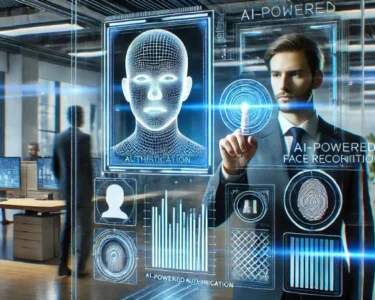
The fifth generation of computers represents the present and future of technology. These computers are based on Artificial Intelligence. They focus on machine learning, robotics, voice recognition, and natural language processing. Fifth-generation computers aim to simulate human intelligence. AI-powered systems, smart assistants, and advanced robots are examples of this generation. Researchers are also working on quantum computing, which may revolutionize the future of computing.
In conclusion, computer division helps us understand different types of computers based on their working principle and size, while computer evolution explains the technological progress across five generations. From large vacuum tube machines to intelligent AI systems, computers have developed rapidly. Today, computers are an essential part of daily life and continue to advance toward a smarter and more connected future.
do follow us instagram