

 By
By Delhi’s entry ban on non-city private vehicles that do not meet Bharat Stage-VI (BS-VI) emission norms came into force on Monday, marking a significant step by authorities to curb rising air pollution levels in the national capital. The restriction applies to privately owned vehicles registered outside Delhi that are compliant only up to BS-IV standards, preventing them from entering the city limits during the enforcement period.
The move is part of a broader set of anti-pollution measures implemented by the Delhi government and the Commission for Air Quality Management (CAQM) to address deteriorating air quality, especially during peak pollution seasons.
What the Ban Entails
Under the new rule, private diesel and petrol vehicles registered outside Delhi that do not conform to BS-VI emission standards are barred from entering the city. BS-VI norms, introduced nationwide in April 2020, are significantly stricter than previous standards and aim to drastically reduce harmful vehicular emissions such as nitrogen oxides and particulate matter.
The restriction, however, does not apply to essential services vehicles, including ambulances, fire tenders, and police vehicles. Public transport vehicles, such as buses and commercial goods carriers, are also subject to separate regulations under pollution control guidelines.
Enforcement at City Borders
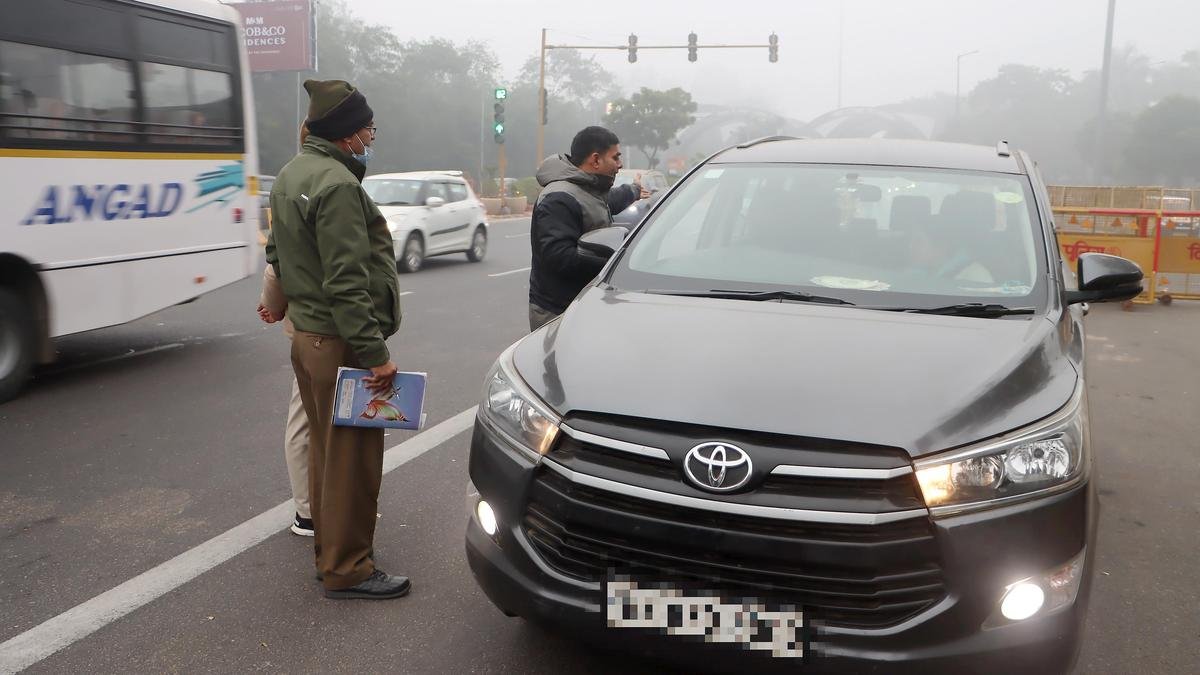
Authorities have deployed traffic police and enforcement teams at major entry points into Delhi to ensure strict compliance with the ban. Automatic number plate recognition (ANPR) cameras are being used at several border crossings to identify vehicles that violate the rule.
Officials said violators will face fines and may be turned back at the border. In some cases, vehicles entering without permission could also be impounded. The Delhi Traffic Police has urged motorists travelling from neighbouring states to check their vehicle’s emission compliance before attempting to enter the capital.
Rationale Behind the Decision
Vehicular pollution is one of the largest contributors to Delhi’s poor air quality, accounting for a significant share of particulate matter and nitrogen oxide emissions. Experts have long pointed out that older vehicles, especially those running on outdated emission norms, emit disproportionately higher levels of pollutants.
By restricting the entry of non-city private vehicles below BS-VI standards, authorities aim to reduce the cumulative pollution load, particularly during periods when meteorological conditions trap pollutants close to the ground.
Impact on Commuters and Travellers
The ban has affected many commuters who regularly travel to Delhi from neighbouring states such as Haryana, Uttar Pradesh, and Rajasthan. Several travellers expressed inconvenience, especially those who rely on older private vehicles for work or personal reasons.
However, officials maintain that public health considerations outweigh temporary inconvenience. Commuters have been advised to use public transport, carpooling options, or BS-VI compliant vehicles to avoid disruption.
Government’s Broader Anti-Pollution Strategy
The entry ban is one of several measures adopted to improve air quality in Delhi. Other steps include restrictions on construction activities, regulation of diesel generator use, promotion of electric vehicles, and enhanced monitoring of industrial emissions.
The Delhi government has also expanded its electric bus fleet and encouraged citizens to shift towards cleaner mobility options. Authorities say that sustained efforts across multiple sectors are essential to bring down pollution levels in the long term.
Mixed Reactions from Experts and Public
Environmental experts have largely welcomed the move, calling it a necessary intervention to control vehicular emissions. They argue that stricter enforcement of emission norms will push faster adoption of cleaner vehicles and reduce pollution-related health risks.
However, some transport associations and commuters have called for a phased approach, citing economic challenges faced by vehicle owners unable to immediately upgrade to BS-VI compliant vehicles.
Conclusion
The enforcement of Delhi’s entry ban on non-city private vehicles below BS-VI standards marks a firm policy decision prioritising air quality and public health. While the measure has caused inconvenience to some commuters, authorities believe it will contribute to cleaner air and set the tone for stricter environmental compliance. As Delhi continues its battle against air pollution, such regulatory steps are expected to play a crucial role in shaping a more sustainable urban future.
Do Follow Us Instagram