 By
By The Krishna River, one of South India’s lifelines, has once again turned turbulent, causing widespread anxiety among residents living in low-lying areas along its banks. Heavy rains in the upper catchment areas and increased inflows from upstream reservoirs have led to the river swelling beyond safe levels. As a result, several villages located along the Krishna River basin are experiencing partial flooding, forcing authorities to shift more than 100 families to relief camps.
Evacuation and Relief Measures
Local administration, supported by disaster management teams and police officials, began evacuation operations late on Sunday night after water levels showed a rapid rise. Using boats and rescue vehicles, families were moved to safer locations, and special relief camps were set up in government schools and community halls. Authorities ensured that food, drinking water, and medical facilities were made available immediately to those displaced.
District Collector stated that over 100 families, primarily from riverside hamlets, had been relocated. Priority was given to vulnerable groups such as the elderly, children, and women. The Collector further assured that additional shelters would be readied if the water levels continued to rise in the coming days.
Infrastructure and Transportation Hit
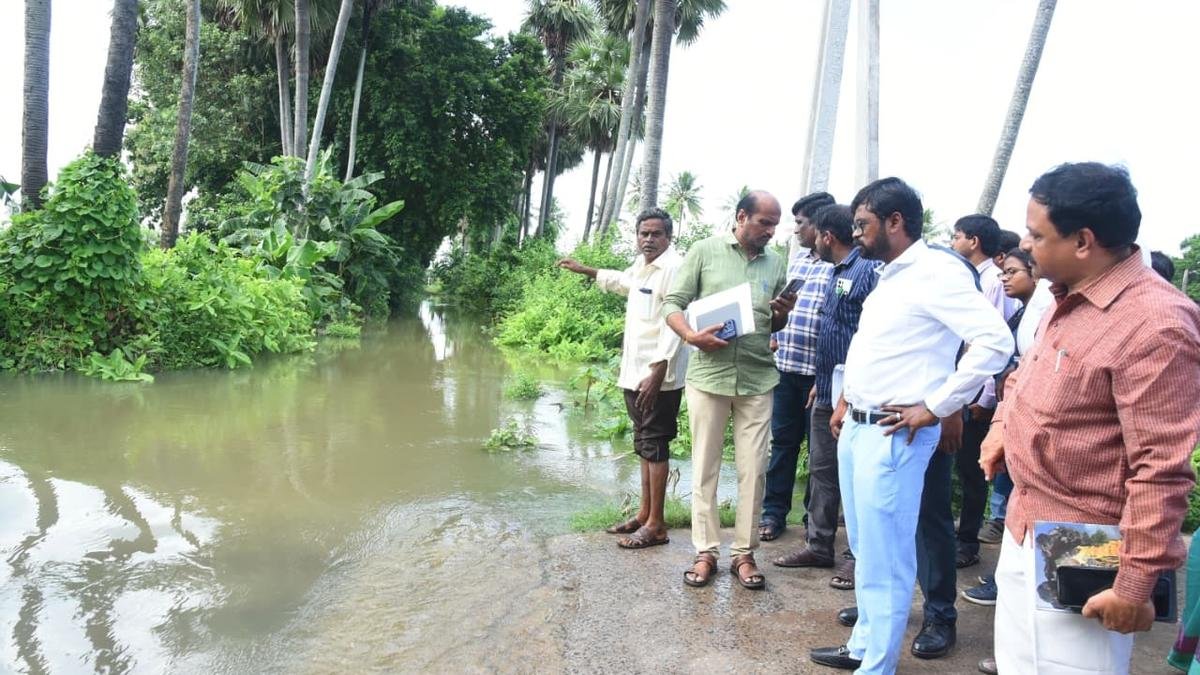
The floods have not only displaced families but also disrupted road connectivity in several areas. Low-lying bridges have been submerged, cutting off transport between villages. Public transport has been suspended on certain routes as a safety measure. Officials have warned motorists to avoid flooded roads and are actively monitoring the situation to prevent accidents.
Power supply in a few localities was also temporarily cut off to avoid electrocution risks. Electricity department teams are on high alert to restore supply once water levels recede. Meanwhile, farmers expressed worry as standing crops in fields adjacent to the river are under threat of submersion.
Voices from the Relief Camps
Inside the relief camps, families recounted their harrowing experiences of watching the water rush into their homes. Many had to leave behind their belongings and cattle, managing only to carry essential items. A resident shared that they had never witnessed such a sudden rise in water levels in recent years.
Relief workers, NGOs, and volunteers are working tirelessly to provide food packets, blankets, and medicines. Temporary medical units have been set up to prevent the spread of water-borne diseases. Special care is being taken to safeguard children, with arrangements for milk and baby food.
Government and Disaster Response
State government officials are closely coordinating with the National Disaster Response Force (NDRF) and State Disaster Response Force (SDRF). Control rooms have been set up to provide real-time updates and assistance to citizens. Chief Minister held a review meeting, instructing officials to prioritize safety and ensure timely distribution of relief materials.
The irrigation department is keeping a close watch on inflows into the river from upstream reservoirs. Engineers are monitoring dam gates to regulate water discharge and prevent further flooding downstream. Officials cautioned that the situation would remain critical for the next 48 hours depending on rainfall patterns.
Farmers and Economic Concerns
Apart from the human displacement, the floods have raised concerns about agricultural losses. Thousands of acres of paddy, maize, and cotton crops are under threat. Farmers fear that prolonged submersion will destroy their yield, pushing them into financial distress. The government has promised to conduct a damage assessment once the water recedes and assured compensation for affected families.
Local businesses have also taken a hit, with shops in submerged areas forced to shut down temporarily. Transporters and small traders, who rely on daily transactions, have appealed to the administration for relief support.
Public Appeal and Safety Measures
Authorities have urged people living in flood-prone areas not to ignore evacuation calls. Announcements are being made through loudspeakers, and social media channels are being used to spread awareness about safety measures. Citizens are advised not to attempt crossing flooded bridges or waterlogged stretches.
Volunteers have stepped up by assisting in rescue operations and distributing essential supplies. Several youth groups have also joined hands with NGOs to extend help at relief camps.
Looking Ahead
While the immediate priority is to safeguard lives and provide relief to displaced families, the recurring floods in Krishna basin highlight the urgent need for long-term solutions. Experts stress the importance of strengthening embankments, improving flood forecasting systems, and implementing permanent rehabilitation plans for vulnerable communities.
For now, the focus remains on ensuring that the more than 100 families shifted to relief camps receive continuous support until it is safe for them to return home. With weather forecasts predicting more rainfall in the coming days, authorities remain on high alert, preparing for any further emergencies.