 By
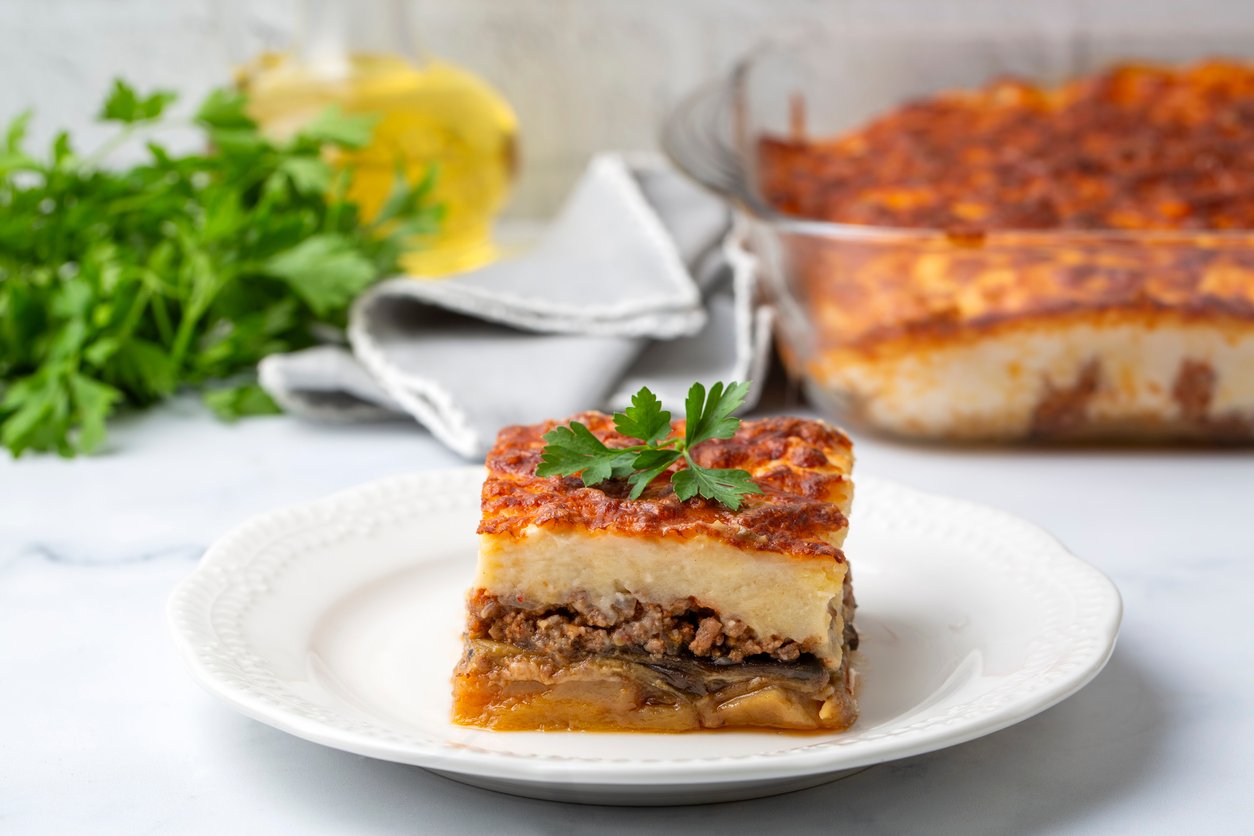
By Moussaka is one of the most beloved dishes in Greek cuisine, known for its comforting layers of vegetables, meat sauce, and creamy béchamel topping. Often compared to lasagna but with a Mediterranean twist, moussaka brings together tender eggplant, potatoes, spiced minced meat, and a velvety white sauce. This dish is hearty, flavorful, and perfect for family gatherings, festive meals, or whenever you want something warm and satisfying. In this recipe, you’ll learn how to prepare an authentic Greek moussaka step-by-step, along with tips to make it easier and more delicious.
Ingredients
For the Vegetable Layers:
- 2–3 large eggplants
- 2 large potatoes (optional but traditional in many Greek homes)
- Olive oil for brushing or frying
- Salt for seasoning
For the Meat Sauce:
- 500 g minced beef or lamb
- 1 large onion, finely chopped
- 2–3 garlic cloves, minced
- 2 medium tomatoes, grated (or 1 cup tomato puree)
- 2 tablespoons tomato paste
- ½ cup red wine (optional but gives great flavor)
- 1 teaspoon cinnamon
- 1 teaspoon dried oregano
- ½ teaspoon black pepper
- 1 teaspoon salt
- 2 tablespoons olive oil
- 1 bay leaf
For the Béchamel Sauce:
- 4 tablespoons butter
- 4 tablespoons all-purpose flour
- 3 cups milk
- 1 egg
- ½ cup grated parmesan or kefalotyri cheese
- Salt and pepper
- ½ teaspoon nutmeg (optional but traditional)
Preparing Moussaka: Step-by-Step
1. Prepare the Vegetables
Eggplant is the heart of moussaka, giving it a rich, slightly smoky flavor. Start by slicing the eggplants into 1 cm thick rounds or long slices. Sprinkle them with salt and let them rest for 20–30 minutes. This helps remove bitterness and reduces excess moisture.
For the potatoes, peel and slice them into thin circles. These form a strong base for the moussaka, preventing the dish from becoming too watery.
Once the vegetables are ready, you have two cooking options:
Option 1: Frying (Traditional Method)
Heat olive oil in a pan and fry the eggplants and potatoes until golden on both sides. Place the cooked slices on tissue paper to absorb excess oil.
Option 2: Baking (Healthier Method)
Brush each slice with olive oil, arrange on a baking sheet, and roast at 200°C for 20–25 minutes. This reduces oil and keeps the dish lighter.
Both methods produce delicious results, so choose whichever suits your preference.
2. Make the Meat Sauce
The meat sauce is the soul of moussaka, filled with warm spices and simmered until rich.
Heat olive oil in a pan. Add the chopped onions and sauté until soft and translucent. Add minced garlic and stir until fragrant. Then add the minced beef or lamb, breaking it apart with a spoon. Cook until the meat browns nicely.
Next, add tomato paste and mix well to deepen the flavor. Pour in the grated tomatoes or tomato puree. If using red wine, add it now and let it simmer until the alcohol evaporates. Season with cinnamon, oregano, salt, black pepper, and a bay leaf.
Reduce the heat and allow the sauce to simmer for 20–25 minutes. The flavors need time to blend, so don’t rush this step. A good meat sauce becomes thick and aromatic, perfect for layering.
3. Prepare the Béchamel Sauce
A hallmark of Greek moussaka is the creamy, luxurious béchamel topping. To make it, melt the butter in a saucepan over medium heat. Add flour and whisk constantly to form a smooth paste (roux). Cook this mixture for about 1 minute without browning.
Gradually add milk, whisking continuously to avoid lumps. Keep stirring until the sauce thickens into a smooth, creamy consistency. Add salt, pepper, and a pinch of nutmeg. Turn off the heat and let the sauce cool slightly. Beat the egg in a small bowl and slowly add it to the béchamel while whisking constantly. Finally, stir in the grated cheese.
Your béchamel should now be thick, glossy, and ready to pour.
4. Assemble the Moussaka
Preheat your oven to 180–190°C.
Use a deep baking dish and lightly oil it. Start by arranging the potato slices at the bottom. Next, add a layer of eggplant. Spread half of the meat sauce evenly over the vegetables. Add another layer of eggplant and top with the remaining meat sauce.
Finally, pour the béchamel sauce over the top, smoothing it with a spatula. The sauce will be thick and should fully cover the layers beneath. Add extra cheese on top if you like a golden, crispy crust.
5. Bake the Moussaka
Place the dish in the preheated oven and bake for 45–50 minutes or until the top turns beautifully golden with slight browning. The smell filling your kitchen will be irresistible—warm spices, roasted vegetables, and creamy sauce blending together.
Once done, remove the moussaka from the oven and let it rest for at least 30 minutes before cutting. This step is crucial. If sliced too soon, the layers will collapse. Resting allows the dish to set and makes serving easier.
Serving Suggestions
Moussaka is rich and filling, so you usually need only a few sides:
- A simple Greek salad with tomatoes, cucumbers, olives, and feta
- Crusty bread or garlic bread
- A glass of red wine or lemon water
- Tzatziki for added freshness
Moussaka tastes even better the next day, as the flavors deepen. It also freezes well—simply cut into portions, wrap, and store.
Tips for the Best Moussaka
- Salt the eggplant to remove bitterness.
- Use lamb for a more authentic Greek taste, though beef works beautifully.
- Don’t skip the cinnamon—it adds warmth and depth.
- Allow the meat sauce to simmer long enough for rich flavor.
- Always let béchamel cool slightly before adding the egg to avoid curdling.
- Rest the moussaka before slicing for perfect layers.
Conclusion
Moussaka is a timeless dish that represents the warmth and generosity of Greek cooking. With its layered structure, aromatic spices, roasted vegetables, and velvety béchamel, it’s a recipe worth taking your time with. Once you prepare it, you’ll understand why it has become a classic enjoyed in homes and restaurants worldwide. Whether you serve it at a family dinner or as a centerpiece for a celebration, moussaka promises comfort, flavor, and a touch of Mediterranean magic in every bite.
Do Follow Us On Instagram