

 By
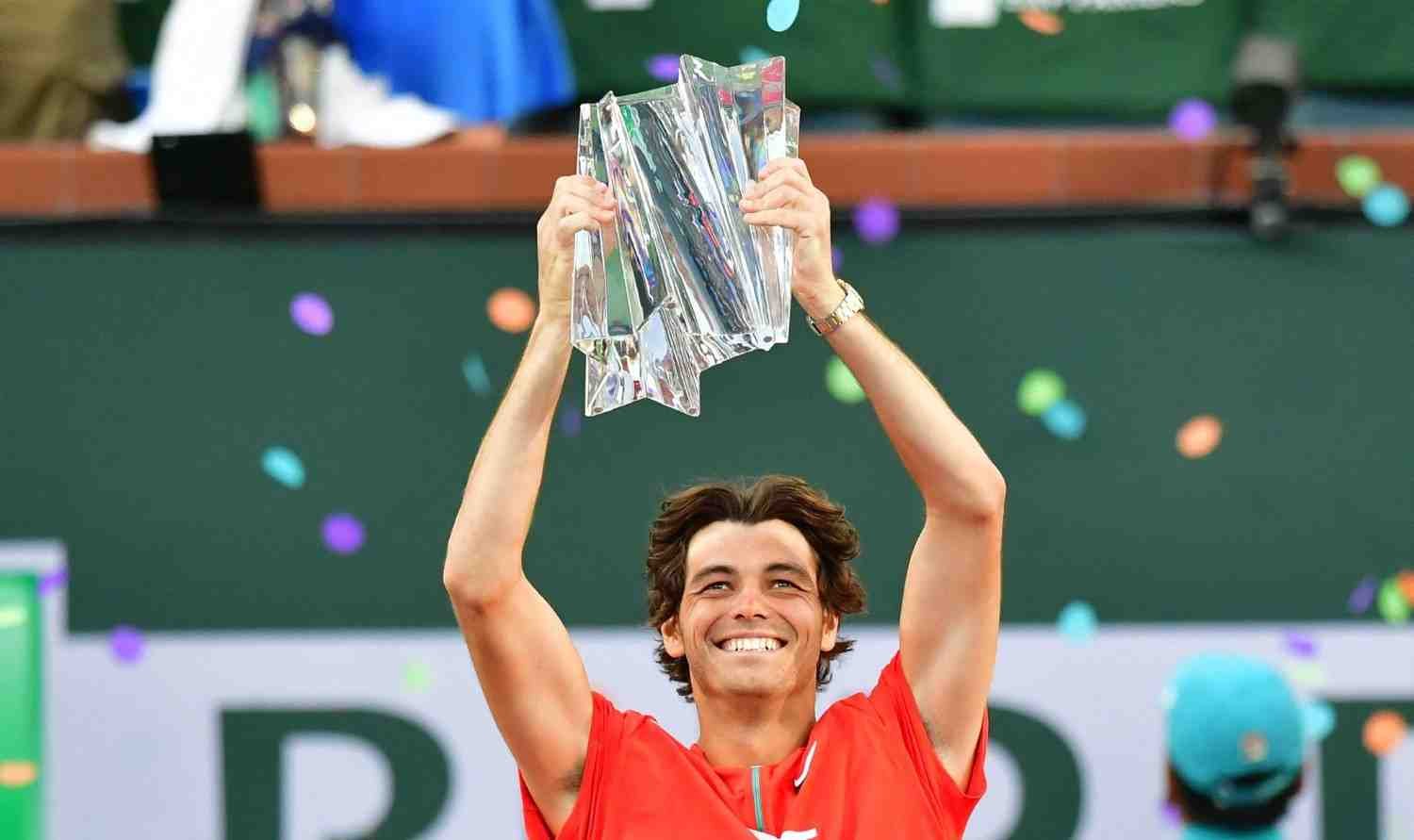
By When it comes to American men’s tennis in the current era, Taylor Fritz has positioned himself as a central figure. His recent Open performance reinforced what many already knew — he is no longer just a contender; he is a serious title threat on hard courts.
Fritz’s game isn’t built on flash. It’s built on structure, power, and relentless first-strike tennis. And when those elements click together, he becomes extremely difficult to break down.
The Foundation: Serve and First Forehand
Fritz’s biggest weapon remains his serve.
On hard courts, he generates:
- High first-serve percentages
- Consistent free points
- Strong body serves under pressure
But the serve alone doesn’t win matches. What makes him dangerous is how efficiently he follows it up. His first forehand after the serve is aggressive and direct, often dictating the rally immediately.
That one-two combination is his blueprint.
When Fritz controls the first three shots of a rally, opponents struggle to regain rhythm.
Baseline Stability
Unlike some power hitters who overhit under pressure, Fritz maintains composure. His backhand is stable, compact, and reliable in crosscourt exchanges.
He doesn’t rush unnecessarily.
Instead, he builds pressure gradually and waits for short balls to attack. That patience is one reason he has become more consistent in ATP 500 and Masters-level tournaments.
Open Performance Breakdown
During this Open campaign:
- He maintained strong serving numbers in tight sets.
- He handled tiebreak pressure with controlled aggression.
- He limited unforced errors compared to previous seasons.
That last point is critical.
Earlier in his career, Fritz could be streaky — brilliant one set, inconsistent the next. Now, he sustains level across matches.
That’s maturity.
Physical and Mental Growth
Physically, Fritz has improved movement efficiency. He’s not the fastest on tour, but his positioning compensates. He anticipates patterns well and cuts angles early.
Mentally, the biggest growth is composure.
He no longer shows visible frustration after missed opportunities. Instead, he resets quickly between points. That emotional stability helps him close matches instead of letting them slip.
The difference between Top 20 and Top 10 often comes down to that detail.
Hard-Court Specialist?
While Fritz competes on all surfaces, hard courts remain his strongest environment.
The quick bounce and predictable surface allow him to:
- Strike early
- Control tempo
- Avoid extended defensive exchanges
On slower surfaces like clay, extended rallies can expose movement limitations. But on fast courts, he’s operating in ideal conditions.
That’s why Open-level events on hard courts are crucial for his ranking success.
Areas That Still Need Work
Let’s not pretend he’s flawless.
To reach consistent Grand Slam semifinal and final appearances, he must improve:
- Return depth against elite servers.
- Defensive transitions when pulled wide.
- Shot variation in longer baseline exchanges.
Against top-tier all-court players, predictability becomes a problem. If opponents neutralize his serve, he needs Plan B.
That’s the next evolution step.
Ranking Impact
An Open title or deep run boosts:
- ATP ranking points
- Seeding positions
- Confidence heading into Masters events
Momentum in tennis is real. Strong performances build belief, and belief wins tight matches.
Fritz’s current trajectory suggests he’s positioning himself for a strong Masters swing.
American Tennis Context
For years, American men’s tennis searched for a consistent leader.
Fritz, along with a handful of peers, has stepped into that role. His steady performances create expectations — and expectations change perception.
But expectations also increase pressure.
Sustaining results under that spotlight is the real challenge.
Final Assessment
Taylor Fritz’s Open performance reinforced three truths:
- His serve remains elite-level dangerous.
- His baseline control is more stable than ever.
- His mental composure has matured significantly.
If he continues refining his return game and adding tactical variation, deeper Grand Slam runs are realistic.
But consistency over a full season is the real test.
One strong Open is important.
Repeated strong performances across Masters and Slams define careers.
Right now, Fritz is trending upward.
The question is whether he can sustain it when the competition intensifies.