


 By
By The spotlight was firmly on Doha as two of the most exciting young stars in women’s tennis delivered strong performances at the Qatar Open. Zheng Qinwen marked her return to competition with a composed and confident victory, while Mirra Andreeva once again proved why she is considered one of the most dangerous rising talents on tour.
Zheng Qinwen: A Statement Return
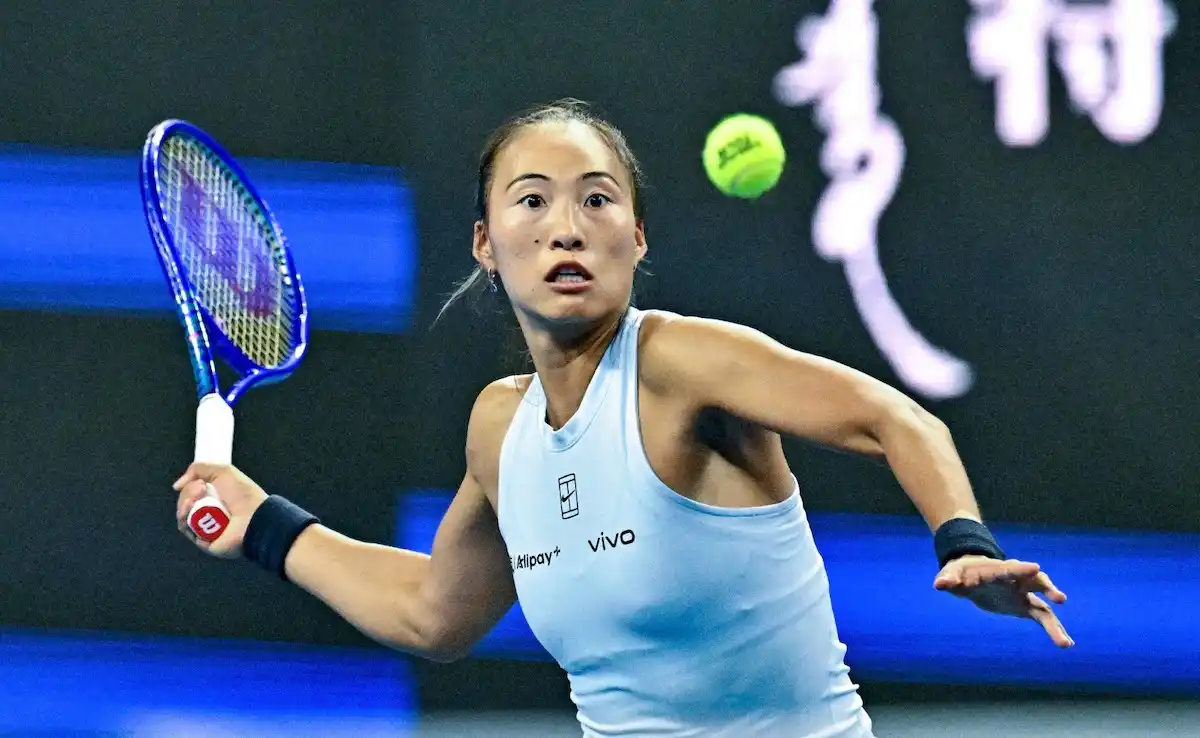
Coming back after a short break, Zheng showed no signs of rust. From the first few games, her intent was clear — aggressive baseline control combined with heavy forehands that pushed her opponent deep behind the baseline. Her serve, often an underrated weapon, was sharp and precise, helping her escape pressure moments.
Zheng’s biggest improvement continues to be her composure. Earlier in her career, momentum swings sometimes disrupted her rhythm. But in Doha, she managed tight situations with maturity. Break points were handled with smart shot selection rather than risky power hitting. That shift in mindset made the difference.
The Chinese star dictated rallies early, taking control with inside-out forehands and forcing shorter replies. Her ability to transition from defense to offense within a single rally stood out. Instead of engaging in extended exchanges, she chose the right moments to accelerate, finishing points decisively at the net.
This win is significant. Not just because it advances her in the tournament, but because it reinforces her status as a legitimate contender at major WTA events this season. If she maintains this level of discipline and physical intensity, deeper runs in big tournaments are not just possible — they are expected.
Mirra Andreeva: Calm, Fearless, Relentless
While Zheng celebrated her return, Mirra Andreeva quietly delivered another clinical performance. Despite her young age, Andreeva plays with tactical intelligence far beyond her years. She doesn’t rush points. She constructs them.
In her match, Andreeva absorbed early pressure before gradually taking control through consistency and sharp angles. Her backhand down the line remains one of her most effective weapons. Opponents struggle to predict it, and when it lands, it often changes the direction of rallies instantly.
What makes Andreeva special is her mental stability. Big points do not visibly shake her. She maintains the same rhythm between points, rarely showing emotional fluctuations. That mental discipline is rare in young players and gives her a competitive edge.
Her movement across the court is another standout quality. She anticipates well, slides effectively on hard courts, and resets quickly after defensive shots. This allows her to extend rallies until her opponent makes an error.
The victory in Doha further strengthens her growing reputation. She is not just participating at elite tournaments — she is competing to win.
A New Era in Women’s Tennis
Matches like these underline a bigger trend in women’s tennis: the rise of a fearless new generation. Players like Zheng and Andreeva are not intimidated by rankings or reputations. They step onto the court expecting to compete at the highest level.
The Qatar Open has become an early-season proving ground for serious contenders. Performances here often signal momentum shifts for the rest of the year. For Zheng, this win could reignite her campaign. For Andreeva, it’s another stepping stone in what looks like a rapid climb toward the top tier.
The intensity, athleticism, and tactical sharpness displayed in Doha highlight how competitive the WTA Tour has become. There are fewer easy matches, and young stars are closing the gap on established names faster than ever.
If this week is any indication, both Zheng Qinwen and Mirra Andreeva are building seasons that could define 2026. The question isn’t whether they belong at the top — it’s how soon they will fully take over.