

 By
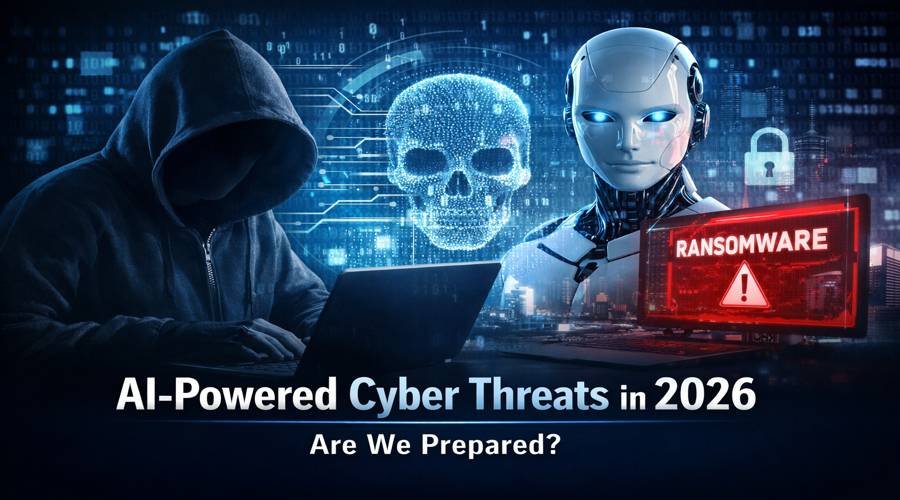
By The Rise of AI-Powered Cyber Threats in 2026: Are We Prepared?
Cybersecurity in 2026 is no longer just about firewalls and antivirus software. The digital battlefield has evolved — and artificial intelligence (AI) is now at the center of it. While AI has empowered organizations with smarter defenses, it has also given cybercriminals advanced tools to launch faster, more convincing, and highly targeted attacks.
The question is no longer if an organization will face a cyberattack — but how sophisticated that attack will be.
AI: A Double-Edged Sword in Cybersecurity
Artificial intelligence has transformed cybersecurity operations. Security teams use AI-driven tools to detect anomalies, monitor unusual login behavior, prevent fraud, and respond to threats in real time. Machine learning models analyze millions of data points within seconds — something impossible for human teams alone.
However, attackers are using the same technology.
Cybercriminals are now leveraging AI to automate phishing campaigns, crack passwords faster, create deepfake identities, and even write malware code. AI-powered bots can scan systems for vulnerabilities 24/7 and adapt their attack methods based on the defenses they encounter.
This has led to a dramatic rise in intelligent cyber threats.
Deepfake Phishing and Social Engineering
One of the most alarming trends in 2026 is AI-generated deepfake phishing. Attackers use AI tools to mimic voices, faces, and writing styles. There have already been reported cases where employees received video calls appearing to be from their CEO, requesting urgent financial transfers — only to later discover it was a deepfake scam.
Traditional phishing emails were often easy to detect due to grammar mistakes or suspicious links. Today’s AI-generated phishing emails are nearly flawless, personalized, and context-aware. They analyze social media activity and public information to craft highly convincing messages.
This makes employee awareness more critical than ever.
Ransomware 3.0: Smarter and More Destructive
Ransomware attacks have evolved significantly. Modern ransomware is AI-enhanced, allowing it to identify the most valuable data within a network before encrypting it. Some variants even disable backup systems automatically.
Attackers are also using “double extortion” tactics — stealing sensitive data before encryption and threatening to publish it if the ransom is not paid.
In 2026, businesses of all sizes — including startups and mid-level companies — are being targeted. Cybercriminals prefer smaller organizations because they often lack advanced security infrastructure.
The Rise of Zero-Trust Architecture
In response to these threats, organizations are shifting toward a Zero-Trust Security Model. The principle is simple: Never trust, always verify.
Instead of assuming internal users are safe, zero-trust systems continuously authenticate users, devices, and access levels. Multi-factor authentication (MFA), biometric verification, and behavioral analytics are becoming standard security layers.
Zero-trust architecture reduces the risk of insider threats and limits damage if credentials are compromised.
Cloud and API Security in Focus
As businesses move rapidly to cloud environments, APIs (Application Programming Interfaces) have become major targets. Misconfigured cloud storage, exposed APIs, and weak authentication mechanisms are common entry points for attackers.
Companies must prioritize:
- Regular cloud security audits
- API monitoring and rate limiting
- Strong encryption standards
- Continuous vulnerability scanning
Ignoring these areas can leave even well-established businesses exposed.
Human Error Still Remains the Weakest Link
Despite advanced technologies, human error continues to be a major cause of breaches. Weak passwords, clicking suspicious links, and improper data handling remain common issues.
Organizations must invest in:
- Regular cybersecurity awareness training
- Simulated phishing exercises
- Clear data protection policies
- Strong password and MFA enforcement
Cybersecurity is not just an IT responsibility — it is a company-wide culture.
Preparing for the Future
The future of cybersecurity will depend on proactive strategies rather than reactive responses. Businesses must combine AI-driven defense systems with human intelligence and structured security frameworks.
Key action steps for 2026 include:
- Implement AI-based threat detection tools
- Adopt Zero-Trust security models
- Secure cloud and API infrastructures
- Conduct regular penetration testing
- Train employees continuously
Cybersecurity is no longer optional — it is foundational to digital survival.
As AI continues to reshape both attack and defense strategies, staying informed and prepared is the only way forward. Organizations that treat cybersecurity as a strategic investment rather than an operational expense will be better equipped to navigate the rapidly evolving threat landscape.
The digital world is becoming smarter — and so are cybercriminals. The real question is: Are we evolving just as fast?