


 By
By Cloud Security: Protecting Data, Applications, and Infrastructure in the Cloud
As organizations continue to move their operations online, cloud computing has become the backbone of modern digital infrastructure. Businesses rely on cloud platforms to store data, run applications, and deliver services to users worldwide. However, this rapid adoption has also increased the risk of cyber threats, data breaches, and unauthorized access. This is where cloud security plays a crucial role.
Cloud security refers to the set of technologies, policies, and practices designed to protect data, applications, and services hosted on cloud platforms. With the rise of remote work, SaaS applications, and digital transformation, ensuring strong cloud security has become a top priority for businesses of all sizes.
Why Cloud Security Matters
Cloud environments store sensitive information such as customer data, financial records, intellectual property, and operational systems. Without proper protection, these assets can become targets for cybercriminals.
A single security breach can lead to:
- Financial losses
- Reputation damage
- Legal penalties
- Loss of customer trust
Because cloud environments are accessible over the internet, organizations must implement strong security strategies to prevent unauthorized access and cyberattacks.
Key Components of Cloud Security
Effective cloud security relies on multiple layers of protection. Some of the most important components include encryption, identity and access management, and continuous monitoring.
1. Cloud Encryption
Encryption is one of the most powerful ways to protect sensitive information in the cloud. It converts readable data into an unreadable format using complex algorithms. Only authorized users with the correct decryption key can access the original information.
There are two major types of cloud encryption:
Data at Rest Encryption – Protects stored data in cloud databases, storage systems, and backups.
Data in Transit Encryption – Protects data as it moves between systems, such as between users and cloud servers.
Encryption ensures that even if attackers gain access to cloud storage, the information remains unreadable and useless to them.
2. Identity and Access Management (IAM)
Identity and Access Management (IAM) controls who can access cloud resources and what actions they can perform. IAM systems authenticate users and enforce permissions based on roles.
Key IAM features include:
- Multi-factor authentication (MFA)
- Role-based access control (RBAC)
- User identity verification
- Access policies
For example, a developer may have access to application code but not financial data, while a finance team member may access billing systems but not infrastructure settings. IAM ensures that users only access what they truly need.
This principle is known as least privilege access, which significantly reduces security risks.
3. Monitoring Cloud Infrastructure
Continuous monitoring is essential to detect and respond to potential threats in real time. Cloud monitoring tools track system activity, user behavior, and infrastructure performance.
Monitoring systems can detect:
- Suspicious login attempts
- Unusual data transfers
- Unauthorized configuration changes
- Malware or intrusion attempts
When abnormal activity is detected, security teams can quickly investigate and mitigate the threat before it causes serious damage.
Many organizations also use automated security tools powered by artificial intelligence to identify vulnerabilities and respond to attacks faster.
Common Cloud Security Challenges
Despite its benefits, cloud security comes with several challenges.
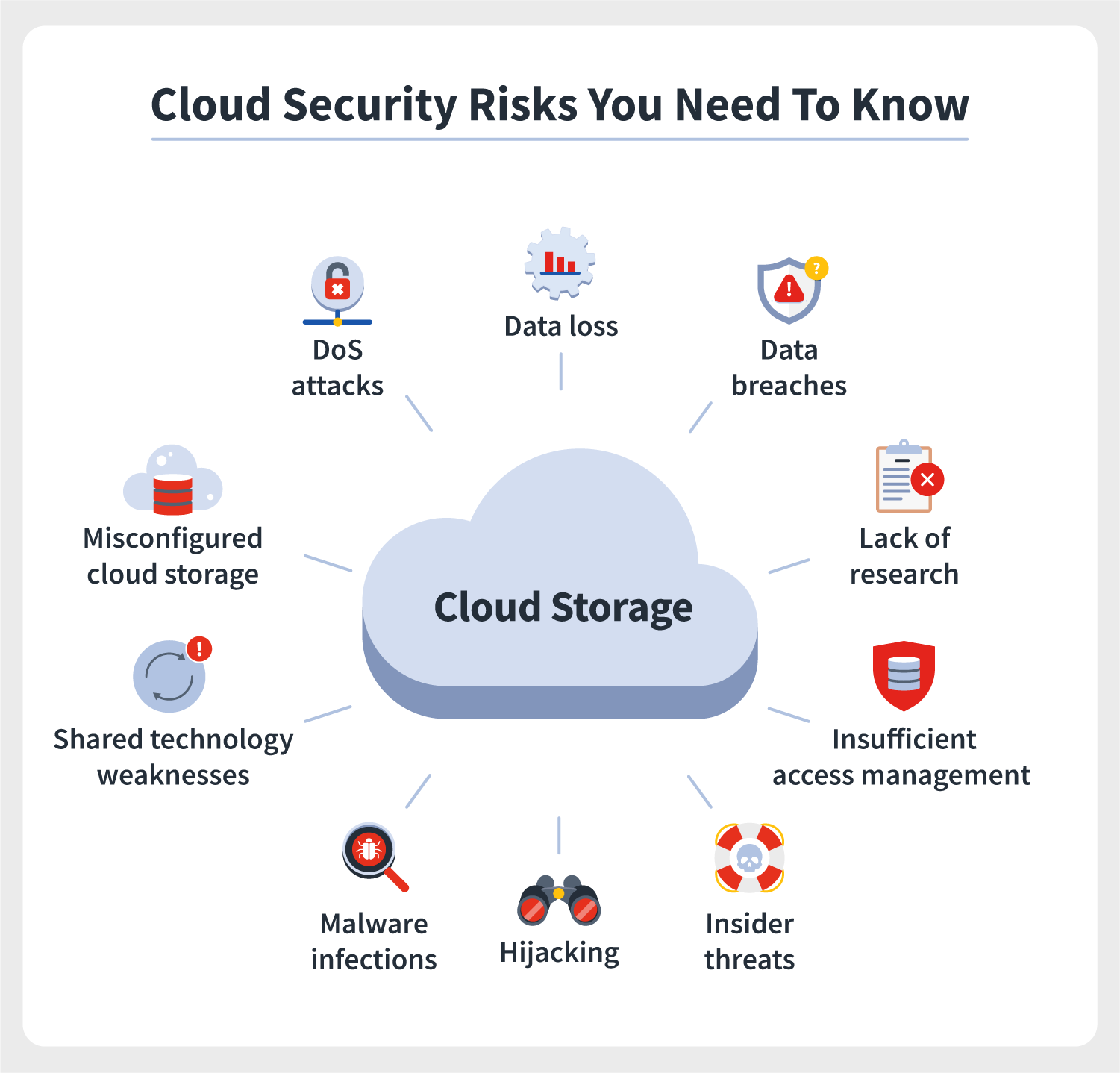
One major challenge is misconfiguration. Incorrect security settings, such as publicly accessible storage buckets or weak access controls, can expose sensitive data.
Another challenge is shared responsibility. In most cloud environments, the cloud provider is responsible for securing the infrastructure, while the customer is responsible for securing their applications, data, and user access.
This means organizations must understand their responsibilities and implement proper security measures.
Best Practices for Strong Cloud Security
To build a secure cloud environment, businesses should follow these best practices:
- Use strong encryption for sensitive data
- Implement multi-factor authentication for all users
- Apply the principle of least privilege access
- Regularly monitor cloud infrastructure for suspicious activity
- Conduct security audits and vulnerability scans
- Keep systems updated with security patches
By combining these strategies, organizations can create a strong defense against cyber threats.
The Future of Cloud Security
As cloud adoption continues to grow, cloud security technologies are also evolving. Emerging trends include AI-powered threat detection, zero trust security models, and automated security monitoring.
In the future, organizations will rely more on intelligent security systems that can detect threats faster and respond automatically.
Ultimately, cloud security is not a one-time setup but an ongoing process. Businesses must continuously update their security strategies to stay ahead of evolving cyber threats.
By investing in strong cloud security practices today, organizations can protect their digital assets, maintain customer trust, and ensure long-term success in the cloud-driven world.