 By
By Key Phrase: drinking water kidney stone prevention
Introduction
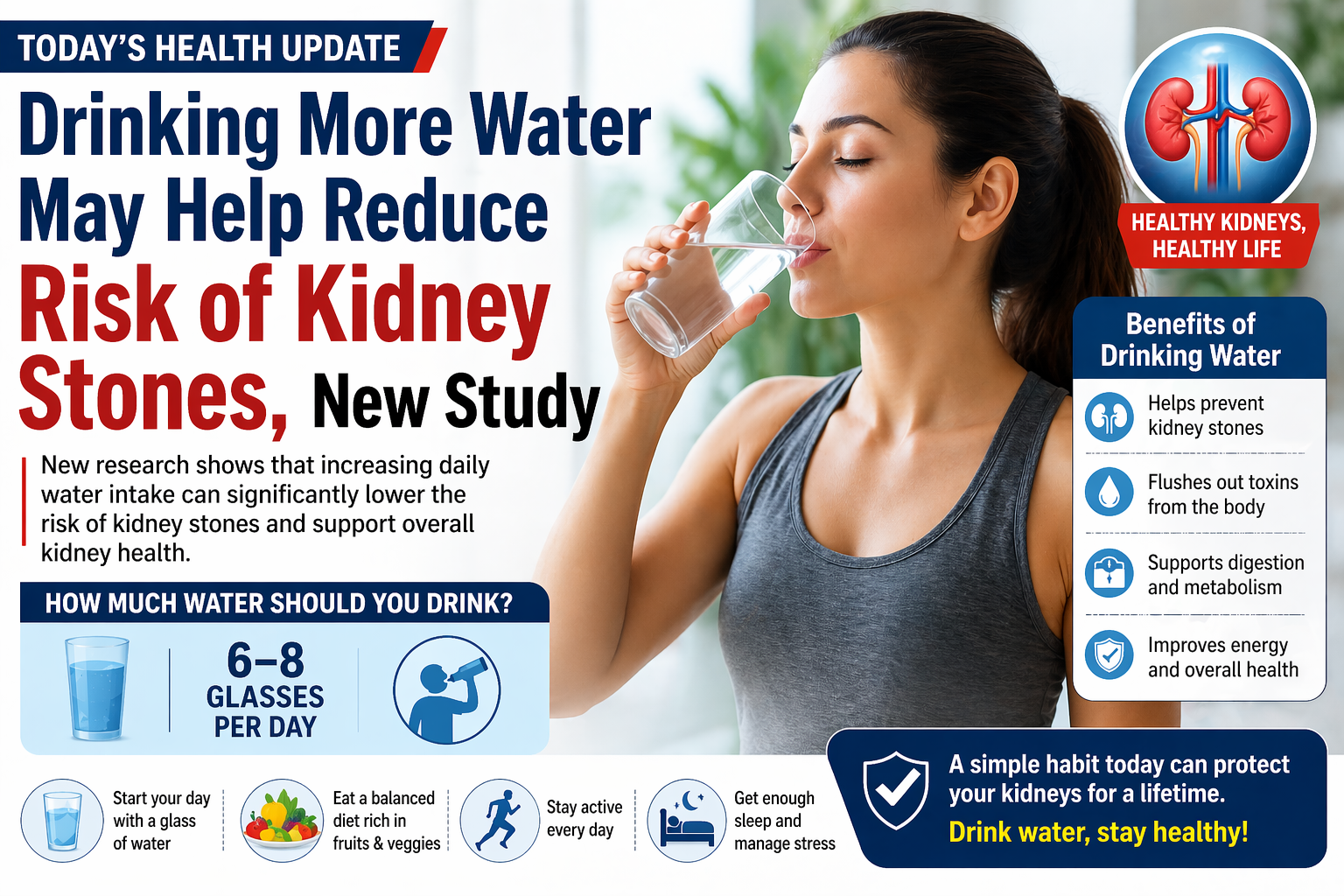
A recent study suggests that increasing daily water intake may significantly reduce the risk of developing kidney stones, a condition that affects millions of people worldwide. With rising temperatures, busy lifestyles, and poor hydration habits, experts say this issue is becoming more common than ever.
This latest health update is a reminder that something as simple as drinking enough water could play a major role in protecting your kidneys.
What the Latest Research Says
According to recent findings, individuals who consume higher amounts of water daily have a lower risk of kidney stone formation.
Researchers observed that:
- Proper hydration helps dilute minerals in urine
- It reduces the chances of crystal formation
- It supports overall kidney function
Kidney stones are formed when minerals like calcium and oxalate become concentrated and crystallize. Drinking more water prevents this concentration, making it harder for stones to develop.
Why Kidney Stones Are a Growing Concern
Kidney stones are not just painful—they can also lead to serious health complications if left untreated.
Common symptoms include:
- Severe pain in the lower back or side
- Nausea and vomiting
- Pain during urination
- Blood in urine
In recent years, doctors have noticed an increase in kidney stone cases, especially among younger adults. Poor hydration, unhealthy diets, and sedentary lifestyles are major contributing factors.
How Water Helps Protect Your Kidneys
Water plays a crucial role in flushing out toxins and maintaining the balance of minerals in the body.
Here’s how it helps:
1. Dilutes Urine
Drinking enough water keeps urine less concentrated, reducing the risk of stone formation.
2. Flushes Out Waste
It helps remove excess salts and minerals before they can build up.
3. Supports Kidney Function
Proper hydration ensures kidneys can filter blood efficiently.
4. Prevents Recurrence
For people who have already had kidney stones, drinking more water can reduce the chances of them coming back.
How Much Water Should You Drink?
Experts generally recommend:
- 6 to 8 glasses of water per day
- More if you live in hot climates or exercise regularly
However, individual needs may vary depending on:
- Body weight
- Physical activity
- Climate conditions
A simple way to check hydration is by observing urine color—light yellow usually indicates proper hydration.
Who Is Most at Risk?
Some people are more likely to develop kidney stones than others.
High-risk groups include:
- People who drink less water
- Individuals with high salt or protein diets
- Those with a family history of kidney stones
- People living in hot regions
- Individuals with obesity or sedentary lifestyles
If you fall into any of these categories, increasing water intake becomes even more important.
Other Ways to Prevent Kidney Stones
While drinking water is essential, experts recommend combining it with other healthy habits:
1. Reduce Salt Intake
High sodium levels can increase calcium in urine.
2. Eat a Balanced Diet
Include fruits, vegetables, and whole grains.
3. Limit Sugary Drinks
Soft drinks and sugary beverages can increase risk.
4. Stay Active
Regular exercise supports overall health.
5. Avoid Excess Protein
Too much animal protein can contribute to stone formation.
What Experts Are Saying
Health professionals emphasize that hydration is one of the easiest and most effective ways to prevent kidney stones.
Doctors recommend:
- Making water your primary beverage
- Drinking consistently throughout the day
- Increasing intake during summer or workouts
They also advise people not to ignore early symptoms and seek medical help if needed.
The Bottom Line
This new study highlights a simple but powerful message:
- Drinking more water can significantly reduce kidney stone risk
- Dehydration is a major contributing factor
- Prevention is easier than treatment
In a world where health issues are becoming more complex, sometimes the best solutions are the simplest.
Conclusion
Kidney stones can be extremely painful and disruptive, but they are often preventable. Staying properly hydrated is one of the most effective steps you can take to protect your kidneys.
As this new research suggests, a small daily habit—like drinking enough water—can make a big difference in long-term health.
So the next time you feel thirsty, remember:
Your body—and your kidneys—depend on it.
Follow Us On Instagram