


 By
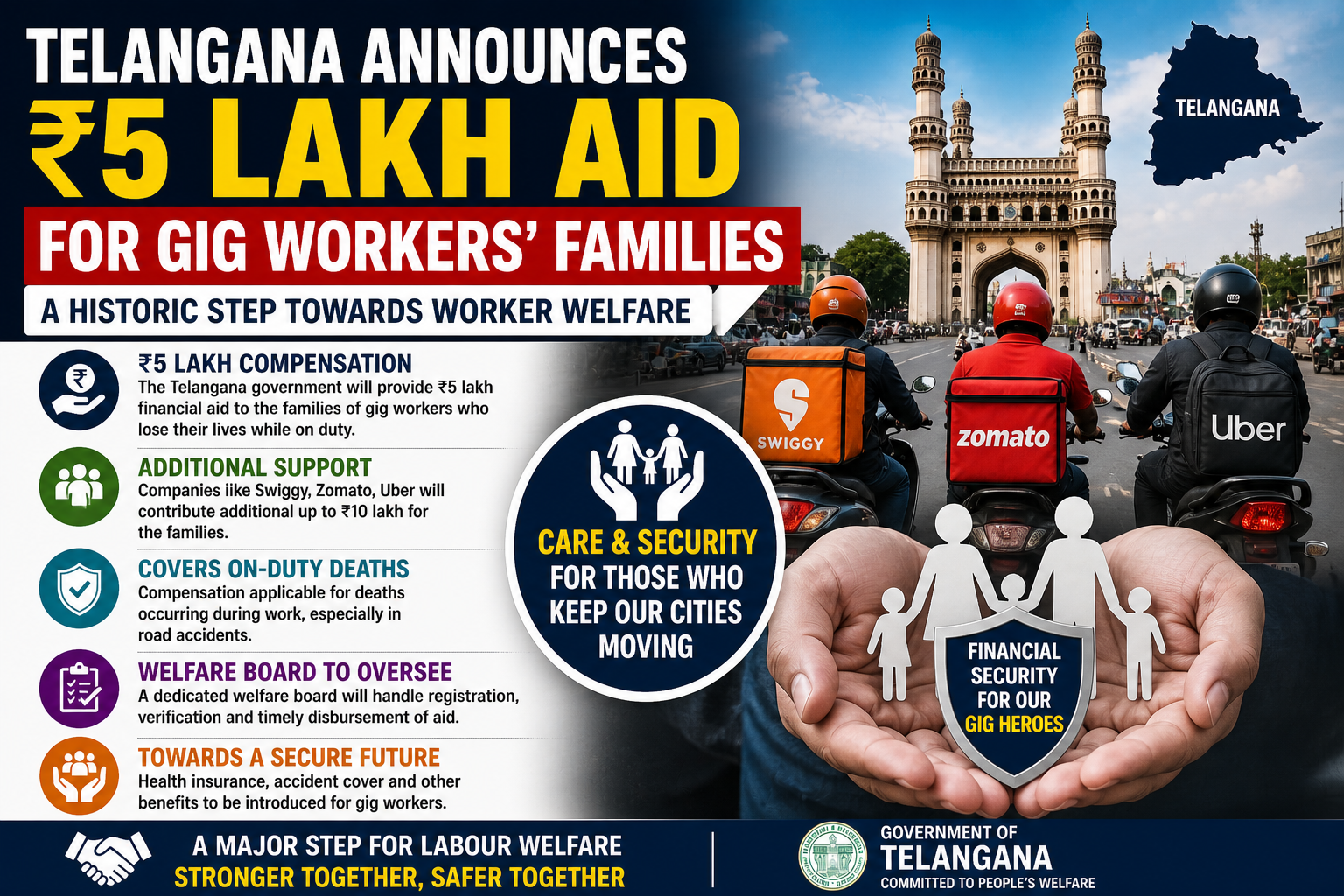
By In a landmark move aimed at strengthening social security for gig workers, the government of Telangana has announced financial assistance of ₹5 lakh to the families of gig workers who lose their lives while on duty. This initiative marks one of the first structured welfare measures in India specifically targeting workers in the rapidly growing gig economy, including delivery partners, ride-hailing drivers, and other app-based service providers.
The decision comes at a time when gig workers have become an integral part of urban economies, especially in cities like Hyderabad, where services such as food delivery, transportation, and logistics are heavily dependent on them. Despite their growing importance, these workers often lack formal employment benefits such as insurance, job security, and social protection. The new scheme aims to address this gap by providing immediate financial relief to families affected by accidental deaths, particularly those occurring during work-related activities.
Under the policy, eligible beneficiaries will receive ₹5 lakh from the state government in the event of the worker’s death while on duty. In addition, major gig platforms are expected to contribute further compensation, which could significantly increase the total support available to affected families. This collaborative approach between the government and private companies reflects a broader effort to create a shared responsibility model for worker welfare.
Officials have indicated that the scheme will be implemented through a dedicated welfare board for gig workers, which will oversee registration, verification, and disbursement processes. Workers will be required to enroll in the system to avail benefits, ensuring that the scheme is both targeted and transparent. The government is also exploring additional measures such as health insurance, accident coverage, and pension-like benefits to provide more comprehensive support.
From a policy perspective, this initiative is being seen as a progressive step toward formalizing aspects of the gig economy. As digital platforms continue to expand, governments across India have been grappling with how to regulate and support this workforce. Telangana’s move could serve as a model for other states, encouraging them to adopt similar frameworks that balance flexibility with security.
The announcement also carries political significance. By introducing a welfare measure for a relatively underserved segment of the workforce, the government is positioning itself as responsive to emerging economic realities. Gig workers, many of whom are young and part of the urban workforce, represent a growing demographic whose concerns are increasingly shaping policy discussions.
Worker unions and advocacy groups have welcomed the decision, noting that it acknowledges the risks faced by gig workers, particularly those involved in delivery and transportation services. Road accidents, long working hours, and lack of safety nets have been persistent issues, and the new scheme provides at least partial protection against such uncertainties. However, some experts argue that while compensation for death is important, there is also a need to address broader concerns such as fair wages, working conditions, and access to healthcare.
Implementation will be a key factor in determining the success of the scheme. Ensuring that all eligible workers are registered, claims are processed efficiently, and funds are disbursed without delay will require robust administrative mechanisms. The government will also need to work closely with gig platforms to ensure compliance and coordination.
In conclusion, the announcement of ₹5 lakh aid for the families of deceased gig workers represents a significant step toward inclusive welfare in Telangana. It highlights the state’s recognition of the changing nature of work and the need to extend social protection to new categories of workers. While challenges remain in implementation and scope, the initiative sets an important precedent for integrating gig workers into the broader framework of labour welfare and social security.