 By
By Published Date: October 13, 2026
Location: New Delhi, India
Category: Indian Politics
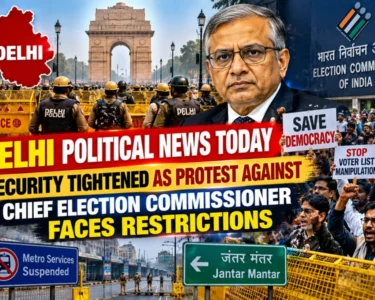
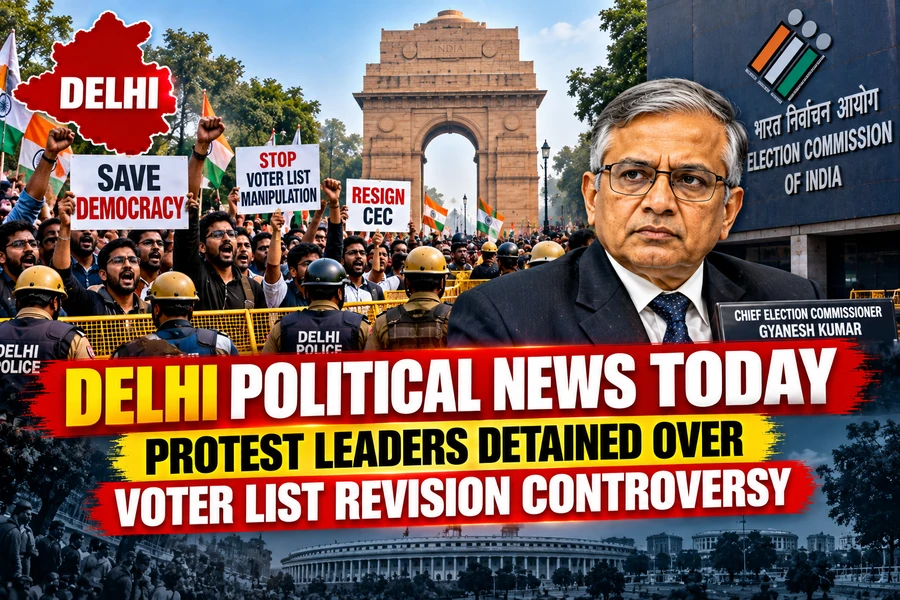
Political tensions continued in New Delhi on October 13 as police detained leaders of the youth-led Cockroach Janta Party (CJP) during a protest demanding the resignation of Chief Election Commissioner Gyanesh Kumar. The demonstration centres on concerns about electoral-roll revisions and questions over voter registration and election transparency.
According to Reuters, protesters returned to Jantar Mantar, a well-known protest location in the capital, after authorities had restricted access to the site. Several movement leaders and volunteers were detained after demonstrators crossed barricades. The latest incident has brought renewed attention to the debate over electoral administration and the right to peaceful protest. <Cite refs={[“turn291752news16″,”turn291752search13”]}/>
Why Are Protesters Demanding Accountability?
The protest is linked to the Special Intensive Revision (SIR) of electoral rolls, a process intended to verify voter records and improve the accuracy of electoral lists.
The Cockroach Janta Party and its supporters have raised concerns about the removal of names from voter lists. Reuters reported that more than 130 million names were removed during the wider revision process, including people recorded as having moved or who could not be traced.
Opposition parties have questioned the process and alleged that some communities could be disproportionately affected. The Election Commission has rejected allegations of political favouritism and has said that voters whose names were incorrectly removed can seek re-enrolment.
These competing positions make transparency, documentation and accessible correction procedures central to the debate. The reported number of removals should not automatically be interpreted as the number of eligible voters wrongly excluded; individual cases and official records are important to establish the actual impact. <Cite refs={[“turn291752news16″,”turn291752news19”]}/>
Police Detain Youth Movement Leaders
Reuters reported that several CJP leaders, including Ashutosh Ranka, Saurav Das and Ajinkya Shinde, were among approximately 20 volunteers detained during the latest demonstration.
The protest took place against a backdrop of restrictions around Jantar Mantar. The location has historically hosted demonstrations on political, social and public-policy issues, making access to the site an important part of the current dispute.
The detentions have added another dimension to the controversy. Protest organisers are seeking greater accountability over voter-list revision, while authorities have imposed restrictions around the demonstration site. The circumstances of each detention and the legal grounds involved should be assessed using official statements and any relevant court proceedings. <Cite refs={[“turn291752news16″,”turn291752search13”]}/>
Opposition Parties Raise Electoral Concerns
The voter-list revision controversy has become a wider political issue, with opposition leaders questioning whether the process is sufficiently transparent and whether eligible citizens could lose their opportunity to vote.
Accurate electoral rolls are essential for conducting elections. At the same time, eligible voters need clear ways to verify their registration, report errors and seek inclusion when their names are missing.
The debate therefore involves two connected responsibilities: maintaining reliable voter records and ensuring that eligible citizens are not unfairly excluded. Independent verification, published procedures and timely resolution of complaints can help address concerns.
Political allegations should be distinguished from established findings. Claims about deliberate manipulation or disproportionate effects require supporting evidence, while responses from election authorities and the outcome of any formal review are also relevant to understanding the dispute.
What Happens Next?
The latest developments could lead to further political demonstrations and legal proceedings. Hindustan Times reported on October 13 that pleas connected to the protesters were scheduled for a Supreme Court hearing on October 15.
That hearing may provide a further opportunity for the court to consider the legal questions raised in the proceedings. The precise scope of the hearing and any subsequent directions should be confirmed through official court records and updated reporting. <Cite refs={[“turn291752search13”]}/>
Meanwhile, the broader debate over electoral-roll revision is likely to continue. Voters concerned about their registration should consult official Election Commission channels and follow the applicable procedures for checking their names or submitting claims.
Why This Issue Matters to Voters
Electoral rolls determine who is registered to participate in elections. A reliable process must account for changes of residence, duplicate records, deaths and other legitimate updates while providing safeguards for eligible voters.
The controversy also highlights the importance of peaceful assembly and clear communication between authorities, political groups and citizens. Public trust depends not only on accurate records but also on whether people can understand the process and obtain remedies when mistakes occur.
Conclusion
The detention of CJP leaders in Delhi on October 13 has intensified an ongoing dispute over voter-list revision, election transparency and protest restrictions. The Election Commission has defended the revision process, while protesters and opposition parties continue to raise concerns about its effects.
The next developments, including the reported October 15 court hearing, may clarify some of the legal questions surrounding the protests. Until then, claims from all sides should be assessed against verified evidence and official records.
Follow Us On Instagram