


 By
By As cyber threats continue to evolve in 2026, network security has become one of the most critical priorities for businesses of every size. From ransomware attacks to data breaches and phishing campaigns, organizations face constant risks targeting internal and external communications. A single vulnerability in a network can expose sensitive customer data, disrupt operations, and damage brand reputation.
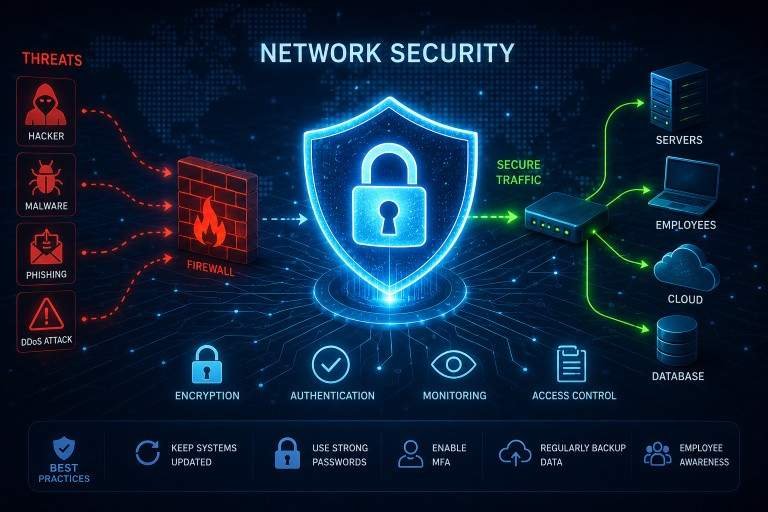
Modern network security is no longer just about installing antivirus software. Businesses now require a layered approach that combines firewalls, intrusion detection systems, secure Wi-Fi, VPNs, and network segmentation to create a resilient defense against cybercriminals.
Why Network Security Matters More Than Ever
Today’s workplaces are highly connected. Employees work remotely, cloud applications are widely used, and devices such as smartphones, laptops, and IoT systems continuously access company networks. While this connectivity improves productivity, it also expands the attack surface for hackers.
Cybercriminals are increasingly using AI-powered attacks, social engineering, and advanced malware to exploit weak security systems. As a result, organizations must proactively secure both incoming and outgoing network traffic.
Strong network security helps businesses:
- Protect confidential customer and business data
- Prevent unauthorized access to systems
- Reduce downtime caused by cyberattacks
- Ensure compliance with data protection regulations
Build customer trust and credibility - Firewalls: The First Line of Defense
- Firewalls remain one of the most essential components of network security. A firewall acts as a barrier between trusted internal networks and untrusted external traffic, filtering malicious requests before they enter the system.
- Modern next-generation firewalls (NGFWs) go beyond traditional filtering by offering deep packet inspection, application awareness, and real-time threat intelligence. Businesses are increasingly adopting cloud-based firewalls to secure hybrid work environments and distributed networks.
- An effective firewall strategy includes:
- Blocking suspicious IP addresses
- Monitoring application traffic
- Preventing unauthorized access
- Detecting unusual network behavior
- When properly configured, firewalls significantly reduce exposure to cyber threats.
- IDS and IPS: Detecting and Preventing Threats
- Intrusion Detection Systems (IDS) and Intrusion Prevention Systems (IPS) are becoming increasingly important in identifying cyberattacks before they cause damage.
An IDS monitors network activity and alerts administrators about suspicious behavior. An IPS goes one step further by automatically blocking harmful traffic in real time. - These technologies help organizations:
- Detect malware and ransomware attempts
- Identify unusual user behavior
- Stop brute-force login attacks
- Monitor suspicious network traffic patterns
- AI-driven IDS/IPS solutions are now trending because they can analyze massive amounts of traffic data and detect anomalies faster than traditional security systems.
- Network Segmentation Reduces Risk
- One of the most effective modern security practices is network segmentation. Instead of allowing unrestricted communication across all systems, segmentation divides a network into smaller isolated sections.
- This approach limits the spread of cyberattacks. For example, if one department’s system becomes infected with malware, segmentation prevents the attack from moving laterally across the entire organization.
Businesses commonly separate: - Finance systems
- HR databases
- Guest Wi-Fi networks
- Cloud infrastructure
- Production environments
- Zero Trust Architecture is also gaining popularity, where no device or user is automatically trusted, even inside the network perimeter.
- Secure Wi-Fi Is Essential for Hybrid Work
- With remote and hybrid work becoming standard, secure Wi-Fi networks are more important than ever. Weak wireless security can allow attackers to intercept data or gain unauthorized network access.
- Organizations should implement:
- WPA3 encryption for wireless networks
- Strong password policies
- Multi-factor authentication (MFA)
- Separate guest networks
- Regular firmware updates for routers and access points
Public Wi-Fi remains a major security concern for remote employees. Businesses should educate teams about safe browsing practices and secure connection methods. - VPNs Continue to Protect Remote Access
- Virtual Private Networks (VPNs) are still widely used to secure remote access by encrypting internet traffic between users and company systems.
- VPNs help protect sensitive communications from cybercriminals, especially when employees work from public networks or home connections. Modern VPN solutions now integrate with Zero Trust security frameworks for stronger identity verification and access control.
- However, experts recommend combining VPNs with MFA and endpoint security tools for maximum protection.
- The Future of Network Security
- In 2026, network security is increasingly driven by automation and artificial intelligence. Security teams are using AI-powered monitoring tools to identify threats faster, automate responses, and improve overall visibility across networks.
- Cloud security, Zero Trust models, and real-time analytics are becoming industry standards. Businesses that fail to modernize their network security strategies risk facing severe financial and reputational consequences.
Ultimately, network security is not a one-time investment but an ongoing process. Organizations must continuously monitor systems, update security policies, and train employees to stay ahead of evolving cyber threats. - By combining firewalls, IDS/IPS, secure Wi-Fi, VPNs, and network segmentation, businesses can build a stronger and safer digital environment for the future.