


 By
By Severe heatwave conditions continue to affect large parts of Telangana, placing growing pressure on public health systems, civic infrastructure, water management, and administrative preparedness. The India Meteorological Department (IMD) has issued repeated heatwave alerts for several districts as temperatures remain dangerously high across the state.
According to weather officials, multiple districts in Telangana are witnessing temperatures crossing 43°C, while some northern and eastern regions are nearing 46°C to 47°C under severe heatwave conditions. Hyderabad has also continued experiencing intense daytime heat, with temperatures hovering around 41°C to 43°C in many areas.
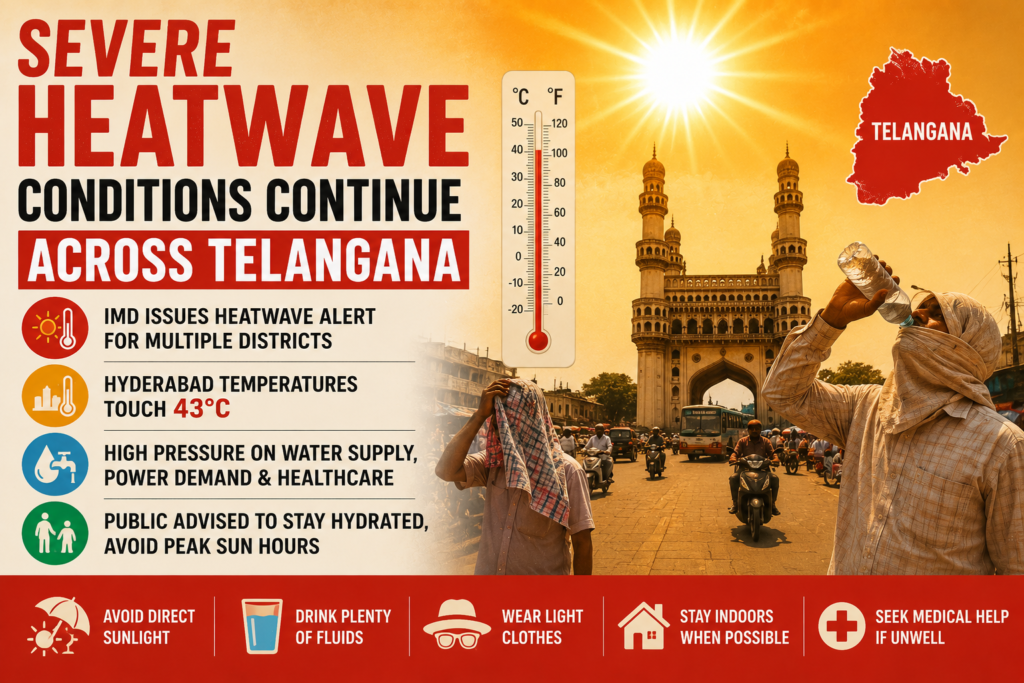
The IMD’s Hyderabad Meteorological Centre warned that heatwave conditions are likely to persist across districts including Adilabad, Karimnagar, Khammam, Warangal, Nalgonda, Suryapet, Hanamkonda, and several others over the coming days. Yellow alerts were issued for multiple districts, while authorities advised residents to remain cautious during peak afternoon hours.
The ongoing heatwave has significantly increased governance pressure on the Telangana administration. Officials from health, electricity, municipal, and disaster management departments have been instructed to maintain emergency readiness and coordinate relief measures. Public awareness campaigns advising citizens to avoid unnecessary outdoor exposure, stay hydrated, and monitor vulnerable individuals have also intensified.
Healthcare systems across the state are witnessing rising concerns related to dehydration, heat exhaustion, and heatstroke cases. Doctors have warned that prolonged exposure to extreme temperatures can become dangerous, especially for children, elderly citizens, outdoor laborers, and people with chronic illnesses. Hospitals and primary health centers have reportedly been asked to remain prepared for heat-related emergencies.
The heatwave has also placed enormous pressure on electricity demand across Telangana. Increased use of air conditioners, coolers, fans, and refrigeration systems has led to a sharp rise in power consumption. Energy officials are closely monitoring electricity supply systems to avoid outages during peak demand periods, especially in urban centers like Hyderabad.
Water management has emerged as another major challenge. Municipal authorities are working to maintain uninterrupted drinking water supply as rising temperatures increase consumption across both urban and rural areas. Concerns over groundwater depletion and reservoir stress have also triggered discussions around long-term water conservation measures.
Political reactions have also intensified around the heatwave situation. The ruling Indian National Congress government has highlighted preparedness measures and emergency coordination efforts, while opposition parties including the Bharatiya Janata Party and Bharat Rashtra Samithi have questioned whether enough has been done to protect vulnerable populations and strengthen infrastructure resilience.
Urban infrastructure systems are increasingly being tested under the prolonged extreme weather conditions. Experts note that rapidly expanding cities like Hyderabad face additional risks because of rising concrete expansion, shrinking green cover, and increasing urban heat island effects. Environmental planners have stressed the need for sustainable urban development, tree plantation drives, climate-resilient infrastructure, and better heat action plans. (arXiv)
The heatwave is also affecting economic activity and outdoor labor sectors. Construction workers, delivery personnel, transport workers, farmers, and street vendors remain among the most vulnerable groups directly exposed to high temperatures. Labor welfare and workplace safety concerns are therefore becoming an important part of the broader public discussion.
Experts believe climate change and changing seasonal weather patterns are contributing to the growing frequency and intensity of heatwaves across Telangana and India. Long-term solutions such as urban cooling systems, expanded green zones, water conservation programs, and improved public health preparedness are increasingly being viewed as essential governance priorities.
In conclusion, the continuing heatwave across Telangana has evolved into both a public safety challenge and a major governance test. As temperatures remain extremely high across several districts, the state administration faces mounting pressure to ensure effective healthcare response, stable electricity supply, water security, and public awareness management. Heatwave preparedness is now becoming a central issue in Telangana’s broader discussions on urban resilience, climate adaptation, and governance efficiency.