


 By
By Database Security in 2026: Protecting Your Most Valuable Digital Asset
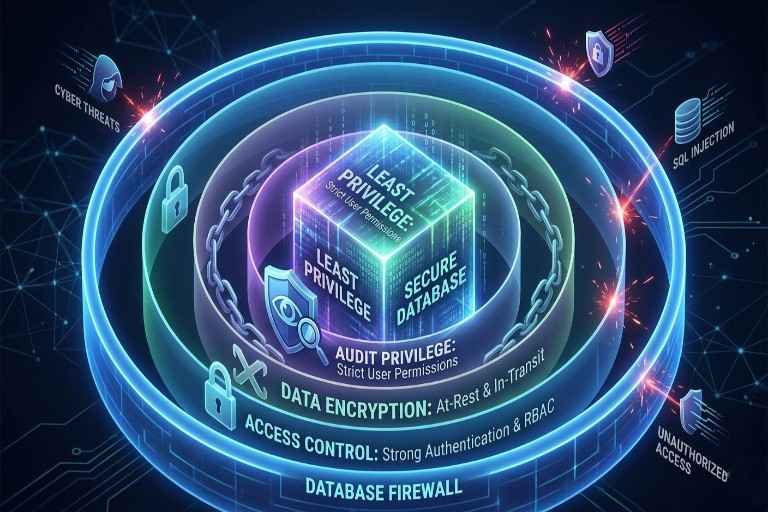
Data has become one of the most valuable assets for modern organizations. From customer information and financial records to business intelligence and operational data, databases store the critical information that drives daily operations. As cyber threats continue to evolve, protecting databases from unauthorized access, theft, and corruption has become a top cybersecurity priority in 2026.
Database security refers to the collection of tools, policies, and best practices used to safeguard database systems and the information they contain. Whether organizations use traditional relational databases, cloud-native databases, or NoSQL platforms, robust security measures are essential to prevent data breaches and maintain business continuity.
Why Database Security Is More Important Than Ever
The growing volume of digital information has made databases a prime target for cybercriminals. Attackers often seek access to sensitive customer data, login credentials, payment information, and proprietary business records. A successful database breach can result in financial losses, regulatory penalties, legal consequences, and significant reputational damage.
In today’s cloud-first environment, databases are increasingly accessible through web applications, APIs, and distributed systems. While this improves business efficiency, it also creates new attack vectors that organizations must secure proactively.
Modern database security is no longer limited to protecting the database server itself. It involves securing data throughout its lifecycle, from storage and access to backup and recovery.
SQL Injection Prevention: Defending Against a Persistent Threat
Despite advancements in cybersecurity, SQL injection remains one of the most common and dangerous attacks targeting databases. SQL injection occurs when attackers manipulate application inputs to execute unauthorized database commands.
A successful SQL injection attack can allow attackers to:
Bypass authentication systems.
View sensitive information.
Modify database records.
Delete critical data.
Gain administrative access.
To prevent SQL injection attacks, organizations should:
- Use parameterized queries and prepared statements.
- Validate and sanitize all user inputs.
- Implement web application firewalls (WAFs).
- Follow secure coding practices during application development.
- Conduct regular security testing and code reviews.
By eliminating vulnerabilities at the application layer, organizations can significantly reduce database-related security risks.
Role-Based Access Control (RBAC): Limiting User Permissions
One of the most effective database security strategies is ensuring that users only have access to the information necessary for their responsibilities. This principle is known as the Principle of Least Privilege.
Role-Based Access Control (RBAC) allows administrators to assign permissions based on job roles rather than individual users.
For example:
Finance departments access financial records relevant to their duties.
Database administrators receive full management privileges.
Developers receive limited access to development environments.
Customer support teams access only customer-related information.
RBAC offers several benefits:
- Reduces insider threats.
- Minimizes accidental data exposure.
- Simplifies access management.
- Improves compliance with regulatory requirements.
Regular access reviews are essential to ensure permissions remain appropriate as employees change roles or leave the organization.
Encryption of Data at Rest: Protecting Stored Information
Even if attackers gain physical or logical access to a database, encryption can prevent them from reading sensitive information. Data encryption at rest has become a standard requirement for modern database security.
Encryption transforms readable data into an unreadable format that can only be decrypted using authorized keys.
Key benefits include:
- Protection against unauthorized access.
- Enhanced compliance with data protection regulations.
- Reduced impact of stolen storage devices or compromised servers.
- Improved customer trust and confidence.
Organizations should implement strong encryption algorithms and secure key management practices. Many cloud database platforms now offer built-in encryption features, making it easier to protect sensitive information without impacting performance.
Emerging Database Security Trends in 2026
As technology evolves, database security continues to advance. Several key trends are shaping the future of database protection:
AI-Powered Threat Detection
Artificial intelligence helps identify unusual database activities, detect insider threats, and respond to attacks more quickly than traditional monitoring systems.
Cloud Database Security
With more organizations migrating workloads to the cloud, securing managed database services has become a critical focus area. Cloud-native security controls, identity management, and encryption are essential for protecting hosted databases.
Zero Trust Database Access
Zero Trust principles require continuous verification of users, devices, and applications before granting database access. This reduces the risk of unauthorized access even if credentials are compromised.
Automated Compliance Monitoring
Organizations are increasingly using automation tools to monitor compliance with regulations such as GDPR, HIPAA, and PCI DSS while maintaining database security standards.