 By
By AI PCs Are Entering a New Era of Computing
The computer industry is going through an important transformation in 2026. Traditional improvements such as faster processors, better graphics and larger storage remain important, but artificial intelligence is becoming one of the biggest forces shaping new laptops and desktops.
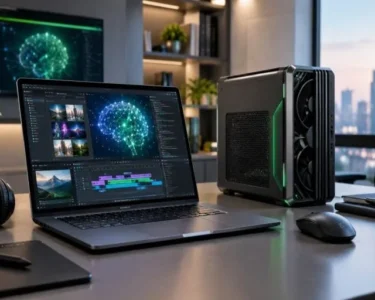
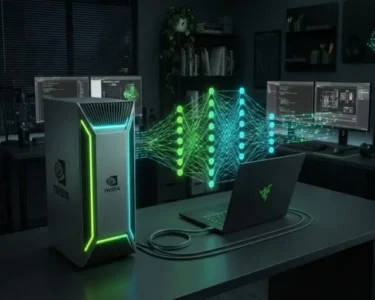
The latest trend is moving beyond computers that simply run AI applications. Manufacturers and software companies are increasingly developing PCs capable of running AI models and agents locally. These systems are designed to understand tasks, process information and potentially perform multiple steps with less dependence on cloud-based computing.
From AI PCs to Agentic PCs
One of the most notable developments this month comes from AMD. On September 24, AMD announced that Perplexity’s Portable Computer can run on supported Windows PCs powered by Ryzen AI Max processors. According to AMD, users can run local AI tasks and recurring workflows on their own hardware.
This development highlights the growing idea of agentic computing. Instead of using AI only to answer questions or generate text, an AI agent can potentially coordinate multiple actions to complete a larger task.
For computer users, this could eventually mean asking a PC to organize files, research information, prepare documents or assist with software workflows rather than manually completing every individual step.
Local AI Could Become a Major PC Feature
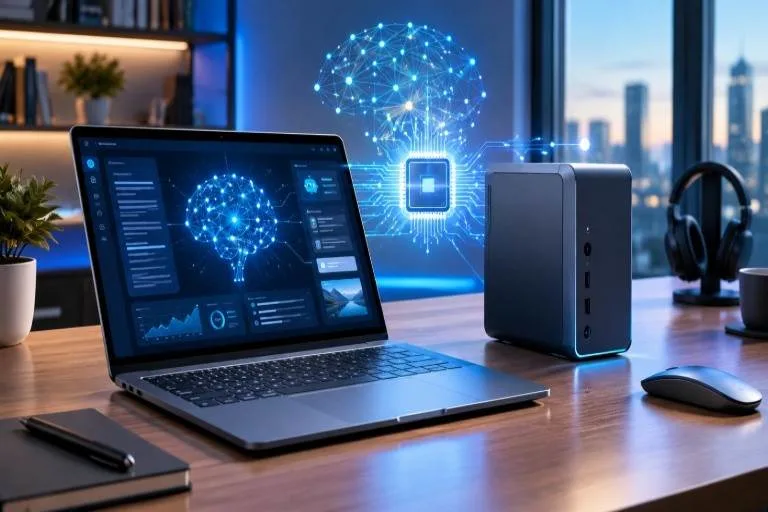
Another important trend is the move toward local AI processing. Modern AI PCs increasingly include dedicated neural processing units, or NPUs, designed specifically for AI workloads.
Local processing can be useful for applications where responsiveness, privacy or reduced dependence on internet connectivity matters. Microsoft is also continuing to expand AI capabilities within Windows. Its September 22 Windows 11 26H1 update includes updated AI components, although Microsoft notes that these components apply specifically to compatible Copilot+ PCs.
This means the operating system itself is becoming an increasingly important part of the AI-PC experience.
Processors Are Being Designed for AI Workloads
The processor market is also adapting to this shift. AMD has been highlighting how its Ryzen AI Max processors can support local AI workloads, while the company is also discussing how its CPU architecture is evolving for agentic AI applications.
This reflects a broader change in computer design. Future laptops may not be judged only by traditional CPU performance. Buyers could increasingly look at NPU capabilities, AI software compatibility, memory capacity, graphics performance and power efficiency when selecting a computer.
AI Is Also Affecting Professional Computers
The AI-PC trend is not limited to everyday laptops. Professional workstations are also being designed around local AI capabilities.
At Autodesk University 2026, AMD highlighted the HP ZBook Ultra G3a mobile workstation, powered by Ryzen AI Max PRO 400 Series processors. The system is aimed at professional design and engineering workflows, showing how AI processing is becoming relevant to demanding creative and technical applications.
For designers, engineers, developers and content creators, local AI could eventually become part of everyday professional workflows rather than an optional feature.
PC Prices and Memory Supply Remain Important
Another factor influencing the computer market is memory availability. Industry reports indicate that tight memory supplies are affecting PC configurations and prices, while strong demand from AI infrastructure is adding pressure to the memory market. Some manufacturers are responding by emphasizing higher-priced, AI-capable machines.
This creates an interesting situation for consumers. Computers are becoming more powerful and AI-focused, but hardware costs and component availability may influence how quickly advanced features reach mainstream buyers.
What Can We Expect From Future Computers?
The direction of the computer industry is becoming increasingly clear: AI is moving from an application feature to a core computing capability.
Future PCs are likely to combine powerful CPUs, GPUs and NPUs with operating systems that can understand user intent and coordinate AI-powered tasks. Some workloads will continue to rely on cloud services, while others may increasingly run directly on the computer.
For consumers, this could eventually make computers more helpful and capable in everyday activities. For businesses and professionals, local AI could create new opportunities for productivity, automation and data processing.
The biggest computer trend in 2026 is therefore not simply about buying a faster laptop or desktop. It is about a fundamental change in what computers are designed to do. As AI hardware and software continue to develop, the traditional PC is gradually becoming a platform capable of working alongside users in a much more active way.