

 By
The Future of AI Computers in 2027: How Agentic AI PCs Are Changing the Way We Work
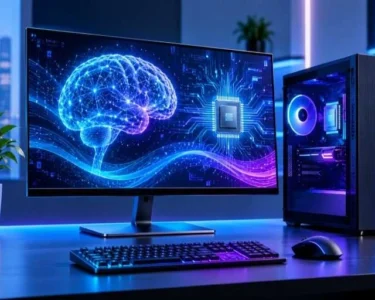
The computer industry is entering a new phase as artificial intelligence becomes more deeply integrated into personal computers. Traditional computers are primarily designed to follow user instructions, run applications and process information. However, a new generation of AI-powered computers is introducing something more advanced: the ability to understand tasks, make decisions and assist users with multiple activities.
This development is known as agentic AI computing. Instead of simply responding to individual questions, AI agents can help complete multi-step tasks with less manual intervention.
Technology companies such as NVIDIA, Microsoft, Intel and AMD are investing in this emerging area, making AI-powered PCs one of the most interesting computer technology trends heading into 2027.
1. What Are Agentic AI Computers?
Agentic AI computers are systems designed to support AI agents that can understand instructions and perform multiple connected tasks.
For example, a user might ask an AI assistant to research a topic, organise information, prepare a report and create a presentation. Rather than requiring separate instructions for every small activity, an AI agent can potentially manage several steps as part of one workflow.
These capabilities can make computers more useful for professionals, students, developers and businesses.
However, users should still review important actions and results, especially when an AI agent works with personal files or business information.
2. NVIDIA Is Bringing Advanced AI Hardware to PCs
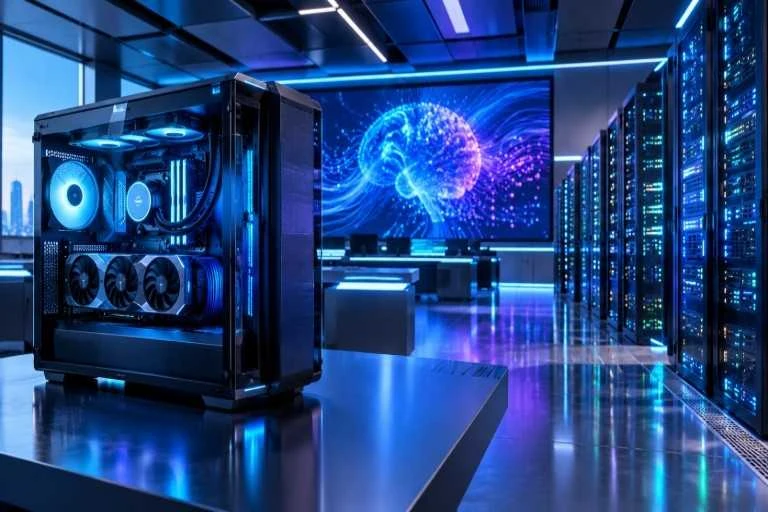
One major development is NVIDIA’s RTX Spark platform, designed to bring powerful AI computing capabilities to Windows laptops and desktop computers.
The platform combines CPU and GPU technology with unified memory to support demanding AI workloads.
NVIDIA announced its collaboration with Microsoft to develop computers capable of supporting local AI agents and advanced creative applications.
The technology is intended to help developers, creators and professionals run larger AI models directly on compatible computers instead of depending entirely on cloud-based services.
This development could increase competition in the personal computer market and create new opportunities for hardware manufacturers.
3. AI Agents Could Change Everyday Computer Usage
One of the most interesting possibilities is the integration of AI agents into everyday computer activities.
In the future, users may be able to ask their computers to organise documents, analyse spreadsheets, research information, summarise emails and assist with software development.
For example, business professionals could use AI agents to prepare reports, while developers could receive assistance with debugging and code analysis.
Students may also benefit from AI-powered learning tools that help explain complex subjects and organise study materials.
The main advantage is the possibility of reducing repetitive work and allowing people to focus on more important activities.
4. Local AI Processing Is Becoming Important
Another important development is local AI computing.
Traditionally, many AI applications rely on cloud servers to process information. However, modern AI computers are increasingly designed to run certain models directly on the device.
This approach offers several potential benefits:
- Privacy: Certain information can remain on the user’s computer.
- Speed: Local processing can reduce delays for supported tasks.
- Offline capabilities: Some AI features can work without continuous internet access.
- Reduced cloud dependence: Users can perform selected AI operations using their own hardware.
However, larger AI models and complex workloads may still require powerful cloud infrastructure.
5. New Processors Are Driving the AI PC Revolution
Processor manufacturers are developing new hardware to support increasingly demanding AI applications.
Intel, AMD and NVIDIA are competing to deliver improved computing performance, graphics capabilities and AI acceleration.
Modern AI PCs increasingly combine three important components:
- CPU for general computing operations.
- GPU for graphics and parallel processing.
- NPU for specialised AI workloads.
This combination allows computers to distribute different tasks across specialised hardware.
As AI applications become more advanced, memory capacity and processor efficiency will also become increasingly important.
6. The Challenge: Cost, Security and Hardware Availability
Although AI computers offer exciting possibilities, there are challenges that manufacturers must address.
Powerful AI processors, high-capacity memory and advanced components can increase computer prices. The growing demand for AI hardware is also putting pressure on semiconductor manufacturing and advanced chip packaging.
A November 6, 2026 Reuters report highlighted how advanced semiconductor packaging is becoming an important bottleneck as AI chip demand increases. Reuters
Security is another major concern. AI agents that can access files and applications must operate with appropriate permissions and safeguards.
Manufacturers will need to balance performance, affordability, privacy and security to make these computers suitable for everyday users.
7. What Can We Expect in 2027?
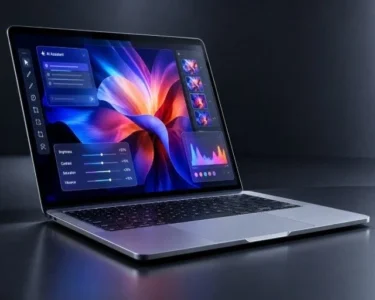
The coming year could bring more AI-powered laptops, desktop workstations and intelligent software applications.
We may see computers capable of managing more complex workflows, assisting with creative projects and providing personalised productivity support.
For businesses, AI PCs could improve workplace automation. For individual users, they could make everyday computing simpler and more interactive.
The success of these developments will depend on practical benefits, software compatibility, pricing and user trust.