 By
By IoT Security in 2026: Protecting Connected Devices in an Always-On World
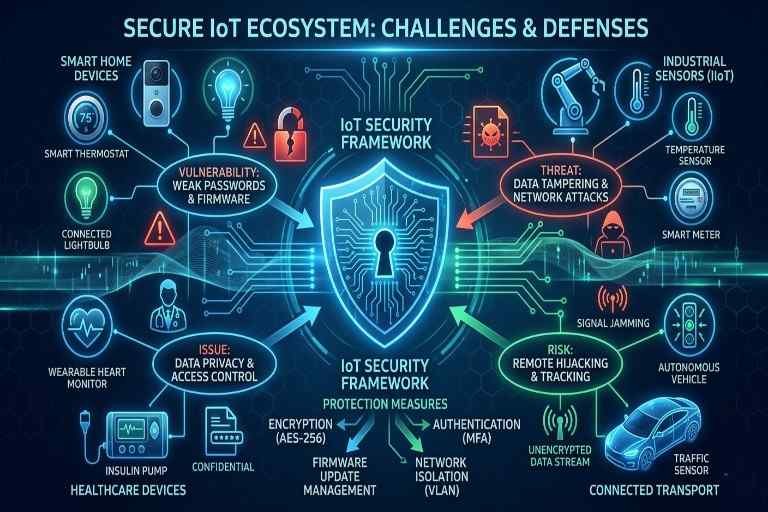
The Internet of Things (IoT) has revolutionized the way people live, work, and interact with technology. From smart home devices and wearable fitness trackers to connected industrial machines and healthcare equipment, IoT technology is transforming industries and everyday experiences. As billions of devices continue to connect to the internet, ensuring their security has become one of the most significant cybersecurity challenges of 2026.
IoT Security focuses on protecting internet-connected devices, networks, applications, and the data they generate from cyber threats. Since IoT devices often operate with minimal human interaction and are continuously connected, they present unique security risks that require specialized protection strategies.
Why IoT Security Matters More Than Ever
The number of IoT devices worldwide continues to grow at an unprecedented rate. Smart thermostats, surveillance cameras, wearable health monitors, industrial sensors, and connected vehicles all contribute to a highly interconnected digital ecosystem.
While these devices improve efficiency, convenience, and automation, they also create additional entry points for cybercriminals. Many IoT devices collect sensitive personal or operational data, making them attractive targets for hackers.
A compromised IoT device can lead to:
Device hijacking and botnet participation.
Unauthorized access to networks.
Data theft and privacy breaches.
Operational disruptions.
Ransomware attacks.
As organizations and consumers become increasingly dependent on connected technologies, securing IoT ecosystems has become essential for maintaining trust and operational resilience.
Securing Smart Home Devices
Smart home technology continues to gain popularity in 2026. Devices such as smart speakers, security cameras, video doorbells, smart locks, thermostats, and connected appliances make homes more convenient and efficient.
However, many smart home devices have limited built-in security controls, making them potential targets for attackers.
To improve smart home security, users should:
Disable unnecessary device features and remote access settings.
Change default usernames and passwords immediately.
Enable Multi-Factor Authentication (MFA) where available.
Keep firmware and software updated.
Use strong Wi-Fi encryption such as WPA3.
Manufacturers are increasingly adopting secure-by-design principles, but consumers still play a critical role in maintaining device security.
Protecting Wearable Technology
Wearable devices have evolved far beyond simple fitness trackers. Modern smartwatches, health monitoring devices, and connected medical wearables collect vast amounts of sensitive personal information, including heart rate data, activity levels, sleep patterns, and location information.
Because wearable devices often sync with smartphones and cloud platforms, attackers may attempt to intercept or exploit this data.
Effective wearable security measures include:
- Encrypting stored and transmitted data.
- Installing software updates regularly.
- Reviewing application permissions carefully.
- Using trusted mobile applications and cloud services.
- Securing linked user accounts with strong authentication.
As healthcare and wellness technologies continue to expand, wearable security will remain a key focus area for both manufacturers and users.
Securing Connected Industrial Machines
Industrial Internet of Things (IIoT) technology is transforming manufacturing, logistics, energy production, and infrastructure management. Connected sensors, machines, and automation systems provide real-time operational insights and improve efficiency.
However, cyberattacks against industrial IoT environments can have severe consequences, including equipment damage, production downtime, and safety risks.
Organizations should implement:
- Network segmentation between IT and operational technology (OT) systems.
- Strong authentication and access controls.
- Continuous monitoring of industrial networks.
- Regular vulnerability assessments.
- Secure firmware management processes.
Protecting connected industrial machines is critical for maintaining operational continuity and preventing disruptions to essential business functions.
Emerging IoT Security Trends in 2026
As IoT ecosystems continue to expand, several emerging trends are shaping the future of IoT security.
AI-Powered Threat Detection
Artificial intelligence helps identify unusual device behavior, detect attacks in real time, and automate threat response activities.
Zero Trust for IoT
Organizations are increasingly applying Zero Trust principles to IoT environments, requiring continuous verification of devices before granting access to networks and resources.
Secure-by-Design Development
Manufacturers are integrating security controls into device design from the earliest stages of development rather than adding them after deployment.
Regulatory Compliance and Standards
Governments and industry regulators are introducing stricter IoT security requirements to improve consumer protection and reduce cybersecurity risks.
Best Practices for Strengthening IoT Security
Organizations and consumers can enhance IoT security by following several essential practices:
- Replace default credentials immediately.
- Enable encryption for data transmission and storage.
- Update device firmware regularly.
- Segment IoT devices from critical business networks.
- Monitor device activity continuously.
- Remove unused or unsupported devices.
- Conduct regular security assessments.
A proactive security approach significantly reduces vulnerabilities and helps protect connected environments.