

 By
By Mobile Security in 2026: Protecting Smartphones, Tablets, and Apps from Modern Cyber Threats
Smartphones and tablets have become indispensable tools for both personal and professional use. From mobile banking and online shopping to remote work and healthcare applications, these devices store vast amounts of sensitive information. As mobile usage continues to grow, cybercriminals are increasingly targeting mobile devices with sophisticated attacks. This makes mobile security a critical priority for individuals, businesses, and developers alike.
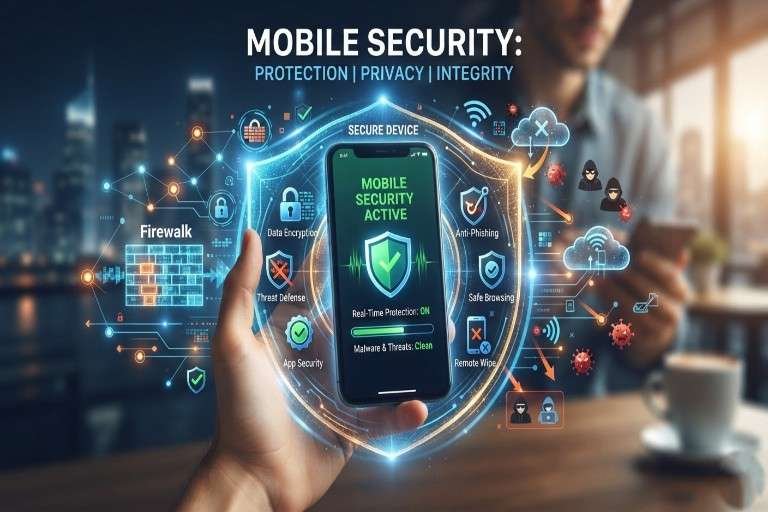
Mobile security refers to the technologies, policies, and best practices designed to protect smartphones, tablets, and mobile applications from unauthorized access, malware, data theft, and other cyber threats. In 2026, effective mobile security combines advanced security features with user awareness to create a safer digital experience.
Why Mobile Security Matters
Modern mobile devices contain much more than contacts and messages. They often store banking credentials, business emails, confidential documents, personal photos, health records, and digital payment information. A single compromised device can expose valuable data, leading to financial loss, identity theft, or unauthorized access to corporate systems.
With the rise of hybrid work environments and cloud-based applications, securing mobile devices has become just as important as protecting traditional computers.
Common Mobile Security Threats
Cyber threats targeting mobile devices continue to evolve. Some of the most common risks include:
- Malicious apps disguised as legitimate software.
- Phishing attacks delivered through SMS, email, or messaging apps.
- Spyware that secretly monitors user activity.
- Ransomware that locks devices or encrypts files.
- Public Wi-Fi attacks that intercept sensitive information.
- Data leakage caused by insecure mobile applications.
Understanding these threats is the first step toward building stronger mobile security.
Essential Mobile Security Technologies
1. App Sandboxing
App sandboxing is one of the core security features of modern mobile operating systems. Each application runs in its own isolated environment, preventing it from accessing data or resources belonging to other apps without permission.
This isolation significantly reduces the impact of malicious applications. Even if one app becomes compromised, it cannot easily spread to other parts of the device or access sensitive information stored by other applications.
2. Mobile Antivirus
While mobile operating systems include built-in security protections, mobile antivirus software provides an additional layer of defense. Modern mobile antivirus solutions can detect malware, scan downloaded files, identify harmful websites, and warn users about suspicious applications.
Many enterprise organizations also use mobile threat defense solutions that continuously monitor devices for unusual behavior and emerging threats.
3. Device Encryption
Encryption protects sensitive information by converting it into unreadable data that can only be accessed with the correct authentication credentials. Most modern smartphones automatically encrypt stored data, ensuring that even if a device is lost or stolen, unauthorized users cannot easily access its contents.
Organizations handling confidential information should ensure that device encryption is enabled across all company-owned mobile devices.
4. Secure Authentication
Passwords alone are no longer sufficient to protect mobile devices. Secure authentication combines multiple verification methods to strengthen access control.
Popular authentication methods include:
- Fingerprint recognition
- Facial recognition
- Strong PINs and passwords
- Multi-factor authentication (MFA)
- One-time verification codes
These measures significantly reduce the risk of unauthorized access, even if login credentials are compromised.
Emerging Trends in Mobile Security
Artificial intelligence is transforming mobile security by detecting suspicious behavior in real time and identifying threats before they cause damage. AI-powered security solutions can analyze login patterns, application behavior, and network activity to detect anomalies that may indicate cyberattacks.
Another growing trend is Zero Trust security, where every user, device, and application must continuously verify its identity before gaining access to sensitive resources. This approach minimizes the risk of unauthorized access, especially in remote work environments.
Privacy-focused mobile operating systems, secure app development practices, and cloud-based mobile device management (MDM) solutions are also becoming increasingly important for businesses managing large fleets of mobile devices.
Best Practices for Better Mobile Security
Users can greatly improve their mobile security by following a few simple habits. Always download applications from trusted app stores, keep devices and apps updated with the latest security patches, enable device encryption and biometric authentication, and avoid connecting to unsecured public Wi-Fi without a trusted VPN.
Businesses should implement Mobile Device Management (MDM) solutions, enforce strong password policies, require multi-factor authentication, and educate employees about phishing attacks and safe mobile usage. Regular security audits and application testing can also help identify vulnerabilities before they are exploited.