

 By
AMD’s AI Data Centre Boom in 2026: How Artificial Intelligence Is Changing the Future of Computers
The computer industry is experiencing a major transformation in 2026 as artificial intelligence becomes one of the biggest drivers of technological development. From personal computers and gaming systems to powerful data centres, AI is changing how computing hardware is designed, manufactured and used.
One of the latest developments attracting attention is AMD’s increasing focus on data centre technology. The company, known for its Ryzen processors and Radeon graphics cards, is seeing significant growth in its enterprise and AI business.
AMD CEO Lisa Su recently described the company as a data centre-first business, highlighting the growing importance of AI computing. This development raises an interesting question: how will the increasing demand for AI hardware affect everyday computers and their users?
1. AMD’s Data Centre Business Reaches New Heights
AMD is becoming an important player in the global AI infrastructure market.
According to its third-quarter 2026 financial results, AMD generated approximately $8.5 billion in data centre revenue, representing 97% year-over-year growth.
The company’s EPYC server processors and Instinct AI accelerators are helping power advanced computing infrastructure used by cloud providers and technology companies.
This growth demonstrates how quickly businesses are investing in AI infrastructure and high-performance computing systems.
For AMD, data centres are becoming an increasingly important part of its long-term business strategy. TweakTown+1
2. Why Are AI Data Centres Becoming So Important?
Artificial intelligence applications require enormous computing resources.
Companies developing AI assistants, image-generation systems, software-development tools and advanced language models need powerful hardware to train and operate their technologies.
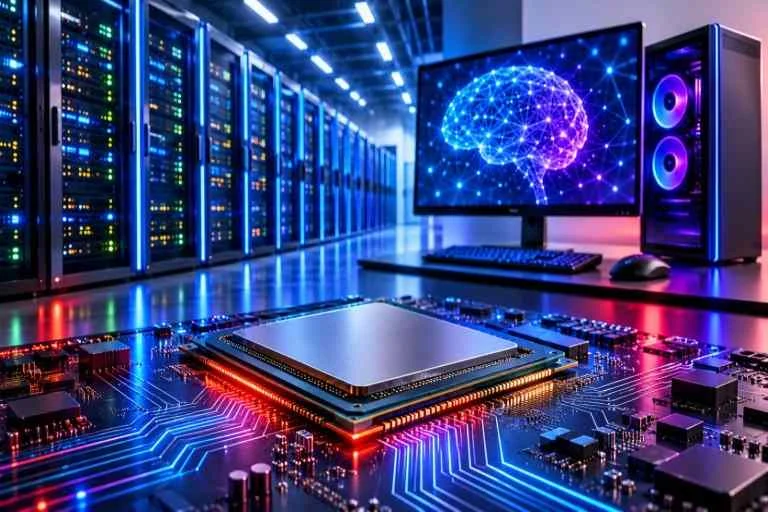
AI data centres contain thousands of processors, graphics accelerators, memory systems and storage devices working together.
These facilities help businesses process large amounts of information and deliver AI services to millions of users.
As AI adoption increases, demand for advanced processors and specialised graphics hardware is also growing.
3. What Are AMD EPYC and Instinct Processors?
AMD’s EPYC processors are designed for enterprise servers and data centre workloads. They support applications requiring high processing capacity, reliability and efficient multitasking.
The Instinct product family focuses on accelerating demanding AI and high-performance computing workloads.
Together, these technologies help organisations build systems capable of handling complex calculations, large datasets and advanced AI models.
AMD’s growing presence in this market also increases competition with other semiconductor companies, particularly NVIDIA and Intel.
4. Could AI Demand Affect Gaming Computers and Graphics Cards?
One important concern for computer enthusiasts is how the AI boom could affect consumer hardware.
As manufacturers focus on supplying data centres, competition for advanced memory, semiconductor manufacturing capacity and other components can become more intense.
AMD’s latest financial results also highlighted a difference between its growing data centre business and its weaker gaming segment. Gaming revenue declined 40% year over year to approximately $773 million in the third quarter. TweakTown+1
This does not mean AMD is abandoning gaming computers. However, it shows how strongly the company’s business is being influenced by demand for AI computing.
5. What Does This Mean for Everyday Computer Users?
The growth of AI infrastructure could influence the computers people purchase in the coming years.
Laptop and desktop manufacturers are increasingly developing systems with powerful CPUs, GPUs and Neural Processing Units.
These components can support AI assistants, image editing, video production, software development and other intelligent applications.
Consumers may also experience changing hardware prices as demand for memory and advanced semiconductor components increases.
For buyers, comparing processor performance, RAM, storage, graphics capabilities and upgrade options will remain important when choosing a new computer.
6. AMD, NVIDIA and Intel: Competition Is Increasing
The AI hardware market is becoming increasingly competitive.
- AMD: Expanding its EPYC server processors and Instinct AI accelerator business.
- NVIDIA: Strengthening its position in AI GPUs and advanced computing platforms.
- Intel: Developing Xeon processors and technologies for enterprise computing and AI workloads.
This competition could encourage innovation in processor efficiency, graphics performance and computing architecture.
For consumers and businesses, stronger competition may eventually create more hardware choices and new technology options.
7. What Is the Future of Computer Technology?
The future of computing will likely involve a closer connection between personal computers and AI infrastructure.
Modern PCs will continue becoming more intelligent, while data centres will provide the computing power needed for advanced AI services.
Developments in processor design, graphics technology, memory and energy efficiency will play important roles in this transformation.
AI-powered computers could make everyday activities such as studying, designing, programming and managing business operations more efficient.