


 By
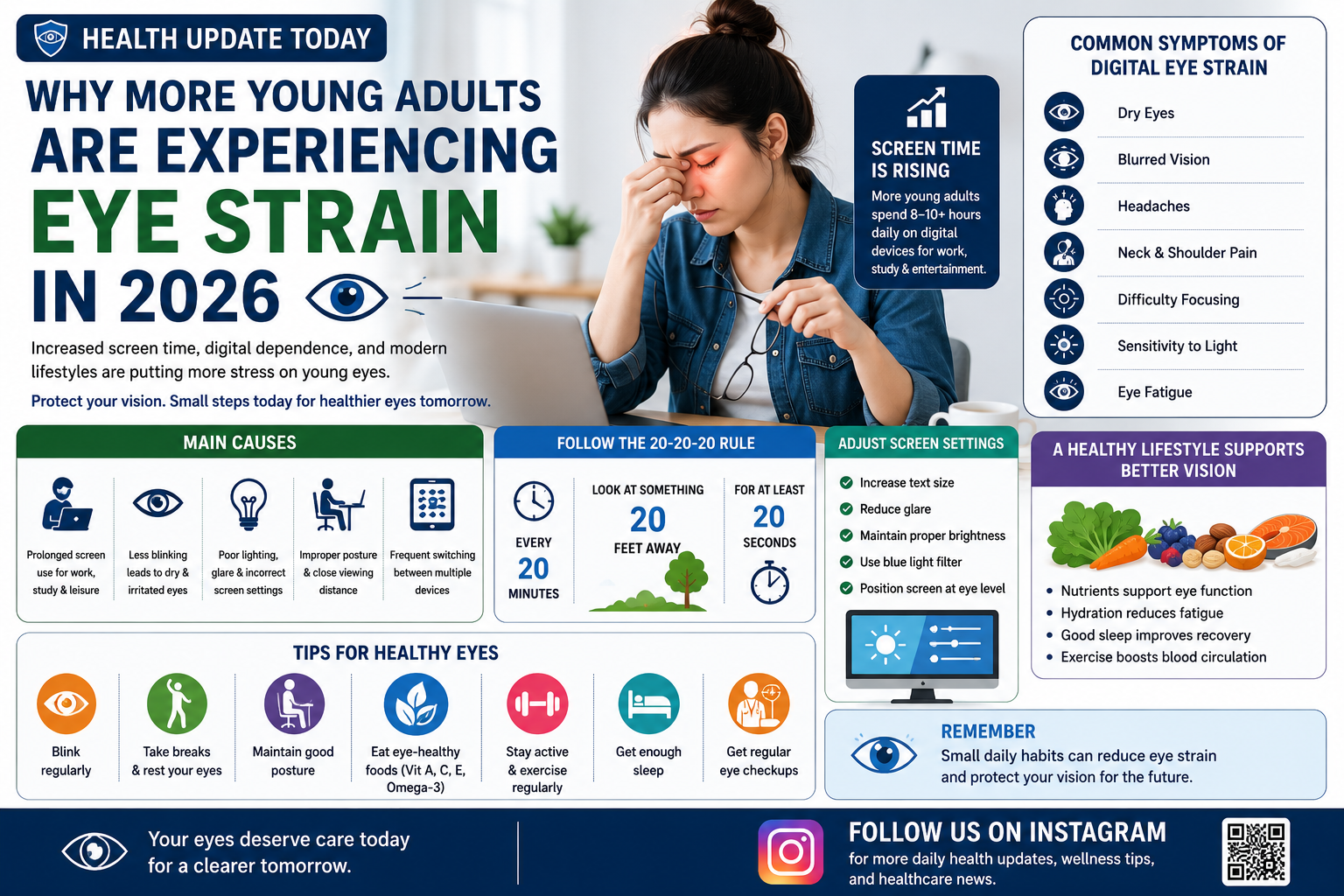
By Health experts are reporting a significant increase in cases of digital eye strain among young adults in 2026. With people spending more time than ever on smartphones, laptops, tablets, and other digital devices, eye health has become a growing concern worldwide.
Digital eye strain, also known as computer vision syndrome, occurs when prolonged screen use causes discomfort and vision-related problems. While it is not usually a serious condition, it can affect productivity, concentration, and overall quality of life.
One of the main reasons for the increase is the growing dependence on digital technology. Many professionals spend eight to ten hours each day working on computers, while students often use screens for both education and entertainment. This extended exposure can place significant stress on the eyes.
Common symptoms of digital eye strain include dry eyes, blurred vision, headaches, neck pain, shoulder pain, and difficulty focusing. Some individuals may also experience increased sensitivity to light and eye fatigue after long periods of screen use.
Experts explain that people tend to blink less frequently while looking at screens. Reduced blinking can cause the eyes to become dry and irritated. Additionally, constantly focusing on nearby screens for long periods may strain the eye muscles.
Poor lighting conditions can worsen the problem. Working in rooms with excessive glare or insufficient lighting forces the eyes to work harder. Incorrect screen brightness and improper viewing distances may also contribute to discomfort.
Health professionals recommend following the 20-20-20 rule to reduce eye strain. Every 20 minutes, individuals should look at something 20 feet away for at least 20 seconds. This simple habit helps relax the eye muscles and reduce fatigue.
Adjusting screen settings can also make a difference. Increasing text size, reducing glare, and maintaining appropriate brightness levels can improve visual comfort. Experts also encourage people to position screens at eye level and maintain proper posture while working.
Regular eye examinations remain important, especially for individuals who spend long hours using digital devices. Early detection of vision problems can help prevent symptoms from becoming more severe.
In addition to screen management, a healthy lifestyle can support eye health. Eating foods rich in vitamins A, C, and E, staying physically active, and getting enough sleep all contribute to better vision and overall well-being.
As technology continues to play a larger role in everyday life, protecting eye health has become more important than ever. Small adjustments to daily habits can help reduce eye strain and support long-term visual wellness.
Follow Us On Instagram for more daily health updates, wellness tips, and healthcare news.
Follow Us On Instagram