 By
By Physical Security in 2026: Protecting People, Facilities, and Business Assets
As organizations invest heavily in digital transformation, cybersecurity often takes center stage. However, physical security remains equally important because even the strongest digital defenses can be compromised if unauthorized individuals gain physical access to buildings, equipment, or sensitive information. In 2026, businesses are adopting smarter and more integrated physical security solutions to safeguard employees, visitors, critical infrastructure, and valuable assets.
Physical Security refers to the measures, technologies, and procedures designed to protect people, facilities, equipment, and physical assets from theft, vandalism, unauthorized access, natural disasters, and other security threats. It combines traditional protection methods with advanced technologies to create a secure environment that supports business continuity and workplace safety.
Why Physical Security Matters
Every organization faces physical security risks, regardless of its size or industry. Offices, manufacturing plants, hospitals, schools, warehouses, and data centers all contain valuable assets that require protection.
Without proper physical security, organizations may experience:
- Theft of equipment and confidential documents.
- Unauthorized access to restricted areas.
- Damage to buildings and infrastructure.
- Workplace violence and safety incidents.
- Business interruptions and financial losses.
- Compliance and regulatory challenges.
An effective physical security strategy helps reduce these risks while creating a safer environment for employees, customers, and visitors.
Locks and Modern Access Control Systems
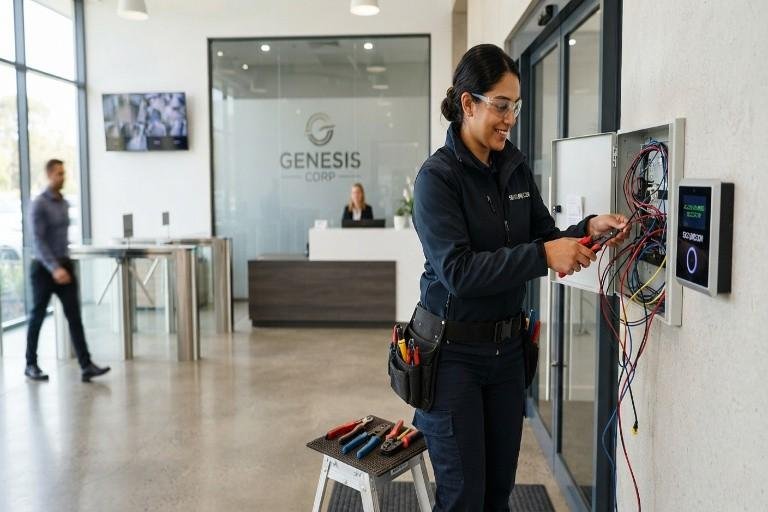
Locks have always been the foundation of physical security, but today’s access control systems offer much greater flexibility and protection than traditional keys.
Modern access control solutions include:
- Electronic key cards.
- Smart locks.
- PIN-based entry systems.
- Mobile credential access.
- Biometric authentication.
These systems allow organizations to control who enters specific areas, monitor access activity, and revoke permissions instantly when employees leave or roles change.
Access control systems also generate detailed logs that support investigations and regulatory compliance while improving overall facility security.
CCTV Cameras: Continuous Surveillance and Monitoring
Closed-Circuit Television (CCTV) cameras remain one of the most effective tools for monitoring facilities and preventing unauthorized activities. Modern surveillance systems provide much more than video recording.
Today’s intelligent CCTV solutions offer:
- High-definition video monitoring.
- Motion detection.
- Facial recognition capabilities.
- Remote viewing through cloud platforms.
- AI-powered threat detection.
- Real-time security alerts.
These technologies help security teams respond quickly to suspicious activity while providing valuable evidence during investigations.
Continuous surveillance also acts as a strong deterrent against theft, vandalism, and other criminal activities.
Security Guards: The Human Element of Protection
Although technology has advanced significantly, trained security personnel remain an essential part of physical security.
Security guards perform important responsibilities such as:
- Monitoring facility entrances.
- Verifying visitor identities.
- Conducting routine security patrols.
- Responding to emergencies.
- Assisting during evacuations.
- Reporting suspicious activities.
The presence of security personnel discourages criminal behavior while providing immediate assistance during incidents.
When combined with surveillance technologies and access control systems, security guards contribute to a comprehensive physical security strategy.
Fire Alarms and Emergency Response Systems
Physical security also includes protecting people and facilities from environmental hazards such as fires and emergencies.
Modern fire protection systems include:
- Smoke detectors.
- Fire alarms.
- Automatic sprinkler systems.
- Emergency notification systems.
- Fire suppression equipment.
Regular inspections, maintenance, and emergency drills ensure these systems remain operational when needed.
Organizations should also establish emergency evacuation procedures and train employees to respond effectively during crises.
Fences and Perimeter Security
Perimeter security serves as the first line of defense against unauthorized access. Security fences, barriers, and controlled entry points help prevent intrusions before they reach sensitive areas.
Common perimeter security measures include:
- Security fencing.
- Automated gates.
- Motion sensors.
- Security lighting.
- Intrusion detection systems.
When integrated with surveillance cameras and access control technologies, perimeter protection significantly strengthens overall facility security.
Biometrics: The Future of Secure Building Access
Biometric authentication has become increasingly popular because it offers both convenience and enhanced security.
Common biometric technologies include:
- Fingerprint recognition.
- Facial recognition.
- Iris scanning.
- Palm vein recognition.
Unlike passwords or access cards, biometric credentials are unique to each individual and difficult to duplicate. This greatly reduces the risk of unauthorized access due to lost cards or stolen credentials.
Many organizations are combining biometrics with Multi-Factor Authentication (MFA) to provide stronger protection for high-security facilities.
Emerging Physical Security Trends in 2026
Physical security continues to evolve with advances in technology.
AI-Powered Surveillance
Artificial intelligence analyzes video footage in real time to identify suspicious behavior, reduce false alarms, and improve incident response.
Smart Building Security
Modern buildings integrate surveillance, access control, environmental monitoring, and emergency systems into centralized management platforms.
Cloud-Based Security Management
Organizations increasingly manage security systems remotely through cloud-based platforms that improve visibility and operational efficiency.
Convergence of Physical and Cybersecurity
Businesses are integrating physical and cybersecurity strategies to create unified protection for both digital and physical assets.