 By
By AI-Powered Computers in 2026: How Next-Generation PCs Are Transforming Work, Study, and Everyday Life
The computer industry is entering a new era in October 2026 as artificial intelligence becomes a central part of modern laptops and desktop computers. Technology companies are developing systems that can perform AI tasks directly on the device, improve productivity, and provide more personalized computing experiences.
One of the biggest developments this month is Microsoft’s push toward hybrid AI computing, combining processing on a computer with cloud-based intelligence. New Windows PCs powered by NVIDIA technology are also bringing advanced AI capabilities to creators, developers, and professionals. These changes are shaping the future of personal computing. <Cite refs={[“turn566990search0″,”turn566990news18”]}/>
1. AI Computers Are Becoming More Powerful
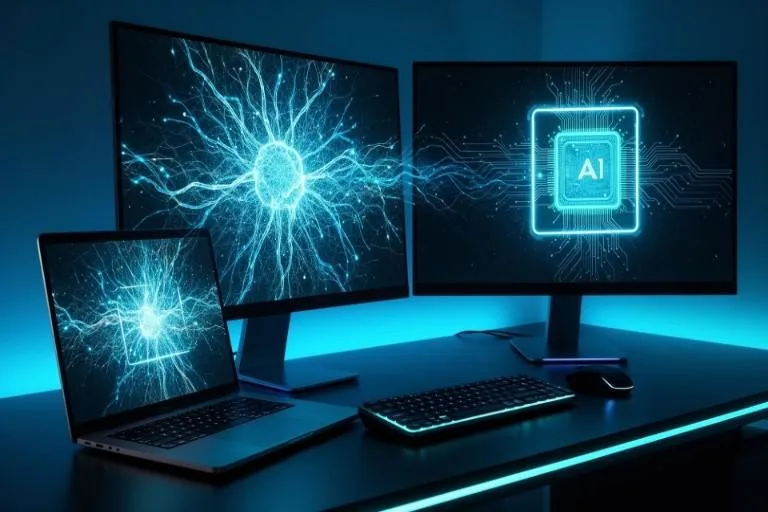
Traditional computers rely mainly on the CPU and GPU to run applications, process information, and handle graphics. Modern AI PCs add a specialized component called a Neural Processing Unit (NPU), designed to accelerate certain artificial intelligence workloads.
This technology can support features such as automatic background removal during video calls, speech transcription, image enhancement, and AI-assisted writing. Depending on the hardware and software, some tasks can run locally without sending every request to an online service.
For students, office workers, and content creators, these capabilities can help reduce repetitive work and save time. However, actual performance depends on the processor, available memory, software support, and the complexity of each task.
2. Microsoft Introduces a New Vision for AI Computing
Microsoft’s October announcements have put hybrid intelligence in the spotlight. The company is working toward a Windows experience that combines local AI processing with cloud services, allowing different tasks to use the computing resources best suited to them.
New AI-focused PCs are designed to support more demanding applications, including coding assistance, content creation, and running AI models directly on the computer. Microsoft is also emphasizing security measures intended to keep AI agents operating within controlled environments. <Cite refs={[“turn566990search0″,”turn566990news18”]}/>
This approach could give users greater flexibility. Local processing may offer faster responses and better control over sensitive information, while cloud services can provide access to models that require more computing power.
3. Better Productivity for Work and Education
AI-powered computers are becoming useful tools for everyday tasks. Students can use supported applications to summarize notes, organize research, and improve writing. Professionals can benefit from meeting transcription, document assistance, data analysis, and automated workflows.
Creative users may also find AI features helpful for editing photographs, producing video content, and generating ideas. Developers can use local models to experiment with code and test applications.
Nevertheless, AI-generated results should be checked for accuracy. Users must also understand which features work offline, which require subscriptions, and which send information to cloud services.
4. Gaming and Content Creation Continue to Advance
Performance remains important for gamers, designers, and video editors. Powerful GPUs, faster storage, and improved cooling systems allow computers to handle demanding applications more effectively.
AI acceleration can add features such as intelligent image enhancement, faster creative workflows, and support for local generative AI tools. Compact high-performance systems are also making advanced computing more accessible to people who do not have room for a large workstation.
Buyers should still compare graphics performance, memory capacity, display quality, and thermal performance rather than choosing a computer based only on its AI branding.
5. Rising Computer Prices Are Another Important Trend
Despite these technological improvements, affordability is becoming a concern. Industry reports in October point to falling global PC shipments and higher memory and storage costs, partly connected to demand from AI infrastructure. These pressures could make some computers more expensive. <Cite refs={[“turn566990news13″,”turn566990search1”]}/>
Consumers should consider their actual needs before upgrading. A student who mainly browses the web and prepares assignments may not need a premium AI workstation. Professionals working with large datasets, advanced software, or local AI models may benefit more from higher-end hardware.
Comparing specifications, checking warranty coverage, and looking for genuine discounts can help buyers make better decisions.
6. Security and Privacy Remain Essential
As computers become more intelligent, cybersecurity becomes even more important. AI assistants may interact with documents, applications, and personal files, so users need to understand permissions and how their information is handled.
Keeping operating systems updated, enabling multifactor authentication, using trusted applications, and backing up important files remain essential practices. Local AI processing can reduce the need to upload certain information, but it does not automatically make a device completely secure.