

 By
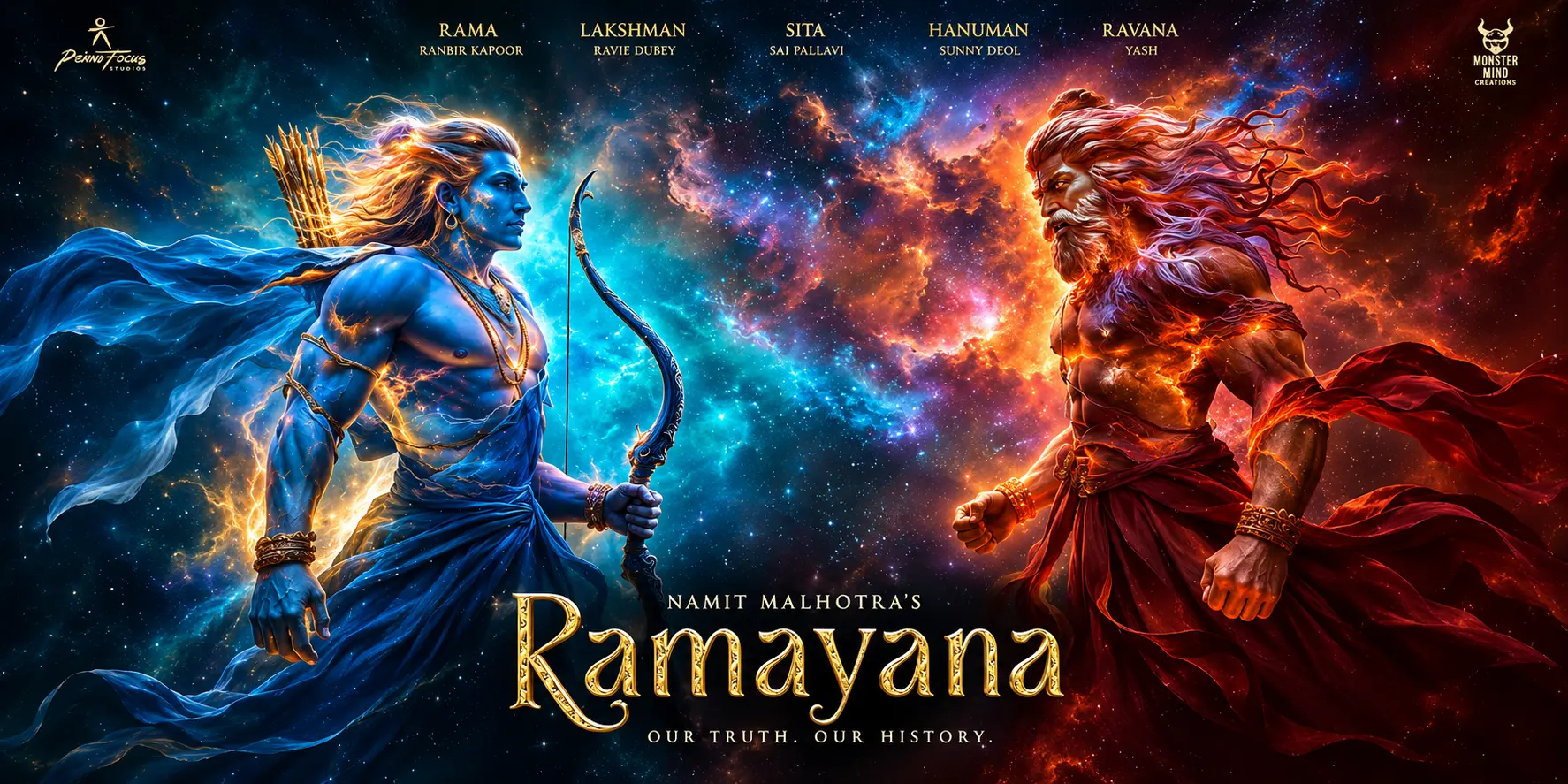
Ramayana: Part 1 is a 2026 Hindi mythological action drama directed by Nitesh Tiwari, starring Ranbir Kapoor as Lord Rama, Sai Pallavi as Goddess Sita and Yash as Ravana. The film also features Ravi Dubey as Lakshman, Sunny Deol, Anupam Kher, Kajal Aggarwal, Rakul Preet Singh, Vivek Oberoi, Kunal Kapoor and Lara Dutta in important roles. Based on the ancient Indian epic Ramayana, the film explores the journey of Lord Rama, his marriage to Sita, their exile from Ayodhya and the events that gradually lead to the confrontation with Ravana. It was released in theatres worldwide on November 5, 2026, with a runtime of approximately three hours.
The early critical response has been largely positive, although some aspects have received mixed reactions. The film’s extraordinary visual scale, Ranbir Kapoor’s portrayal of Rama, Sai Pallavi’s performance as Sita, Yash’s commanding screen presence as Ravana and the background score by Hans Zimmer and A.R. Rahman have attracted attention. However, critics have also raised concerns about artificial-looking visual effects in certain sequences, occasional narrative unevenness and the film’s tendency to prioritise spectacle over deeper storytelling.
Story & Concept
Based on the timeless Indian epic, Ramayana: Part 1 follows the journey of Lord Rama, the prince of Ayodhya, whose life is shaped by righteousness, duty, sacrifice and devotion. The narrative introduces Rama’s childhood, his relationship with his family, his marriage to Sita and the circumstances that lead to his fourteen-year exile.
Accompanied by Sita and his younger brother Lakshman, Rama leaves the comforts of the royal palace and enters the forest. Their journey introduces several challenges, encounters with powerful forces and events that gradually establish the conflict between Rama and Ravana.
The film also explores Ravana’s rise, his power and the circumstances surrounding his character. Rather than presenting him simply as an antagonist, the narrative attempts to establish the world and motivations behind the demon king.
The concept carries enormous cultural and emotional significance. The filmmakers have the responsibility of presenting a familiar story to a new generation while respecting its traditional foundations. The film succeeds in creating an expansive cinematic world, although certain narrative portions could have benefited from more detailed character development.
Performance
Ranbir Kapoor takes on the challenging role of Lord Rama. His portrayal relies on calm expressions, controlled body language and a composed screen presence. Rather than approaching the character through excessive aggression, he attempts to communicate Rama’s patience, discipline and sense of responsibility. His performance becomes more convincing as the narrative progresses, particularly during the emotional and action-driven sequences.
Sai Pallavi brings sincerity and grace to the role of Goddess Sita. Her portrayal gives the character emotional strength and individuality. She is not merely presented as a supporting presence in Rama’s journey; the film also gives her opportunities to demonstrate courage, determination and inner strength. Her chemistry with Ranbir adds warmth to their relationship.
Yash makes a powerful impression as Ravana. His physical presence, expressions and commanding dialogue delivery give the antagonist an imposing identity. He brings arrogance, ambition and intensity to the character, making his appearance one of the film’s major attractions.
Ravi Dubey performs as Lakshman, bringing loyalty, emotional intensity and devotion to the character. His relationship with Rama provides several meaningful moments.
The supporting cast, including Sunny Deol and other prominent actors, contributes to the film’s expansive mythological world. Overall, the performances are among the film’s important strengths, with Yash particularly standing out through his commanding screen presence.
Screenplay & Direction
Nitesh Tiwari deserves credit for taking on one of the most challenging storytelling projects in Indian cinema. Bringing the Ramayana to the big screen requires more than expensive visual effects and elaborate action sequences. It requires an understanding of the emotional, philosophical and cultural significance of the original epic.
The director attempts to balance traditional storytelling with modern cinematic presentation. The narrative introduces familiar characters and important events while giving considerable attention to the world surrounding them.
One of the film’s strengths is its attempt to make the characters accessible to contemporary audiences without completely abandoning their traditional identities. The relationships between Rama, Sita and Lakshman provide the emotional foundation, while Ravana’s introduction establishes the larger conflict.
However, the screenplay occasionally struggles to balance its ambition with narrative depth. Some sequences are more focused on visual presentation than meaningful character development. A stronger emphasis on the philosophical aspects of the story could have made the experience even more powerful.
The direction demonstrates considerable ambition, but the film’s success ultimately depends on how effectively it connects its spectacular moments with the emotional heart of the epic.
Action & Mass Elements
Action is one of the major attractions of Ramayana: Part 1. The film presents battles between divine and demonic forces on an enormous scale, using elaborate choreography, visual effects and dramatic background music.
Rama’s confrontations with powerful enemies are designed to create a theatrical experience. His archery sequences, forest battles and encounters with supernatural forces provide some of the film’s most visually engaging moments.
Yash’s presence as Ravana adds another dimension to the action. His character brings an intimidating energy to the narrative, and the confrontations involving the opposing forces establish anticipation for the larger battle that lies ahead.
The action sequences benefit considerably from the film’s technical scale. However, the repeated use of computer-generated imagery occasionally reduces the natural impact of certain moments.
Viewers looking for grand mythological battles and large-scale cinematic spectacle may find plenty to appreciate, although the emotional significance behind the action could have been explored more consistently.
Romance & Emotional Elements
The relationship between Rama and Sita forms one of the emotional foundations of the Ramayana. Their love is not simply a romantic connection but also represents trust, commitment, respect and companionship.
Ranbir Kapoor and Sai Pallavi bring warmth to their relationship. Their interactions provide a welcome contrast to the film’s larger battles and supernatural elements. The quieter moments between the characters help establish the emotional foundation of their journey.
The relationship between Rama and Lakshman is equally important. Lakshman’s loyalty and willingness to accompany his brother into exile provide several meaningful emotional moments.
The film also explores the emotional connection between Rama and his father, King Dasharatha. The circumstances surrounding Rama’s departure from Ayodhya provide some of the more affecting portions of the narrative.
However, the romantic and emotional elements could have received more consistent attention. Given the importance of these relationships in the original epic, a greater emphasis on intimate character moments would have strengthened the film’s overall impact.
Mythological & Cultural Elements
The Ramayana is one of India’s most significant epics, with generations of people growing up listening to its stories and learning from its characters. Presenting such a familiar narrative through a modern cinematic approach is both an opportunity and a considerable responsibility.
The film attempts to preserve the central values of the epic, including dharma, sacrifice, loyalty, devotion and the eternal struggle between good and evil.
Rama represents righteousness and responsibility, Sita embodies strength and dignity, Lakshman represents devotion and loyalty, while Ravana presents a complex combination of knowledge, ambition and arrogance.
The film also draws attention to the spiritual and cultural world of the epic through its kingdoms, forests, celestial settings and supernatural characters.
Its willingness to bring this traditional story to a global cinematic audience is one of its biggest strengths. However, mythology requires more than visual grandeur. The philosophical depth and moral conflicts of the characters deserve equal attention.
A stronger balance between spectacle and the deeper meanings of the epic could have made the adaptation even more memorable.
Music & Technical Aspects
The technical presentation is one of the film’s biggest highlights. With an enormous production scale, the filmmakers attempt to create a visually expansive world that includes Ayodhya, forest landscapes, celestial environments and the kingdoms associated with the epic.
The cinematography captures the grandeur of the settings and provides an impressive visual foundation for the story. The production design also deserves appreciation for attempting to establish a distinct identity for the different locations and environments.
The visual effects are particularly important because much of the film depends on supernatural characters, extraordinary creatures and large-scale battles. Several sequences create a strong sense of scale, although certain artificial-looking visuals occasionally become distracting.
The music and background score by Hans Zimmer and A.R. Rahman are among the film’s major attractions. The score adds emotional intensity to important scenes and gives the larger sequences a sense of grandeur.
The sound design, visual effects and production work together to create a cinematic experience designed for the big screen. However, greater consistency in the visual effects would have made the technical achievement more convincing.
Pacing & Runtime
With a runtime of approximately three hours, Ramayana: Part 1 is a lengthy cinematic experience. The scale of the story requires sufficient time to introduce the characters, establish their relationships and build the mythological world.
The initial portions focus on Rama’s life, his relationships and the events leading to his exile. These sections provide important background, although certain stretches feel slower than necessary.
As the story moves into the forest and introduces more significant conflicts, the narrative becomes increasingly engaging. The action sequences and major character introductions help maintain interest.
However, the film occasionally spends more time on visual presentation than narrative progression. Some portions could have been edited more tightly to maintain a consistent rhythm.
A more balanced approach to storytelling, action and emotional development could have made the lengthy runtime feel more effective.
Second Half & Climax
The later portions of Ramayana: Part 1 gradually build towards the larger conflict between Rama and Ravana. The narrative gives greater attention to the events that shape the confrontation and establishes the importance of the characters involved.
The sequences involving Ravana and Sita provide some of the film’s most significant dramatic moments. Yash’s commanding performance adds intensity to the conflict, while Sai Pallavi brings emotional strength to Sita’s character.
The film also benefits from the growing anticipation surrounding Rama’s journey and the challenges that lie ahead. The visual scale and background score help create a strong theatrical atmosphere.
However, the climax primarily functions as a setup for the next instalment rather than providing a complete resolution to the larger conflict. This approach makes sense for a multi-part adaptation, but viewers expecting the entire Ramayana to reach its conclusion in this film may find the ending incomplete.
The film succeeds in establishing anticipation for the next chapter, although a stronger emotional conclusion within this instalment could have made the experience more satisfying.
What Works
- Ranbir Kapoor delivers a composed performance as Lord Rama
- Sai Pallavi brings grace, strength and emotional depth to Sita
- Yash makes a commanding impression as Ravana
- Ravi Dubey contributes a strong performance as Lakshman
- Ambitious adaptation of India’s timeless epic
- Impressive production design and large-scale visual presentation
- Hans Zimmer and A.R. Rahman’s background score adds grandeur
- Several action sequences create a strong theatrical experience
- Important relationships provide emotional depth
- Mythological and cultural themes give the film significance
What Doesn’t Work
- Certain visual effects appear artificial
- Some CGI creatures and environments lack visual consistency
- The lengthy runtime affects the pacing
- Certain narrative portions feel slower than necessary
- Spectacle occasionally takes priority over emotional storytelling
- Some characters could have received deeper development
- The philosophical aspects of the epic could have been explored further
- Transitions between emotional scenes and action sequences are occasionally uneven
- The climax leaves the larger conflict unresolved for the next instalment
Final Verdict
Ramayana: Part 1 is an ambitious mythological epic that attempts to bring one of India’s most beloved stories to the big screen on an extraordinary scale. Ranbir Kapoor delivers a composed performance as Lord Rama, Sai Pallavi brings emotional strength to Sita, and Yash makes a powerful impression as Ravana. The film’s production design, large-scale action sequences and background score by Hans Zimmer and A.R. Rahman contribute significantly to its theatrical appeal.
However, the film is not without its shortcomings. Certain artificial-looking visual effects, uneven pacing and an occasional preference for spectacle over emotional depth prevent it from becoming a completely satisfying cinematic experience. Its lengthy runtime also requires patience, particularly during the slower narrative portions.
Despite these limitations, the film deserves appreciation for attempting to present a culturally significant epic through a grand cinematic vision. It creates an expansive world, introduces memorable performances and establishes anticipation for the next instalment.
Overall, Ramayana: Part 1 is a visually ambitious and emotionally promising mythological drama that delivers several impressive theatrical moments, even if its storytelling does not always match the scale of its presentation.
Overall Rating: 3.5/5
Story: ⭐⭐⭐½
Screenplay: ⭐⭐⭐
Performances: ⭐⭐⭐⭐
Direction: ⭐⭐⭐½
Action: ⭐⭐⭐⭐
Romance: ⭐⭐⭐½
Emotional Impact: ⭐⭐⭐½
Music: ⭐⭐⭐⭐½
Cinematography: ⭐⭐⭐⭐
Visual Effects: ⭐⭐⭐½
Pacing: ⭐⭐⭐
Climax: ⭐⭐⭐
Overall: ⭐⭐⭐½
Verdict: Ramayana: Part 1 is a grand mythological spectacle powered by committed performances, impressive visuals and a stirring musical score, but uneven pacing and occasional visual shortcomings keep it from achieving its full storytelling potential.