 By
By Physical Security in 2026: Protecting People, Property, and Smart Infrastructure
In a world increasingly driven by digital transformation, physical security remains a fundamental part of protecting people, buildings, equipment, and critical assets. While organizations invest heavily in cybersecurity, a compromised door, stolen access card, unsecured server room, or disabled surveillance camera can create a direct path to sensitive systems and information. In 2026, physical security is evolving rapidly as organizations combine traditional protection methods with Artificial Intelligence (AI), biometrics, cloud platforms, mobile credentials, smart sensors, and cybersecurity controls.
Physical Security refers to the technologies, processes, and measures used to protect physical locations and assets from unauthorized access, theft, vandalism, accidents, and other threats. Traditional solutions such as locks, security guards, fences, CCTV cameras, and fire alarms continue to be important, but modern systems are becoming increasingly connected and intelligent.
Why Physical Security Matters
Organizations operate offices, warehouses, data centers, manufacturing facilities, hospitals, educational institutions, retail stores, and critical infrastructure sites. Each location has different security requirements and potential risks.
A physical security incident can result in stolen equipment, unauthorized access, property damage, operational disruption, or exposure of sensitive information. For example, gaining physical access to a server room could allow an attacker to interfere with networking equipment or critical systems.
The rapid growth of AI infrastructure and data centers has also highlighted the importance of physical protection. Recent reporting has warned that the rapid construction of AI-focused data centers can result in physical security being overlooked when organizations prioritize computing capacity, power, cooling, and cybersecurity.
Smart Locks and Access Control
Locks remain one of the simplest and most important physical security controls, but modern access control has become much more sophisticated.
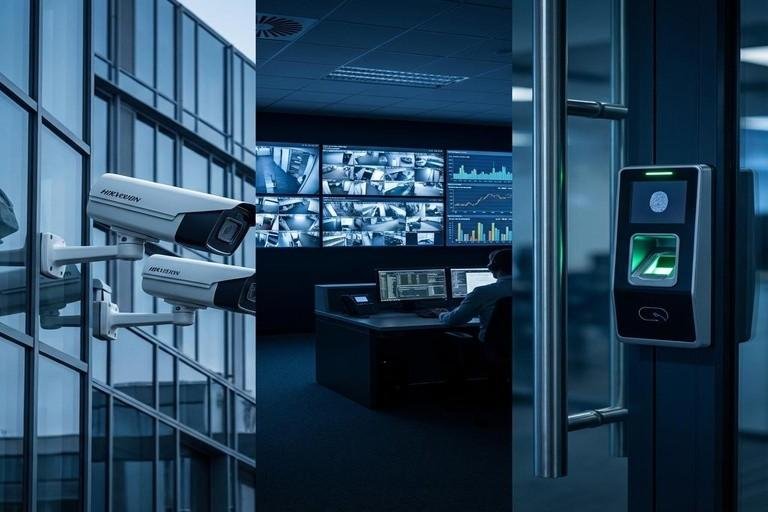
Organizations are increasingly adopting electronic access control systems that use access cards, PINs, smartphones, biometrics, and cloud-managed credentials. These systems allow administrators to grant, modify, or revoke access without replacing physical keys.
Modern access control can also provide detailed entry and exit records, helping security teams investigate incidents and identify unusual access patterns.
In 2026, hybrid and cloud-based access control are becoming increasingly popular because they provide scalability while allowing organizations to maintain some systems on-premises. Mobile credentials and biometrics are also being increasingly used in locations requiring stronger identity verification.
AI-Powered CCTV and Video Surveillance
CCTV cameras have evolved from passive recording devices into intelligent security tools. AI-powered video analytics can analyze camera feeds and help security teams identify unusual activities, unauthorized movement, suspicious behavior, and potential security incidents.
AI can help operators:
- Detect activity in restricted areas.
- Identify unusual movement patterns.
- Search large video archives more efficiently.
- Correlate events across multiple cameras.
- Prioritize important alerts.
- Reduce unnecessary manual monitoring.
However, organizations should implement AI responsibly, with clear governance around privacy, data storage, accuracy, and human oversight. The security industry is increasingly focusing on practical AI applications that improve operator efficiency rather than simply adopting AI for marketing purposes.
Biometrics and Mobile Authentication
Biometric authentication uses unique characteristics such as fingerprints, facial recognition, iris patterns, or other biometric identifiers to verify identity.
Biometrics can provide stronger access control for high-security areas because credentials are tied to an individual rather than simply a physical card or key.
Mobile credentials are another growing trend. Smartphones can act as digital access cards, allowing employees to securely enter buildings without carrying traditional badges. Organizations can also remotely revoke mobile credentials when an employee leaves or a device is reported lost.
However, biometric and mobile access systems must be protected against spoofing, credential theft, privacy risks, and unauthorized data access.
Security Guards and Human Expertise
Technology does not eliminate the need for trained security personnel. Security guards remain essential for monitoring facilities, verifying visitors, responding to emergencies, controlling access, and making decisions that automated systems cannot always handle effectively.
The strongest physical security programs combine human expertise with technology. Security personnel can use mobile applications, real-time alerts, digital visitor management, and centralized surveillance platforms to respond faster and make better-informed decisions.
Perimeter Security and Environmental Protection
Physical security begins before someone reaches the building. Fences, gates, barriers, security lighting, vehicle checkpoints, and perimeter intrusion detection systems help establish multiple defensive layers.
Environmental protection is equally important. Fire alarms, smoke detectors, emergency lighting, sprinkler systems, and evacuation procedures protect people and facilities from fire and other emergencies.
Organizations should regularly inspect these systems and conduct emergency drills to ensure they remain operational when needed.
Physical Security and Cybersecurity Convergence
One of the biggest security trends in 2026 is the convergence of physical security and cybersecurity. Modern CCTV cameras, access control systems, smart locks, sensors, and building-management platforms are often connected to networks or cloud services.
This means a physical security device can also become a cybersecurity target. Organizations should therefore protect security systems using strong authentication, encryption, network segmentation, secure firmware updates, vulnerability management, and continuous monitoring.
Security leaders are increasingly treating access-control infrastructure as a cybersecurity asset that requires patching, testing, governance, and risk management.
Building a Modern Physical Security Strategy
A successful physical security program should use multiple layers of protection rather than depending on a single technology.
Organizations should:
- Conduct regular physical risk assessments.
- Control and monitor building access.
- Maintain CCTV coverage of critical areas.
- Protect server rooms and restricted zones.
- Use strong authentication and biometrics where appropriate.
- Train security personnel regularly.
- Maintain fire and emergency systems.
- Secure connected security devices.
- Review access permissions periodically.
- Test incident-response and emergency procedures.