


 By
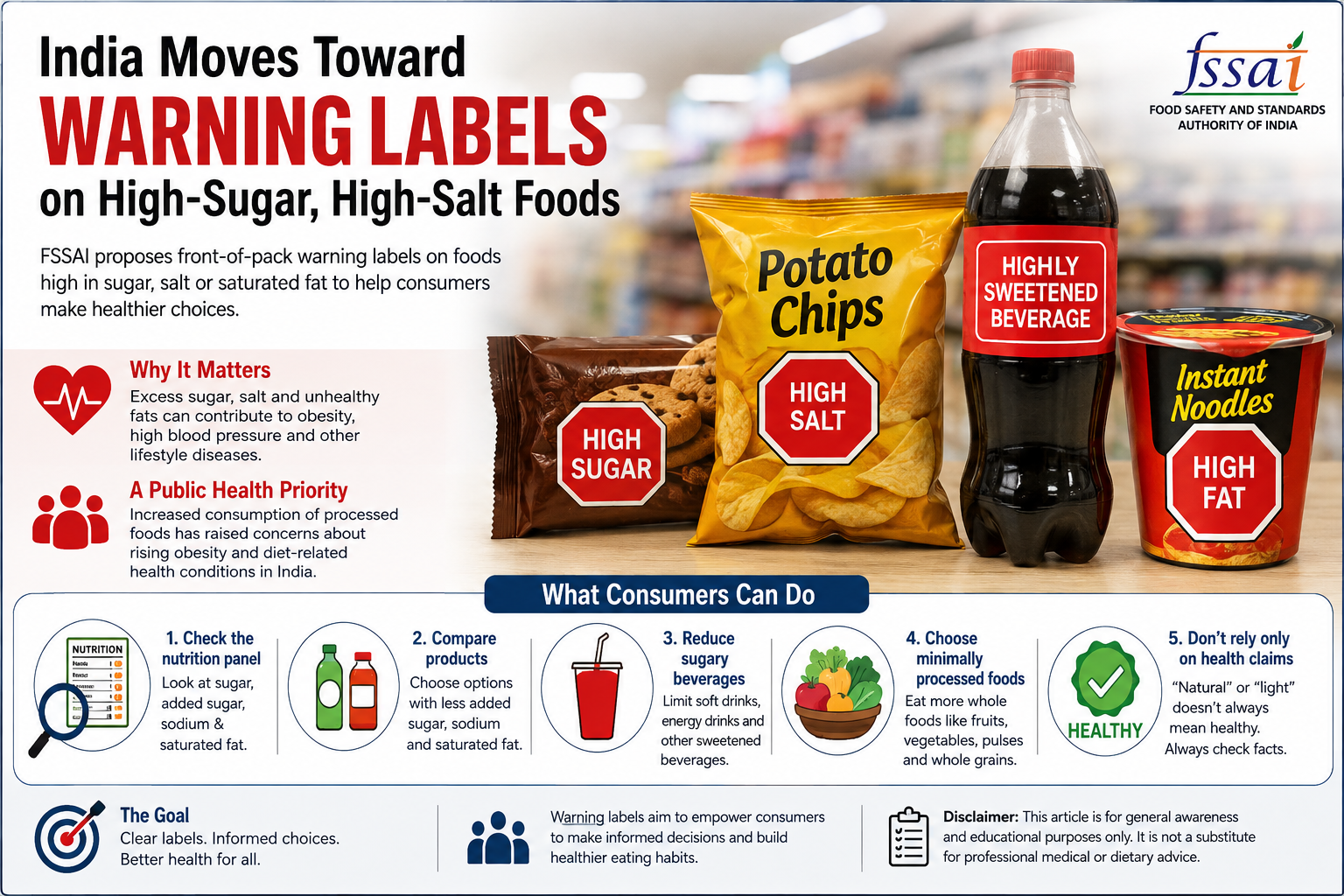
By India has taken a major step toward helping consumers make healthier food choices. The Food Safety and Standards Authority of India (FSSAI) has proposed introducing prominent front-of-pack warning labels on packaged foods and beverages that contain high levels of sugar, salt or saturated fat.
Why Are These Warning Labels Important?
Packaged foods have become a regular part of modern diets. Biscuits, snacks, instant foods, sugary drinks, sauces and other processed products can sometimes contain significant amounts of sugar, sodium or unhealthy fats.
Eating such foods occasionally is not necessarily harmful for most people. However, regularly consuming foods high in these nutrients can contribute to an unhealthy diet. Excessive sodium intake is associated with increased blood pressure, while diets high in added sugars can contribute to weight gain and other metabolic health concerns.
The proposed warning labels are designed to give consumers information quickly, particularly when they are comparing several products in a supermarket.
A Growing Public Health Concern
The move comes amid increasing concern about obesity and diet-related health conditions in India. Health experts and activists have been calling for clearer food labeling so that consumers can better understand what they are purchasing.
According to recent reporting, the proposal follows pressure from health activists and scrutiny from India’s Supreme Court over the need for stronger action on unhealthy food consumption.
For many consumers, nutrition information can be difficult to interpret. A simple front-of-pack warning could therefore make nutritional information more accessible.
What Should Consumers Do?
Even before new labeling rules are implemented, consumers can take several simple steps:
1. Check the nutrition panel: Look at total sugar, added sugar, sodium and saturated fat before purchasing packaged foods.
2. Compare similar products: If two products are available, choose the option with less added sugar, sodium and saturated fat.
3. Reduce sugary beverages: Soft drinks, energy drinks and other highly sweetened beverages can add significant amounts of sugar to the daily diet.
4. Choose minimally processed foods more often: Fresh vegetables, fruits, pulses, whole grains and other minimally processed foods can form the foundation of a balanced diet.
5. Don’t rely only on health claims: Words such as “natural,” “light” or “healthy” on packaging do not necessarily mean a product is nutritionally superior. Always check the actual nutrition information.
Will Warning Labels Change Eating Habits?
The effectiveness of front-of-pack labeling will depend on how clearly the information is presented and how consistently the system is implemented.
Similar labeling approaches have been introduced or considered in different countries as governments attempt to address rising rates of obesity and diet-related diseases.
The goal is not necessarily to tell people that they can never eat packaged foods. Instead, clearer labeling can help people understand what they are buying and make more informed choices.
The Bottom Line
India’s proposed front-of-pack warning labels could represent an important change in how nutritional information is communicated to consumers. Clear warnings about high sugar, salt and fat may help shoppers identify products that should be consumed in moderation.
For consumers, the best approach remains simple: read the label, compare products, limit highly processed foods and maintain a balanced diet.
As the proposal moves forward, consumers and food manufacturers will be watching closely to see how the new labeling system is implemented.
Disclaimer: This article is for general awareness and educational purposes only. It is not a substitute for professional medical or dietary advice.
Follow Us On Instagram