

 By
By Published: August 31, 2026 | Trending News Guru – Health Update
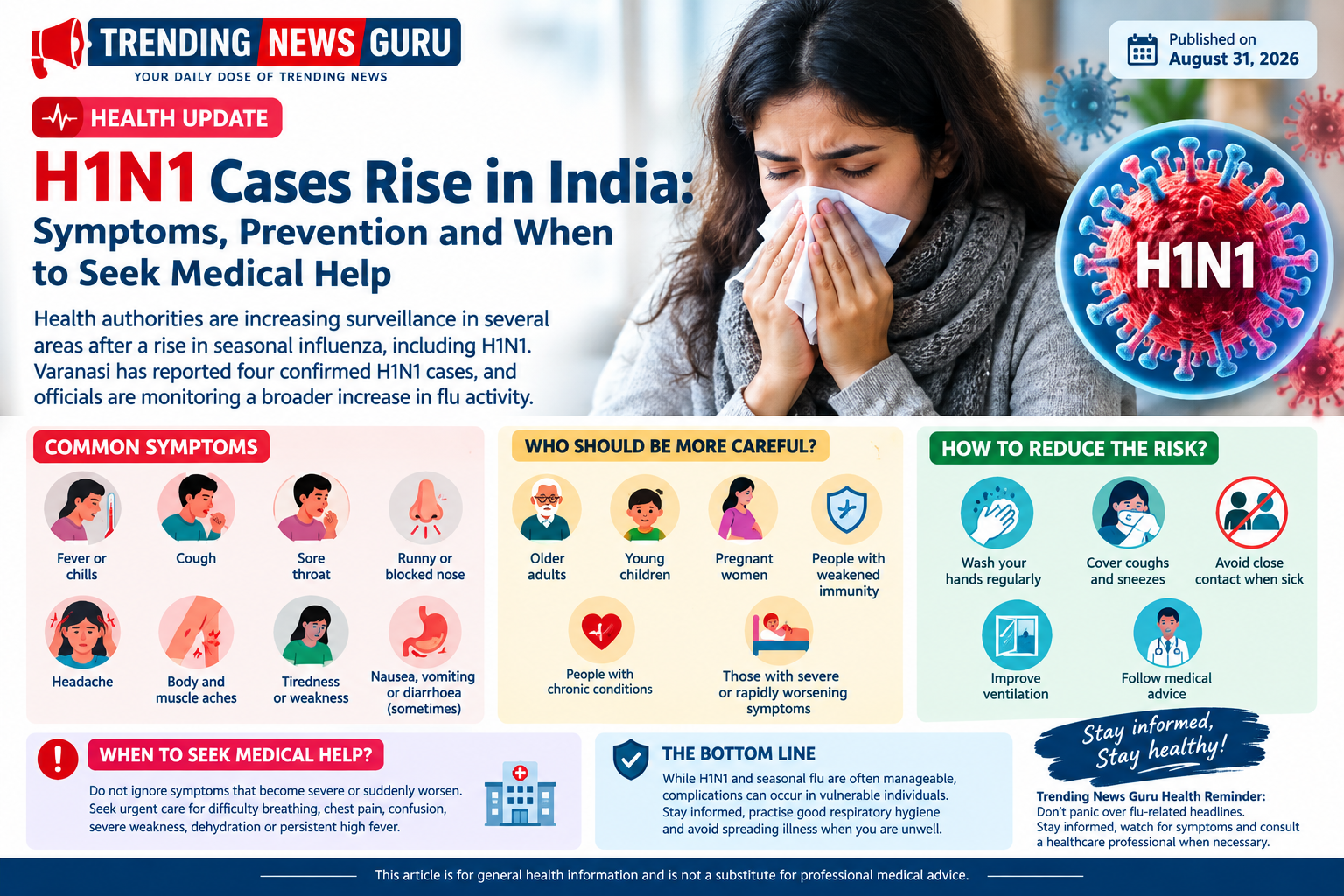
India is seeing increased activity of seasonal influenza, with Influenza A (H1N1) cases drawing attention in several parts of the country. Health authorities are strengthening surveillance and hospital preparedness as infections rise, particularly during the monsoon season. Recent reports from Delhi, Karnataka, Uttar Pradesh and other regions have highlighted increasing H1N1 activity. However, health experts and the Indian Council of Medical Research (ICMR) have advised people not to panic, explaining that the virus currently circulating is a known seasonal H1N1 strain rather than a newly emerged or unusually dangerous variant.
What Is H1N1?
H1N1 is a type of Influenza A virus that causes respiratory illness. It became widely known during the 2009 pandemic, but the H1N1 pdm09 virus has since become part of the seasonal influenza viruses that circulate among communities.
Why Are H1N1 Cases Increasing?
Influenza activity can change with seasons and environmental conditions. In India, influenza activity can increase during monsoon months, when people spend more time in enclosed or crowded environments and respiratory infections can spread more easily.
Delhi has recorded a notable increase in H1N1 infections this year. Reports showed that by August 20, Delhi had recorded 1,777 H1N1 cases, with H1N1 accounting for a large share of reported Influenza A infections. Other states have also reported significant influenza activity, prompting health departments to increase monitoring.
The increase does not automatically mean that a new epidemic or dangerous strain has emerged. ICMR officials have emphasized that the current situation remains consistent with seasonal influenza patterns.
Common Symptoms of H1N1
H1N1 symptoms can resemble those of ordinary seasonal flu. Common symptoms include:
- Fever or chills
- Cough
- Sore throat
- Runny or blocked nose
- Headache
- Body and muscle aches
- Tiredness and weakness
- Loss of appetite
- Sometimes nausea, vomiting or diarrhoea
Symptoms may vary between individuals. Having a fever or cough does not necessarily mean that a person has H1N1. A healthcare professional can determine whether testing or further evaluation is necessary.
Who Is at Higher Risk?
Although many people recover without serious problems, influenza can become more severe in certain groups. Extra caution is recommended for older adults, young children, pregnant women, people with weakened immunity and individuals with certain underlying health conditions.
People in these groups should not ignore worsening flu-like symptoms. Early medical advice can help identify complications and determine whether additional treatment is required.
How Can You Prevent H1N1?
Simple precautions can reduce the spread of respiratory infections.
Wash your hands regularly: Clean your hands with soap and water, especially after coughing, sneezing or touching potentially contaminated surfaces.
Cover coughs and sneezes: Use a tissue or your elbow when coughing or sneezing and dispose of tissues appropriately.
Avoid close contact when sick: If you develop flu-like symptoms, limit close contact with others and avoid crowded places when possible.
Improve ventilation: Keeping indoor spaces well ventilated can help reduce exposure to respiratory particles.
Wear a mask when appropriate: Masks can provide additional protection in crowded or poorly ventilated settings, especially when respiratory infections are circulating.
Follow medical advice: Do not start antibiotics or antiviral medicines on your own. The Ministry of Health advises against unnecessary medication and recommends medical consultation when symptoms are severe, persistent or worsening.
When Should You Seek Medical Help?
Most seasonal influenza infections are manageable, but certain warning signs require prompt medical attention. Seek medical care if symptoms become severe, continue to worsen or do not improve as expected.
Difficulty breathing, chest pain, severe weakness, confusion, dehydration, persistent high fever or a sudden deterioration in health should not be ignored.
People who are at higher risk of complications should contact a healthcare professional earlier if they develop significant flu-like symptoms.
Should People Be Worried?
The latest message from Indian health authorities is clear: stay vigilant, but do not panic. The current H1N1 viruses being monitored in India are consistent with seasonal influenza, and authorities have not identified a new or unusual strain. The government is continuing epidemiological, laboratory and genomic surveillance to monitor changes in influenza activity.
The Bottom Line
The rise in H1N1 cases is an important health development, but it is not a reason for unnecessary fear. Staying informed, maintaining good respiratory hygiene, avoiding close contact when sick and seeking timely medical advice can help reduce the spread and complications of influenza.
Follow Us On Instagram