


 By
By AI-Powered Electronics in 2026: How Smart Devices Are Becoming More Intelligent
The electronics industry is entering a new phase where artificial intelligence is becoming an integral part of everyday hardware. From smartphones and laptops to smart glasses, wearables, cameras, robots and industrial machines, electronic devices are increasingly being designed to process and respond to information intelligently.
One of the biggest trends in 2026 is the movement of AI processing from centralized cloud servers toward devices themselves. This approach, commonly known as Edge AI, allows electronic products to analyze data locally instead of sending every request to the cloud. It can reduce latency, improve privacy and provide faster responses.
The Rise of Edge AI
Edge AI is becoming an important part of modern electronics because many devices need immediate decision-making. Smartphones can perform AI-powered image processing, translation and personalization directly on the device, while industrial cameras can analyze images locally to identify defects.
New processors are increasingly incorporating dedicated Neural Processing Units (NPUs) and AI accelerators. These components are designed to execute AI workloads efficiently while consuming less power than traditional processing architectures.
The growing focus on edge intelligence is also extending to robotics, autonomous machines and other physical AI applications. Recent developments from semiconductor companies are targeting AI capabilities across mobile devices, edge systems and robotics.
AI Chips Are Reshaping Electronics
Semiconductors are at the center of this transformation. AI applications require significant computing power, memory bandwidth and energy efficiency, creating strong demand for advanced processors and memory technologies.
Recent industry developments show that major technology companies are increasing their focus on custom AI chips and next-generation semiconductor technologies. OpenAI, for example, has announced deeper cooperation with Samsung on next-generation chips, while Samsung and SK Hynix are also involved in supplying advanced memory technologies for AI infrastructure.
At the same time, the growing demand for AI computing is putting pressure on memory-chip supply. This is becoming an important factor for consumer electronics because memory is a critical component in smartphones, PCs, gaming systems and other connected devices.
Smarter Wearables and Smart Glasses
Wearable electronics are another area experiencing rapid development. Smartwatches, smart rings, AI-enabled earbuds and smart glasses are increasingly combining sensors, connectivity and AI capabilities.
Instead of simply displaying notifications, next-generation wearables can potentially understand voice commands, analyze sensor information and provide context-aware assistance. Smart glasses are also gaining attention as manufacturers explore ways to combine cameras, displays, microphones and AI assistants into lightweight devices.
The 2026 consumer-electronics outlook identifies smart glasses as one of the important growth areas within the wearables market.
Robotics and Physical AI
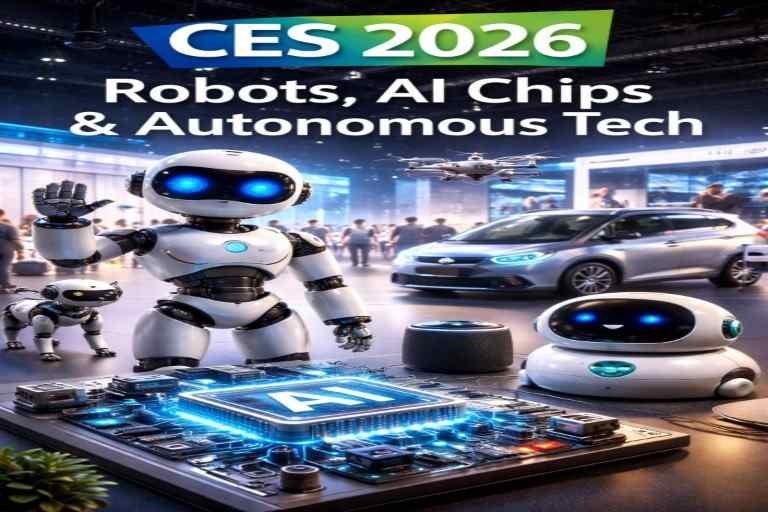
AI is also moving beyond screens and traditional electronics into physical machines. Robots, autonomous vehicles, drones and industrial equipment are increasingly using sensors, processors and AI algorithms to understand their surroundings and make decisions.
This development is often described as Physical AI because intelligence is being integrated into machines that interact with the physical world. Advanced sensors, cameras, processors and communication technologies are essential for these systems.
The combination of AI and electronics could enable robots to perform more complex tasks in manufacturing, logistics, healthcare, agriculture and domestic environments.
Smart Homes Become More Connected
Smart-home electronics are also evolving. Smart cameras, lighting systems, thermostats, security systems and appliances are becoming increasingly interconnected.
Interoperability standards such as Matter are helping different smart-home products communicate more effectively. Meanwhile, local AI processing can allow smart cameras and other devices to perform certain functions without continuously sending sensitive information to remote servers.
Challenges for the Electronics Industry
Despite rapid innovation, the industry faces several challenges. Advanced AI hardware requires sophisticated semiconductor manufacturing, high-performance memory and efficient thermal management.
The electronics supply chain is also under pressure because AI infrastructure is competing with consumer devices for critical components. Rising component costs and semiconductor demand could affect the prices and availability of smartphones, computers and other electronic products.
Security and privacy are equally important. As more devices become connected and intelligent, manufacturers must protect hardware, firmware, personal data and communication channels from cyber threats.
What Comes Next?
The future of electronics will likely be defined by a combination of AI, semiconductor innovation, connectivity, energy efficiency and intelligent sensors.
Rather than simply making devices faster, manufacturers are increasingly focusing on making them more useful and autonomous. Smartphones, PCs, wearables, smart-home products and robots are moving toward a model where hardware can understand information, process it locally and respond intelligently.
In 2026, AI is therefore becoming more than a software feature. It is becoming a fundamental part of electronic-device design. As semiconductor technology continues to evolve, the boundary between electronics and artificial intelligence will become increasingly smaller, creating a new generation of smarter, faster and more connected devices.