

 By
By Polar expeditions have moved from the edges of adventure travel into the global spotlight. Antarctica and Svalbard are attracting travelers who want to witness towering glaciers, untouched coastlines, immense wildlife colonies, and landscapes unlike anywhere else on Earth. As tourists increasingly value rare, educational, and nature-focused journeys, the coldest regions of the planet are becoming some of the most desired destinations in modern travel.
These journeys are not traditional cruises built around entertainment and crowded ports. They are expedition experiences shaped by changing weather, floating sea ice, wildlife sightings, expert guidance, and strict environmental responsibilities. Their growing popularity reflects a wider shift toward meaningful travel and once-in-a-lifetime encounters.
Why Polar Travel Is Experiencing a Boom
Many experienced travelers have already explored major cities, beaches, and familiar cultural destinations. They are now searching for places that still feel genuinely remote. Polar expeditions answer that demand by offering isolation, discovery, and direct contact with the natural world.
Modern expedition ships have also made these regions more accessible. Ice-strengthened vessels now combine improved navigation systems with comfortable cabins, observation lounges, educational facilities, and fleets of inflatable Zodiac boats. Some ships also carry kayaks or small submersibles, allowing guests to explore the environment from different perspectives.
Interest in Antarctica has grown dramatically. Approximately 118,000 people visited the Antarctic region during the 2024–2025 season, compared with about 36,000 in 2014–2015, according to figures reported from industry and Antarctic Treaty documents. More than 80,000 of those recent visitors went ashore, while others experienced the continent from their ships. This rapid growth demonstrates both the appeal of polar travel and the need for careful management. (Le Monde)
Antarctica: The Great White Continent
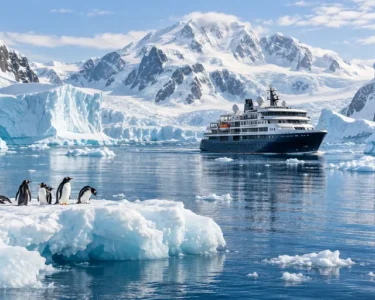
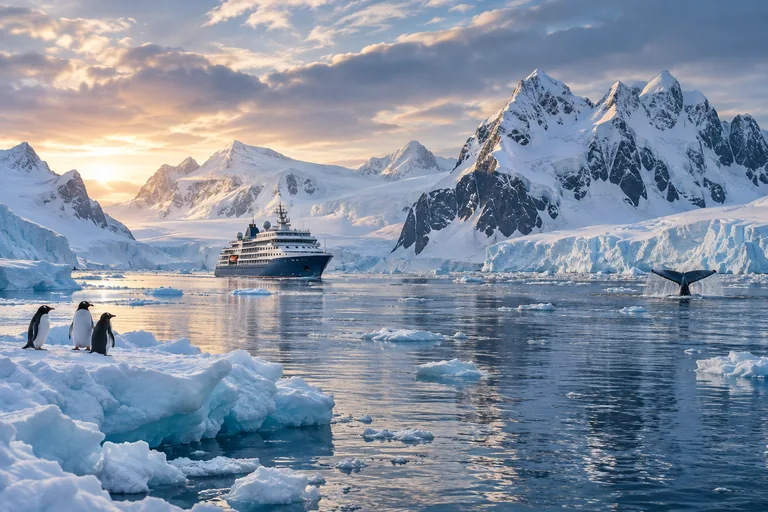
Antarctica offers a scale that photographs struggle to communicate. Enormous tabular icebergs drift through deep-blue water, glaciers descend from mountain ranges, and colonies of penguins gather along the coast. Depending on the itinerary and season, travelers may see gentoo, chinstrap and Adélie penguins, humpback whales, seals, albatrosses, and other seabirds.
Most voyages depart from Ushuaia in Argentina and cross the Drake Passage before reaching the Antarctic Peninsula. Popular activities include Zodiac cruising, guided shore landings, wildlife photography, kayaking, hiking, citizen-science projects, and educational presentations led by scientists or naturalists.
The Antarctic travel season normally runs through the Southern Hemisphere’s spring and summer. Early-season voyages may feature dramatic snow-covered scenery, while later departures can provide increased whale activity and growing penguin chicks. However, every itinerary remains flexible because ice, wind, sea conditions, and wildlife protection requirements determine where passengers can safely land.
Svalbard: Wildlife at the Top of the World
Svalbard provides a different version of the polar experience. Located between mainland Norway and the North Pole, the archipelago combines glaciers, mountains, Arctic tundra, historical expedition sites, and diverse wildlife. Longyearbyen serves as the main gateway for voyages exploring Spitsbergen and surrounding islands.
Travelers may encounter walruses resting near the shoreline, Arctic foxes moving across the tundra, reindeer, seals, whales, and vast seabird colonies. Polar bears are also present, but sightings can never be guaranteed. Responsible operators observe bears from a safe distance and never approach, pursue, feed, or disturb them.
Summer brings the midnight sun, allowing expeditions to operate in daylight around the clock. In colder months, Svalbard offers polar-night experiences, ice caves, snowmobile journeys, and opportunities to observe the northern lights. Its accessibility through Norway makes Svalbard one of the most practical gateways to the High Arctic.
Small Ships Create Deeper Experiences
The strongest polar expeditions focus on exploration rather than simply viewing the scenery from a deck. Smaller vessels can often enter narrow channels and reach landing areas that are unsuitable for conventional cruise ships. They also make it easier to divide passengers into guided groups for shore visits and Zodiac excursions.
Daily plans may change without warning. A scheduled landing can be replaced by whale watching, or sea ice may require the captain to follow an entirely different route. For many travelers, this uncertainty is part of the attraction. The landscape determines the journey, not a rigid sightseeing timetable.
Onboard lectures add another important dimension. Expedition teams explain glaciology, polar history, marine biology, climate science, photography, and wildlife behavior. This transforms the voyage into an immersive learning experience rather than a simple holiday.
Environmental Pressure Cannot Be Ignored
The growth of polar tourism creates serious concerns. Ships and aircraft generate emissions, visitors can accidentally introduce non-native seeds or microorganisms, and repeated landings may disturb sensitive habitats. Black carbon settling on ice can also reduce its reflectivity and contribute to faster melting.
Antarctica is governed through the Antarctic Treaty System, while organized tourism operators commonly follow biosecurity and visitor-management procedures. Boots, clothing, backpacks, and equipment may need to be vacuumed, inspected, or disinfected before landings. Visitors must avoid touching wildlife, taking natural souvenirs, leaving waste, or walking outside designated areas.
Svalbard has also strengthened environmental controls to reduce disturbance in vulnerable locations. Travelers should therefore expect greater restrictions on landings, wildlife observation, motorized movement, and access to protected areas.
Choosing a Responsible Polar Expedition
Travelers should compare more than cabins and prices. Vessel size, environmental policies, guide-to-passenger ratios, educational programs, safety standards, fuel technology, and operator experience all matter.
Choosing an operator connected to recognized expedition-tourism bodies can provide additional confidence. Travelers should also select longer, carefully planned itineraries instead of treating the destination as a checklist item. Sustainable tourism standards encourage operators and destinations to protect natural environments while creating meaningful visitor experiences. (Global Sustainable Tourism Council)
The Future of the Cold Frontier
Polar expeditions will likely remain highly desirable because they offer something increasingly rare: a feeling of true remoteness. Yet their future depends on protecting the very landscapes that attract visitors.
Antarctica and Svalbard should never become ordinary mass-tourism destinations. Strong regulation, smaller groups, cleaner ships, scientific education, and responsible traveler behavior will be essential. The cold frontier can continue inspiring people—but only if exploration is matched by restraint, respect, and a genuine commitment to conservation.