

 By
By 🟣 Why Ube Is Suddenly Big News
The purple yam ube (Dioscorea alata) has gone from a traditional Filipino ingredient to a global food trend, appearing in lattes, ice creams, pastries, cakes and other desserts. But today’s major development is happening at the supply end: the Philippines has indefinitely suspended exports of fresh ube and propagative planting material because domestic planting material is in short supply.
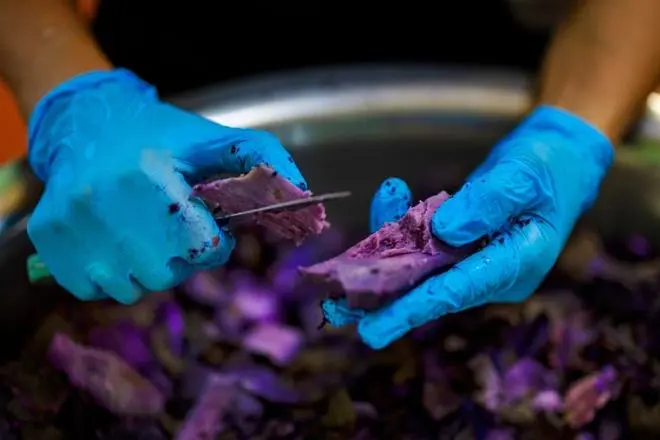
🍠 What Exactly Is Ube?
- Ube is a naturally purple-fleshed yam traditionally used in Filipino cuisine.
- It has a mildly sweet, nutty flavour and striking violet colour.
- Traditional uses include:
- Ube halaya
- Halo-halo
- Cakes
- Ice cream
- Pastries
- Its colour and distinctive flavour have helped it spread internationally through cafés, bakeries and dessert brands.
🌎 Why Is Ube Trending Around the World?
- Consumers are increasingly interested in visually distinctive ingredients and unfamiliar regional flavours.
- Ube works particularly well in social-media-friendly foods because of its natural purple colour.
- It has appeared in:
- Ube lattes
- Doughnuts
- Croissants
- Cheesecakes
- Ice cream
- Cookies
- Smoothies
- International demand has grown enough that ube is increasingly being compared with other globally popular ingredients such as matcha.
🚨 The Big News: Fresh Ube Exports Suspended
The Philippines’ Department of Agriculture says the export suspension was introduced to protect scarce planting material while the country expands domestic production.
- The suspension covers fresh ube and propagative planting materials.
- It applies regardless of whether shipments are intended for consumption, planting or research.
- The government wants to prevent valuable Philippine planting material from being used to establish competing production overseas.
Important: This does not mean every ube product has disappeared from international markets. Processed products such as ube powder, paste, jam and halaya can still be exported.
📈 Demand Is Growing Faster Than Supply
This is what makes the story particularly interesting for the global food industry.
- Philippine authorities say demand for ube has been increasing faster than domestic production capacity.
- Farmers face shortages of quality planting material.
- The government is therefore trying to increase propagation before pushing exports further.
- A ₱300 million budget allocation for the Philippine ube industry in 2027 has been approved as part of efforts to strengthen the sector.
🧑🌾 From Traditional Crop to Global Business
Ube’s story shows how a regional food can become an international commercial ingredient.
- Philippine ube products are already reaching markets including:
- Canada
- Middle Eastern markets
- Parts of Asia
- The US, South Korea and Europe are viewed as further growth markets.
- Government agencies are working with farmers, processors, exporters and researchers to organize the industry.
🧬 The Philippines Is Also Protecting Its Native Ube
The government is not only focusing on exports.
- Researchers are working on genetic mapping of Philippine ube varieties.
- The goal includes:
- Protecting native varieties
- Establishing authenticity
- Supporting higher-yielding varieties
- Reducing the risk of valuable genetic material being used elsewhere without protection
- Tissue culture, community nurseries and mini-set propagation are also being explored to increase planting material.
☕ What Could This Mean for Cafés and Food Brands?
The situation creates an interesting challenge.
- Global brands may continue wanting ube-flavoured products.
- Fresh Philippine ube could become harder to source.
- Businesses may increasingly rely on:
- Frozen ube
- Ube paste
- Ube powder
- Ube extracts
- Locally cultivated alternatives
- That could push ingredient prices and encourage food companies to develop more reliable supply chains.
But there is another issue: real ube and artificial “ube flavour” are not necessarily the same thing. As the ingredient becomes more valuable, consumers may pay more attention to authenticity and origin.
💡 Why This Is a Bigger Food Trend Than Just a Purple Dessert
Ube represents a broader shift in global food culture:
Traditional ingredient → social-media discovery → international demand → supply pressure → premium ingredient → agricultural strategy.
That cycle is increasingly visible with regional foods that suddenly become global sensations.
🔥 Strong Takeaway
Ube’s biggest story in 2026 isn’t just its purple colour — it’s what happens when global food demand grows faster than the farmers producing the ingredient.
The Philippines is now trying to protect its planting material, expand production and build ube into a stronger agricultural industry. Meanwhile, cafés and food brands around the world will have to balance the growing appetite for ube with questions about supply, authenticity, price and origin.
Follow Us On Instagaram