 By
By October 1 is World Vegetarian Day, marking the beginning of Vegetarian Awareness Month.
For many people, vegetarian food can be a healthy choice—but “vegetarian” does not automatically mean “healthy.” A diet based heavily on refined carbohydrates, fried foods and sugary drinks can still be nutritionally poor.
🌱 Why Is Vegetarian Nutrition Trending Today?
India already has a large vegetarian population, while nutrition discussions are increasingly focusing on adequate protein, dietary diversity and balanced meals.
India’s 2026 Rashtriya Poshan Maah campaign is also emphasizing dietary diversity and adequate protein intake, making nutrition quality an important health conversation.
🫘 Vegetarian Foods Can Provide Protein
You don’t need meat or fish to get protein.
Good vegetarian options include:
- 🫘 Dal and lentils
- 🫛 Green peas
- 🫘 Chickpeas and rajma
- 🥜 Peanuts and other nuts
- 🌱 Soybeans and tofu
- 🥛 Milk and curd
- 🧀 Paneer
- 🌻 Seeds
The key is eating a variety of protein sources rather than depending on only one food.
🍚 The Common Mistake: Vegetarian ≠ Only Rice and Vegetables
A meal containing mainly rice, potato and a small amount of vegetables may provide calories but can be relatively low in protein.
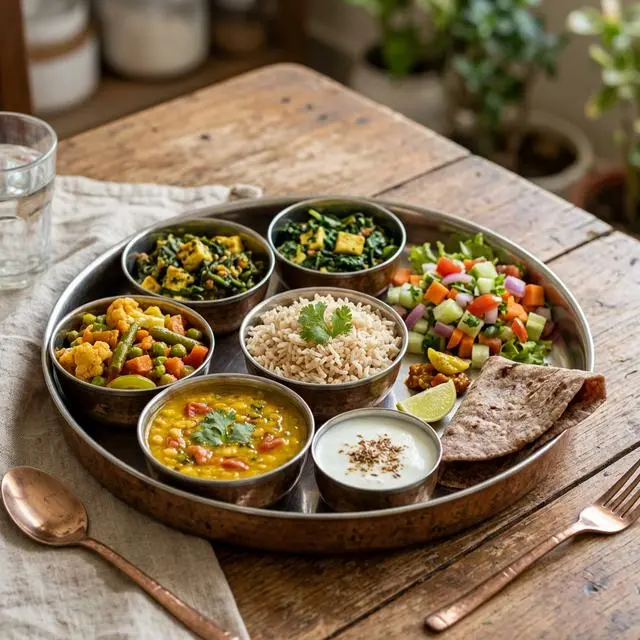
A more balanced Indian vegetarian plate could look like:
Rice/roti + dal/beans + vegetables + curd + fruit
You can adjust portions according to your individual energy and nutritional needs.
💪 Protein Is Especially Important
Protein supports muscle maintenance, tissue repair and recovery. Recent Indian health coverage has also highlighted the importance of adequate protein during recovery from illness.
But more protein isn’t automatically better. Supplements are not necessary for everyone when adequate protein can be obtained from normal foods.
🥬 Don’t Forget Micronutrients
A well-planned vegetarian diet should also provide nutrients such as:
- Iron
- Vitamin B12
- Calcium
- Zinc
- Iodine
- Vitamin D
- Omega-3 fats
Vitamin B12 deserves particular attention, because natural B12 sources are mainly animal-derived. People following a completely vegan diet may need fortified foods or supplementation based on professional advice.
🍟 Vegetarian Junk Food Is Still Junk Food
This is the part people often miss.
A food can be vegetarian and still contain substantial amounts of:
Added sugar + salt + unhealthy fats + refined carbohydrates
So replacing meat with fried snacks, sweets or highly processed vegetarian foods isn’t automatically a health improvement.
🌿 Today’s Health Takeaway
World Vegetarian Day is not about saying everyone should become vegetarian.
The useful lesson is:
Whatever your diet pattern, make it diverse, protein-aware and nutritionally balanced.
For a vegetarian Indian meal, think:
🥗 Vegetables + 🫘 Protein + 🌾 Whole grains + 🥛 Appropriate dairy/fortified alternatives + 🍎 Fruits + 🥜 Nuts/seeds
That’s much more useful than simply asking whether a food is “vegetarian” or “non-vegetarian.”
This article is for general health awareness and does not replace advice from a qualified healthcare professional.
Follow Us On Instagaram