

 By
The Next Generation of AI PCs Is Coming: Microsoft and NVIDIA Prepare to Redefine Windows Computers
The computer industry is entering another important phase as artificial intelligence moves from cloud services directly into personal computers. For October 2026, one of the biggest developments to watch is Microsoft’s upcoming Windows and Surface event, scheduled for October 7 in San Francisco.
Microsoft has described the event as a discussion about how local AI will shape the next chapter of the PC. The event is particularly significant because it comes more than two years after Microsoft’s previous major Windows event. NVIDIA CEO Jensen Huang is also expected to participate, putting the company’s new RTX Spark platform firmly in the spotlight.
Local AI Is Becoming the New PC Trend
For years, many AI services have depended on powerful cloud data centers. Users send information to remote servers, the AI processes it, and the results are returned to the computer.
The next generation of AI PCs is changing that model.
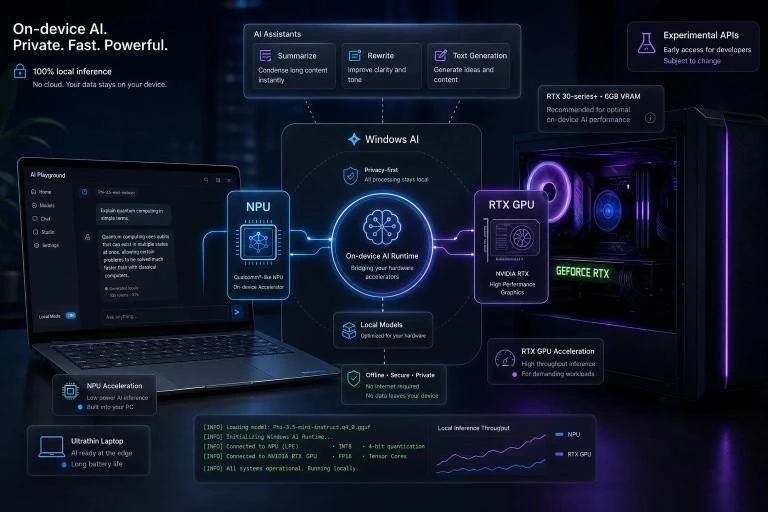
Local AI allows computers to perform more AI workloads directly on the device. This can potentially provide faster responses for supported applications, reduce dependence on internet connectivity and give users greater control over certain types of data.
Microsoft’s latest Windows AI updates show that local AI capabilities are already becoming part of the operating system. Microsoft continues to update AI components supporting different hardware platforms from AMD, Intel, NVIDIA and Qualcomm.
NVIDIA RTX Spark Could Change Windows Hardware
NVIDIA’s RTX Spark is one of the most interesting developments in this transition. NVIDIA describes the platform as a new class of Windows computer designed for personal AI agents, creators and gamers.
The platform combines NVIDIA computing technologies with its AI software ecosystem, including CUDA, RTX and TensorRT technologies. NVIDIA says RTX Spark is designed to enable AI-focused Windows laptops and compact desktop systems.
Reported configurations of the RTX Spark N1X platform include substantial unified memory capacity and thousands of CUDA cores. This architecture is particularly interesting for AI workloads because CPU and GPU resources can work with a shared memory pool.
That could make compact computers increasingly capable of handling AI models and demanding creative applications locally.
Microsoft’s Copilot+ PC Branding Is Changing
Another interesting development is Microsoft’s changing approach to AI-PC branding.
Microsoft has reportedly stopped using the Copilot+ PC name on some of its newest Surface devices, even though those devices meet the original hardware requirements for the category. The shift comes as AI capabilities become increasingly common across modern computers.
This could indicate that AI is becoming less of a special PC category and more of a standard computing feature.
Instead of buying a computer specifically because it carries an AI label, consumers may soon expect AI acceleration to be built into laptops and desktops as naturally as Wi-Fi, Bluetooth and high-speed storage.
What Will the New AI PCs Do?
The practical question is what users will actually gain from these technologies.
AI PCs can support features such as image generation, video processing, speech recognition, document summarization, coding assistance and AI-powered productivity tools. Developers can also benefit from running AI models locally for testing and experimentation.
Microsoft is simultaneously expanding Copilot with coding and agentic capabilities. Recent updates allow Copilot to work with tools such as Word, Excel and PowerPoint, while its Code functionality is designed to help users create software and other projects using natural-language instructions.
The combination of local hardware and increasingly capable AI software could therefore make computers more interactive and useful.
Why October 2026 Matters
The October 7 Microsoft event could provide a clearer look at where Windows computers are heading. With Microsoft focusing on local AI and NVIDIA bringing RTX Spark into the Windows ecosystem, the industry is moving toward computers designed not just to run applications but also to actively assist users.
However, buyers should still look beyond AI specifications when choosing a computer. Processor performance, RAM, storage, battery life, display quality, graphics performance, software compatibility and price remain important factors.
The biggest change may ultimately be conceptual: the PC is evolving from a passive tool into a platform capable of running increasingly sophisticated AI directly on the device.
As October progresses, Microsoft, NVIDIA and other chipmakers could give consumers a much clearer picture of what the AI-powered PC era will look like.