

 By
By Apple Pay Arrives in India: What Apple Users Need to Know in 2026
Apple has officially brought Apple Pay to India, marking an important expansion of its digital payment ecosystem in one of the world’s largest smartphone markets. The service became available in India on September 30, 2026, giving compatible iPhone, iPad and Apple Watch users a new way to make contactless payments.
The launch is particularly interesting because Indian consumers already have a highly developed digital payment ecosystem led by UPI. Instead of immediately replacing existing payment methods, Apple Pay enters the market with a focus on credit-card-based contactless transactions, security and integration with Apple devices.
How Apple Pay Works in India
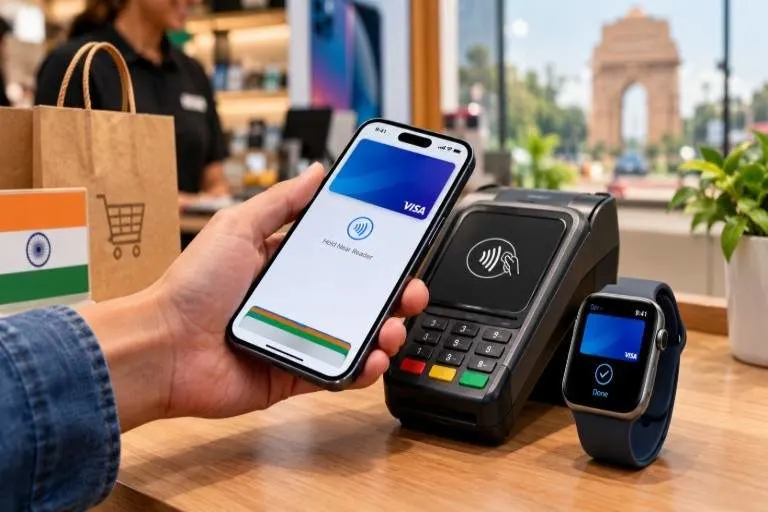
Apple Pay allows users to add supported payment cards to the Apple Wallet app. Once a card is added, users can make contactless payments at compatible payment terminals by authenticating with Face ID, Touch ID or their device passcode.
The service uses tokenization rather than sharing the user’s actual card number with merchants during transactions. This approach is designed to provide an additional layer of security while making payments faster and more convenient.
For Apple users, the biggest attraction is convenience. Instead of taking out a physical card, users can simply use their compatible Apple device at a supported contactless terminal.
Which Cards Are Supported?
At launch, Apple Pay’s availability in India is relatively limited. Apple has partnered with Axis Bank, Visa and Mastercard, with initial support focused on eligible Axis Bank Visa and Mastercard credit cards.
This means the service is not yet available to every Indian banking customer. Additional banks and cards could be added as Apple’s payment ecosystem develops in the country.
Another important point is that Apple Pay currently does not provide UPI payments. Indian users who rely heavily on UPI apps will therefore continue using services such as Google Pay, PhonePe and Paytm for UPI-based transactions.
Compatible Apple Devices
Apple Pay is designed to work across several Apple product categories. At launch, supported devices include newer iPhones, compatible Apple Watch models and selected iPads, while Mac support is also expected as the rollout develops.
This broad device integration could become an important advantage for people who already use several Apple products. A user can potentially keep payment cards connected to the same Apple ecosystem instead of depending on a separate physical wallet.
Why the Launch Matters
India has rapidly expanded its digital-payment infrastructure, making the country an important market for global technology companies. Apple’s decision to introduce Apple Pay now shows the company’s interest in expanding services around its growing hardware ecosystem.
The timing is also notable because Apple’s iPhone business has become increasingly important to India’s electronics and manufacturing story. Recent industry data reported by the Financial Express shows that Apple’s iPhone exports have contributed substantially to India’s smartphone export growth.
Apple Pay therefore adds another layer to Apple’s presence in the Indian technology market. The company is no longer competing only through smartphones, laptops, tablets and wearables; services are becoming an increasingly visible part of the ecosystem.
What Could Come Next?
The biggest question for Indian consumers is whether Apple will eventually expand Apple Pay beyond credit cards and introduce deeper support for India’s payment infrastructure.
More banks, debit cards and payment options could make the service more useful to a much larger audience. For now, however, Apple Pay’s Indian launch should be viewed as an initial step rather than a complete replacement for existing digital-payment platforms.
For Apple users who already have a supported Axis Bank credit card and regularly use contactless payments, the service offers a convenient new option. For everyone else, the next phase of Apple’s India payment strategy will be worth watching.