

 By
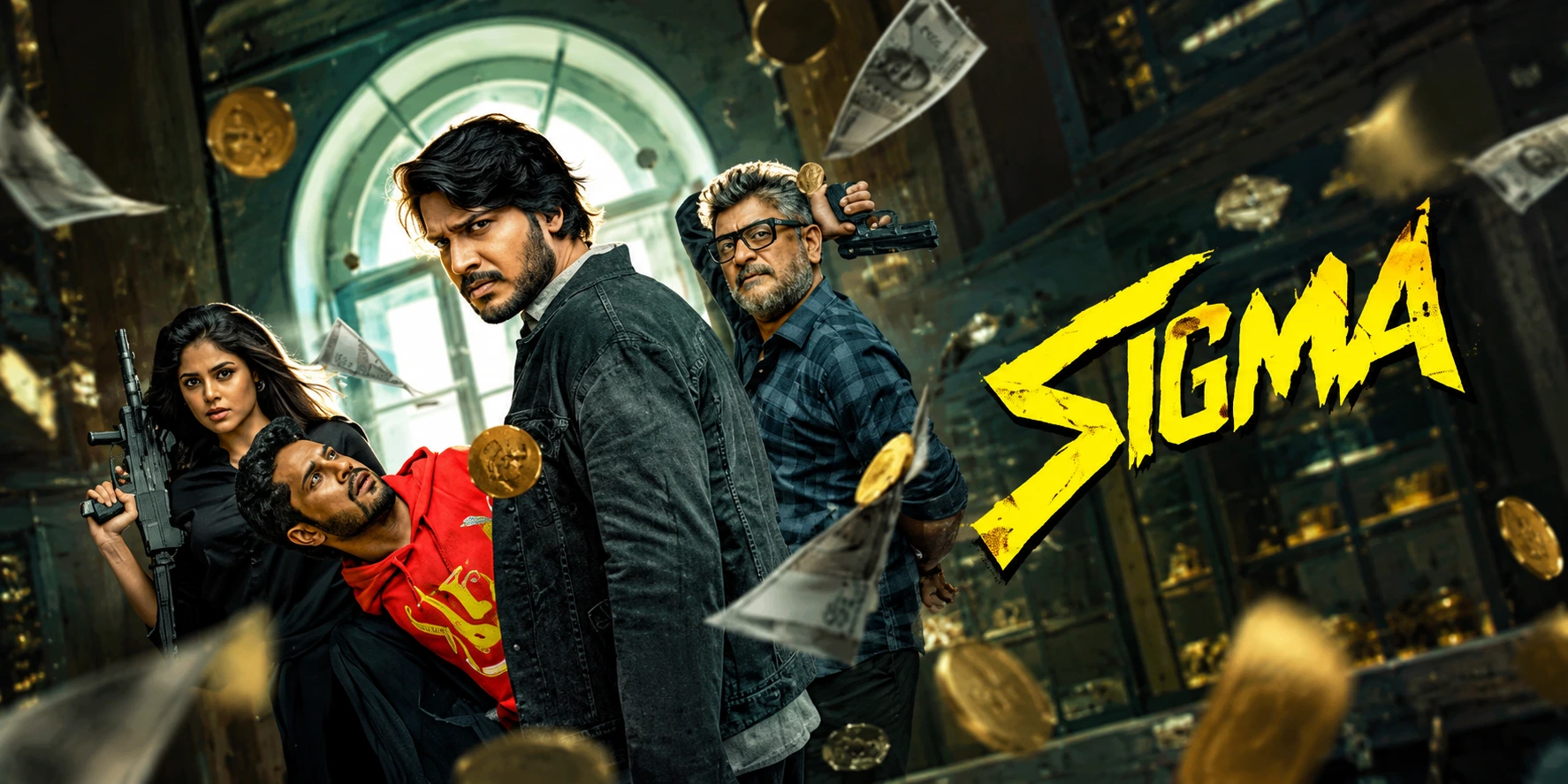
By Sigma is a 2026 action-adventure heist drama directed by Jason Sanjay in his directorial debut. The film stars Sundeep Kishan, Faria Abdullah, Sampath Raj, Raju Sundaram, Shiv Panditt and others, with S. Thaman composing the music and Krishnan Vasant handling cinematography. Produced by Lyca Productions, the film released in theatres on October 2, 2026, with a runtime of around 2 hours 25 minutes.
The film has received a mixed critical response. Sundeep Kishan’s performance, the interval sequence, action moments and visual presentation have received some appreciation, while the screenplay, pacing, character development and lack of freshness have been repeatedly identified as weaknesses.
Story & Concept
Guru (Sundeep Kishan) lives in Vizag and runs a free library that was started by his late mother. He is burdened by his father’s large debt and desperately needs money to save the library. His search for a way out eventually connects him to a dangerous criminal network, a valuable key/drive and a huge stash of money.
What begins as a personal struggle gradually turns into a heist involving criminals, hidden money and multiple players trying to get their hands on the same prize. The basic premise has potential, but several reviews felt that the film relies too heavily on familiar heist-film templates instead of developing a fresh narrative.
Performance
Sundeep Kishan is one of the film’s stronger elements. He gives Guru the required energy and handles the action and lighter moments with commitment. His performance provides some momentum even when the screenplay slows down.
Faria Abdullah has limited scope compared with the lead, while Sampath Raj gets a more substantial role as the antagonist. Sampath brings his usual screen presence to the character, but the supporting roles aren’t developed enough to create a lasting impact.
Screenplay & Direction
Jason Sanjay clearly attempts to give Sigma a stylish cinematic presentation. The film has ambition, some visually interesting sequences and flashes of directorial confidence. The interval sequence is also one of the portions that received positive attention.
The bigger problem is the writing. The central heist idea is surrounded by several predictable developments, and the screenplay struggles to maintain tension. The second half in particular has been criticised for becoming repetitive and confusing, with the narrative moving in circles instead of steadily building toward a satisfying payoff.
Action & Heist Elements
The film promises a proper heist-action experience, but the first half spends considerable time establishing Guru’s financial problems and personal circumstances.
The interval fight provides a noticeable spike in energy, while the second half contains more action. However, the execution does not consistently create the excitement expected from a heist thriller.
Comedy & Entertainment
There are comedy portions mixed into the crime narrative, with Sundeep Kishan carrying much of the lighter material.
However, some reviews felt that the forced comedy interferes with serious scenes instead of enhancing them. The tonal shifts occasionally reduce the impact of emotional and action sequences.
Music & Technical Aspects
Krishnan Vasant’s cinematography and the production design give the film a reasonably polished look. The technical presentation is among the more consistent aspects of the movie.
Thaman’s music and background score received a more mixed response, with some reviewers finding the score fairly routine and unable to elevate important moments. The editing also comes across as dated in portions, according to some reviews.
Pacing & Runtime
At approximately 2 hours 25 minutes, Sigma is not excessively long on paper, but the screenplay makes the runtime feel heavier than it needs to be.
The opening portions take time to establish Guru’s situation, while the second half suffers from repetition. A tighter edit and more focused narration could have improved the overall experience.
Second Half & Climax
The second half has more scope for the heist and action elements, but this is also where the screenplay begins to lose control.
Several developments are made more complicated than necessary, while the final stretch does not provide the level of tension or payoff expected from the setup. The climax, therefore, doesn’t completely capitalize on the film’s premise.
What Works
- Sundeep Kishan gives a committed performance
- The interval sequence provides a strong commercial moment
- Some action sequences have good energy
- Cinematography and production design are reasonably polished
- Jason Sanjay shows visual ambition in his debut
- Sampath Raj brings presence to the antagonist role
- The basic heist premise has commercial potential
What Doesn’t Work
- Routine and predictable heist template
- Screenplay lacks consistency and freshness
- First half takes too long to establish the actual heist
- Second half becomes repetitive and confusing
- Supporting characters lack sufficient depth
- Forced comedy affects serious sequences
- Music and BGM don’t consistently elevate key moments
- Climax doesn’t deliver a strong enough payoff
- Runtime feels stretched because of the narration
Final Verdict
Sigma has the ingredients for an engaging heist entertainer—a capable lead actor, a commercial premise, action, crime and a reasonably polished technical presentation. Jason Sanjay also shows flashes of visual ambition in his directorial debut.
However, the writing doesn’t give those elements enough support. The familiar story, uneven screenplay, repetitive second half and underdeveloped characters prevent the film from reaching the level of excitement its premise promises. Sundeep Kishan remains watchable, but Sigma ultimately feels like an ambitious idea trapped inside a conventional screenplay.
Overall Rating: 2.5/5
Story: ⭐⭐⭐
Screenplay: ⭐⭐
Performances: ⭐⭐⭐
Direction: ⭐⭐½
Action: ⭐⭐⭐
Comedy: ⭐⭐½
Music: ⭐⭐½
Cinematography: ⭐⭐⭐
Pacing: ⭐⭐
Climax: ⭐⭐
Overall: ⭐⭐½
Verdict: Sigma is a visually ambitious heist drama with a committed Sundeep Kishan performance and a few effective action moments, but its routine writing, uneven pacing and weak second half limit its overall impact.