


 By
Tomorrow’s Computer Trends: AI-Powered PCs, Next-Generation Chips, and Smarter Laptops in 2026
The computer industry is evolving rapidly in 2026, with artificial intelligence (AI), advanced processors, and more powerful laptops becoming major technology trends. Computers are no longer designed only for browsing, office work, or gaming. They are increasingly being built to run AI applications, assist with creative projects, and handle complex tasks directly on the device.
As October 20 approaches, one of the most interesting developments is the arrival of a new generation of AI-focused Windows computers powered by NVIDIA’s RTX Spark platform. These systems are designed to bring advanced AI capabilities to laptops and desktop PCs.
Here are five computer trends worth watching tomorrow.
1. AI-Powered Computers Are Changing Everyday Work
Artificial intelligence is becoming one of the biggest selling points for modern computers. AI-powered PCs can support tasks such as summarizing documents, assisting with writing, editing images, improving video calls, and helping developers write code.
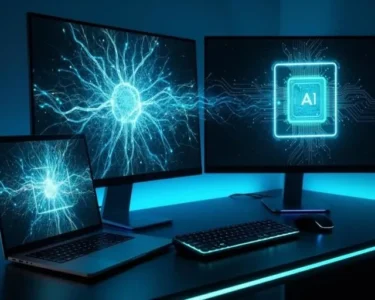
The latest generation of AI computers combines traditional processors with specialized hardware to handle certain AI workloads more efficiently. Some systems can run compatible AI models locally, reducing the need to send every request to a cloud service.
For students, this technology can make research and studying more convenient. Professionals can use AI tools to organize information, while creators may benefit from intelligent photo and video editing.
However, available features vary by hardware and software. Buyers should check which AI functions their chosen computer actually supports.
2. NVIDIA Is Bringing More AI Power to PCs
A major recent development is NVIDIA’s RTX Spark platform, which began reaching consumers on October 16, 2026. The company says compatible systems combine its Blackwell RTX graphics technology with AI computing capabilities and up to 128GB of unified memory.
These computers target developers, content creators, and users who need powerful computing for demanding applications. Local AI processing can support tasks such as running AI models, generating content, and working with complex creative projects.
This development could make advanced AI tools more accessible without relying entirely on remote computing services.
Nevertheless, these are premium systems, and their high prices may put them beyond the budgets of everyday users. For basic browsing, online classes, and office applications, an affordable laptop may remain the better choice.
3. New Processors Are Improving Performance and Efficiency
Processors remain central to computer innovation. Manufacturers such as Intel are developing chips that aim to balance processing power, graphics performance, battery life, and AI acceleration.
Intel’s Core Ultra Series 3 platform, introduced in 2026, focuses on these areas and is designed for a broad range of laptop configurations.
Better processor efficiency can help laptops handle multiple applications while managing heat and power consumption. It can also benefit professionals working with programming tools, spreadsheets, design applications, and video-editing software.
When purchasing a computer, consumers should compare the processor, RAM, storage, graphics capabilities, and battery performance together. A powerful processor alone does not guarantee the best overall experience.
4. Gaming and Content Creation Demand More Powerful Hardware
Gaming PCs and creative workstations continue to benefit from advances in graphics hardware. Modern graphics processors can deliver detailed visuals, smoother gameplay, faster rendering, and acceleration for supported AI applications.
For video editors, photographers, designers, and game developers, these improvements can reduce waiting times and make demanding projects easier to manage.
However, users should not choose a graphics card based only on marketing claims. Real-world performance depends on the game or application, display resolution, cooling system, and other hardware components.
Casual users may not need a dedicated graphics card, while serious gamers and creative professionals should compare performance benchmarks before investing in an expensive system.
5. Computer Security and Software Updates Matter More Than Ever
As computers become more connected and AI tools gain access to files and applications, security remains an important consideration.
Keeping operating systems, browsers, drivers, and applications updated helps protect devices against known vulnerabilities. Users should also enable multifactor authentication where available, use strong passwords, and avoid downloading software from unfamiliar sources.
AI tools deserve particular attention because some applications may request access to personal documents, emails, or other sensitive information. Review permissions carefully and use trusted software.
Regular backups are equally important. A reliable backup can help protect valuable photographs, work documents, and personal files if a device fails or becomes compromised.
Conclusion: What Is Next for Computers in 2026?
The computer industry is moving toward smarter, more capable devices that combine AI processing, improved hardware, and better software integration. NVIDIA’s latest AI-focused PCs and Intel’s processor developments demonstrate how manufacturers are competing to meet the growing demand for performance and intelligent computing.
For consumers, the best computer is not necessarily the newest or most expensive model. It is the one that matches their budget, workload, and future needs.
As these trends continue, buyers should watch product announcements, compare independent performance tests, and prioritize security, reliability, and practical benefits when choosing their next computer.