

 By
AI-Powered Computers in 2026: How a New Generation of PCs Is Changing Technology
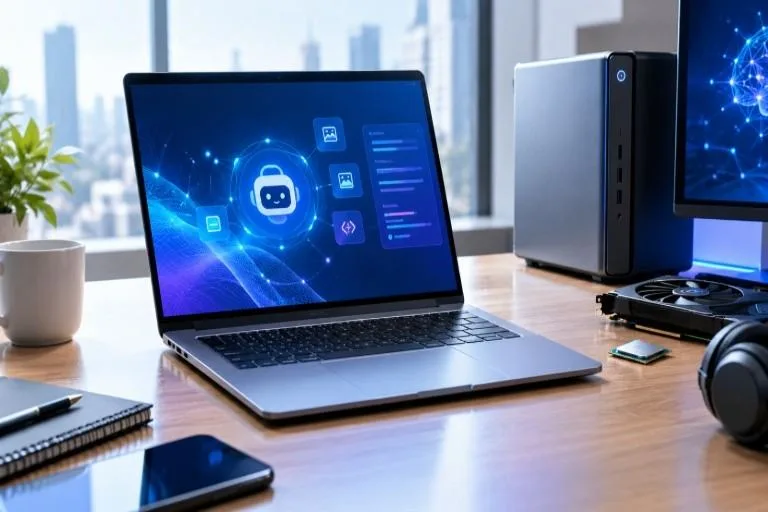
The computer industry is experiencing a major transformation in 2026 as artificial intelligence (AI) becomes an important part of modern laptops and desktop PCs. From helping users complete everyday tasks to supporting advanced gaming, software development, and creative projects, AI-powered computers are changing how people use technology.
One of the latest developments is the introduction of NVIDIA RTX Spark-powered Windows computers, designed to run demanding AI applications directly on a personal computer. Systems from brands including ASUS, Dell, HP, Lenovo, Microsoft, and MSI began becoming available in October 2026.
What Are AI-Powered Computers?
AI-powered computers are devices equipped with hardware and software designed to accelerate artificial intelligence tasks. Depending on the system, this may include a dedicated neural processing unit (NPU), a powerful graphics processing unit (GPU), or specialized processors that help run AI applications efficiently.
Traditional computers already support AI tools through the internet. However, newer systems can perform certain AI tasks directly on the device, reducing the need to send every request to a cloud server.
These capabilities can help users summarize documents, generate content, analyze information, edit images, and automate repetitive activities. The exact features available depend on the computer’s hardware, operating system, and installed software.
NVIDIA RTX Spark: A New Direction for PCs
One of the notable computer technology developments this month is NVIDIA’s RTX Spark platform. It combines NVIDIA Blackwell RTX graphics technology with a Grace CPU in a unified computing architecture intended for demanding AI workloads, creative applications, and gaming.
NVIDIA reports that supported systems can offer up to 128GB of unified memory and up to one petaflop of FP4 AI performance. These specifications are aimed at users who need substantial computing resources for local AI models and other intensive applications.
A New Beginning for Windows PCs
The technology is also attracting attention because it brings capabilities traditionally associated with powerful workstations and specialized computing systems into more compact PC designs.
However, performance varies by model, application, workload, and configuration. Buyers should compare independent reviews and real-world benchmarks rather than relying on headline specifications alone.
Benefits of AI Computers for Everyday Users
AI-powered computers can offer several practical advantages.
1. Improved productivity: AI assistants can help draft emails, summarize long documents, organize information, and support research. These tools may save time when performing repetitive tasks.
2. Creative work: Designers, video editors, photographers, and content creators can use AI-assisted features for image editing, video processing, and other demanding creative workflows.
3. Better gaming experiences: Modern GPUs support advanced rendering technologies and AI-assisted graphics features. Depending on the game and hardware, these technologies can improve image quality or increase performance.
4. Local AI processing: Running supported AI applications on a computer can reduce dependence on cloud services. It may also improve responsiveness and keep some data on the user’s device.
5. Potential efficiency improvements: Specialized AI hardware can handle certain workloads more efficiently than relying entirely on a general-purpose processor. Actual power consumption and battery life still depend on the device and workload.
What Should Buyers Consider Before Upgrading?
Despite their advantages, AI PCs are not automatically the best choice for everyone. Price is an important consideration, particularly for premium models designed for developers and professional creators.
Buyers should first identify their main requirements. Students may need a reliable laptop for browsing, assignments, and video calls, while professionals may benefit from additional memory and stronger processing capabilities.
For gaming, graphics performance, cooling, and display quality remain important. For AI development, memory capacity, software compatibility, and support for the required models can make a significant difference.
It is also worth checking whether the AI features you want are available in your region, require a subscription, or need an internet connection.
The Future of Computers
The growing popularity of AI-powered PCs signals a broader change in personal computing. Instead of simply running applications, future computers are likely to become more capable assistants that help users create, analyze, communicate, and automate tasks.
Competition between NVIDIA, Microsoft, Apple, Intel, AMD, and other technology companies is expected to encourage further innovation in processors, graphics, memory, and AI software. The shift toward local AI processing is particularly important because it gives consumers more options for handling demanding workloads.
Nevertheless, security, privacy, software compatibility, affordability, and energy efficiency will remain important challenges as the technology develops.