

 By
Introduction: The Connection Between Protein and Bone Health
When people think about protein, they often associate it with muscle growth. However, protein also plays an important role in bone health. Bones contain a framework of proteins, particularly collagen, which helps provide structure and flexibility.
A recent health article published by The Indian Express on October 23, 2026, highlights the importance of protein alongside calcium, vitamin D, and balanced nutrition for maintaining healthy bones.
Bone health is important throughout life. During childhood and adolescence, bones grow and develop. In adulthood, good nutrition and regular physical activity help maintain bone strength. As people get older, protecting bone health becomes increasingly important.
The good news is that a balanced diet containing everyday foods can help provide the nutrients your body needs.
Why Is Protein Important for Bones?
Protein contributes to the structure of bones and supports muscles that help maintain balance and movement. Healthy muscles can also help reduce the risk of falls.
Protein is not the only nutrient involved in bone health. Calcium contributes to bone structure, while vitamin D helps the body absorb calcium.
Important nutrients include:
- Protein: Supports bone structure and muscle maintenance.
- Calcium: Helps build and maintain strong bones and teeth.
- Vitamin D: Helps the body absorb calcium.
- Phosphorus: Works with calcium to support bone structure.
- Magnesium: Contributes to normal bone function.
A balanced eating pattern is more useful than focusing on a single nutrient or consuming unusually large amounts of protein.
Best Everyday Foods for Protein and Bone Health
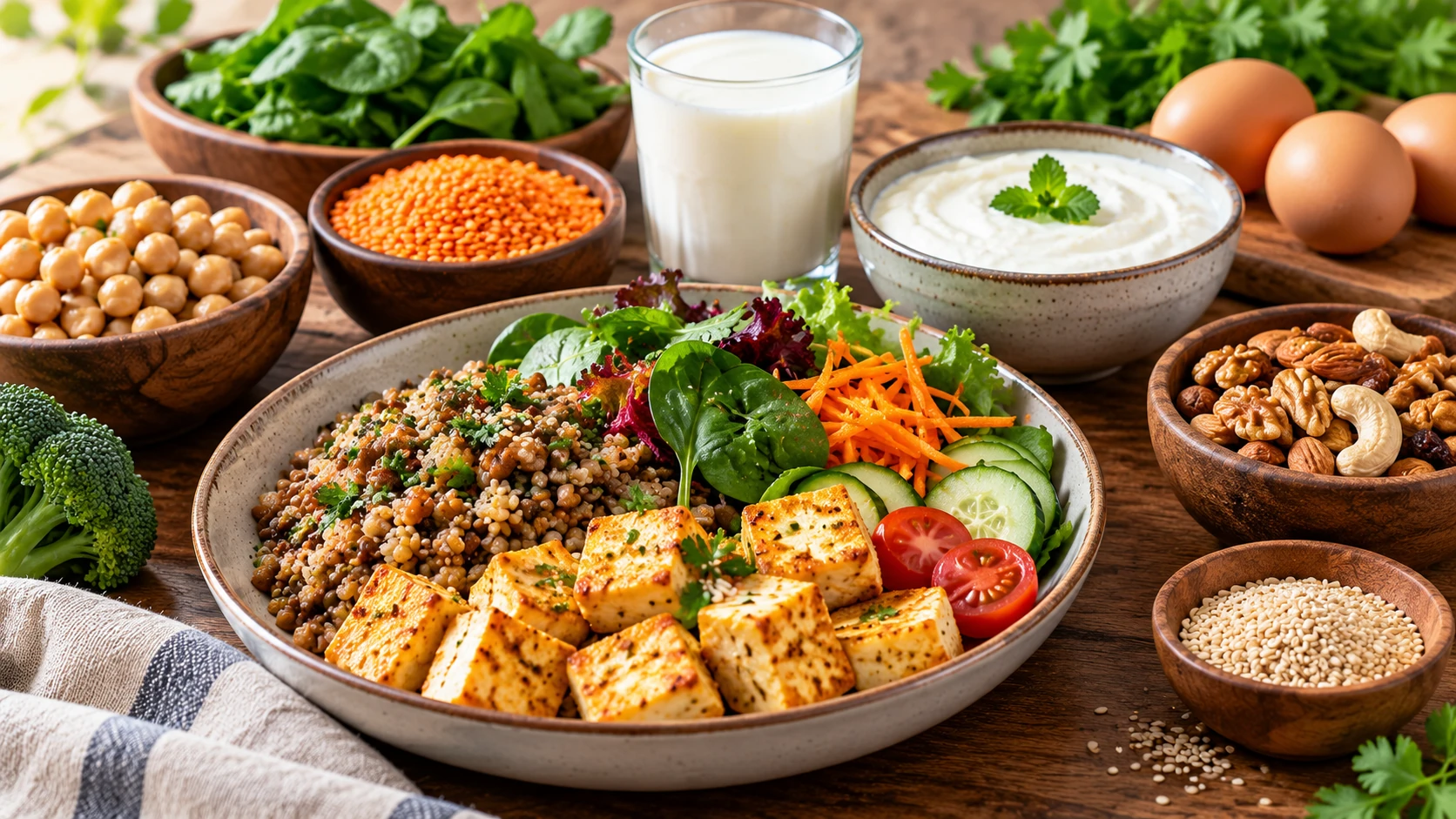
1. Milk, curd, and yoghurt
Dairy products provide protein and calcium. Some varieties of yoghurt also contain beneficial live cultures.
People who avoid dairy can choose appropriately fortified alternatives, checking labels for protein and calcium content.
2. Lentils and beans
Indian staples such as dal, chickpeas, rajma, and other beans provide plant-based protein. They also supply fibre and other nutrients.
Including pulses regularly can help make everyday meals more varied and nutritious.
3. Eggs
Eggs provide protein and several essential nutrients. They can be included in a balanced diet according to individual preferences.
4. Tofu and soy foods
Tofu and other soy foods provide plant-based protein. Calcium content varies by product, so check whether calcium salts have been used during preparation.
5. Nuts and seeds
Almonds, sesame seeds, and other nuts and seeds contribute protein, healthy fats, and minerals. They can be added to meals in suitable portions.
6. Green vegetables
Vegetables such as broccoli and leafy greens provide vitamins and minerals. Some greens contribute calcium, although the amount the body absorbs varies between foods.
Simple Habits That Support Bone Health
Food is one part of maintaining healthy bones. Daily habits matter too.
- Eat a varied diet containing protein-rich foods, vegetables, fruits, and whole grains.
- Include calcium-containing foods regularly.
- Get appropriate vitamin D through diet and safe outdoor activity, following medical advice when needed.
- Participate in age-appropriate weight-bearing activities, such as walking, dancing, or sports.
- Include suitable muscle-strengthening activities as part of a balanced routine.
- Maintain consistent sleep habits.
- Avoid smoking and alcohol, which can negatively affect bone health.
People with medical conditions affecting their bones, kidneys, or nutrient absorption may need individual dietary advice.
Common Myths About Protein and Bone Health
Myth 1: More protein always means stronger bones.
Not necessarily. Protein is essential, but consuming excessive amounts does not automatically improve bone strength. Overall nutrition and individual requirements matter.
Myth 2: Only older adults need to care about their bones.
Bone development begins early in life. Healthy eating and regular movement are valuable habits at every age.
Myth 3: Calcium alone is enough.
Calcium is important, but bone health also depends on protein, vitamin D, physical activity, and other factors.
Myth 4: Everyone needs bone-health supplements.
Not everyone requires supplements. Whether they are appropriate depends on diet, age, health conditions, and individual nutrient needs. A healthcare professional can help determine whether supplementation is necessary.
A Simple Balanced Meal Idea
A practical Indian meal can combine several nutrients without requiring special products.
Consider a meal containing:
- Dal or chickpeas for protein.
- Roti or rice for energy.
- A serving of vegetables.
- Curd or another suitable calcium-containing food.
- Fruit as part of the day’s meals.
There is no single perfect meal. Variety across the day and week is more important than relying on one particular food.
When Should You Seek Professional Advice?
Persistent bone pain, repeated fractures, concerns about growth, or medical conditions that affect nutrient absorption deserve professional assessment.
A doctor or registered dietitian can help assess individual nutritional needs and determine whether tests or supplements are appropriate. Avoid starting high-dose supplements without professional guidance.
Conclusion: Build Strong Bones Through Everyday Choices
Protein plays an important role in bone structure and muscle health, but it works alongside calcium, vitamin D, physical activity, and overall nutrition.
Rather than following extreme diets or focusing on one nutrient, aim for varied meals and consistent healthy habits. Small, sustainable choices can help support bone health throughout life.
Follow Us On Instagaram