

 By
AI-Powered Computers in 2026: How Smart PCs Are Changing the Future of Technology
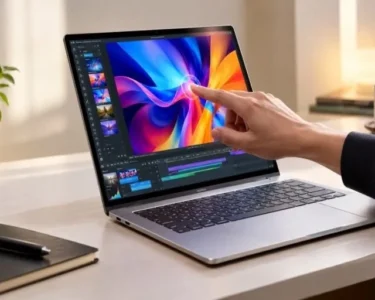
Computer technology continues to evolve, and artificial intelligence is becoming one of the biggest forces shaping the industry in 2026. Modern computers are no longer designed only for browsing the internet, creating documents or playing games. New AI-powered PCs can help users write content, summarize information, edit images, develop software and automate repetitive tasks.
Technology companies are investing in processors, graphics hardware and software that make computers smarter and more efficient. This trend is changing how students, professionals, businesses and everyday users interact with their devices.
1. What Are AI-Powered Computers?
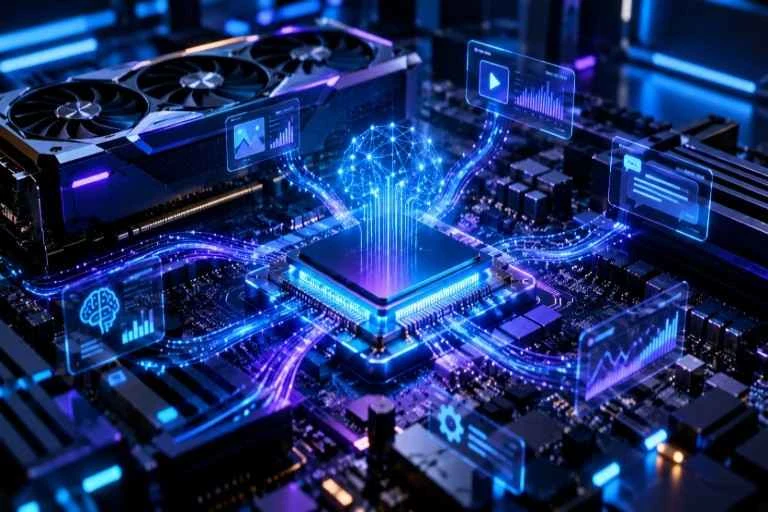
AI-powered computers are devices equipped with hardware and software designed to handle artificial intelligence tasks efficiently. Many newer models include a neural processing unit (NPU), a specialized component that accelerates certain AI workloads.
Unlike traditional computers that depend heavily on their central processing unit (CPU) and graphics processing unit (GPU), AI PCs can distribute suitable tasks across different processing components.
This approach can improve efficiency when running supported features such as background noise removal, image enhancement, live captions and AI assistants. However, the benefits depend on the computer’s hardware, operating system and compatible applications.
2. Running AI Directly on Your Computer
One of the most important developments is local AI processing. Instead of sending every request to an online service, compatible computers can run certain AI models directly on the device.
This can offer several advantages. Responses may be faster, some features can work without an internet connection, and sensitive information may remain on the computer rather than being sent to an external server.
Companies including NVIDIA, Microsoft and their hardware partners are developing technologies that support local AI applications and more advanced automated workflows.
Nevertheless, running larger AI models locally requires sufficient memory, processing power and storage. Cloud services may still be more suitable for complex tasks that exceed a computer’s capabilities.
3. Faster Processors and Smarter Performance
Processor development remains essential to the future of computing. Manufacturers are working to balance speed, energy efficiency and AI performance rather than focusing only on traditional processing benchmarks.
Modern CPUs, GPUs and NPUs serve different purposes. CPUs handle general computing tasks, GPUs are important for graphics and parallel processing, and NPUs accelerate supported AI workloads.
For users, these improvements can mean smoother multitasking, quicker content creation and better performance in compatible applications. Developers may also benefit from computers capable of running coding assistants and testing AI applications locally.
The best processor depends on the intended use. A student working on assignments does not necessarily need the same hardware as a professional video editor or AI researcher.
4. AI Computers for Work, Education and Gaming
AI capabilities are finding applications across several areas.
For students: AI tools can help organize notes, explain difficult concepts, summarize study material and support research. Students should still verify information and use these tools responsibly.
For professionals: AI assistants can help draft documents, analyze information, prepare presentations and automate routine activities. These features can save time when used with appropriate human review.
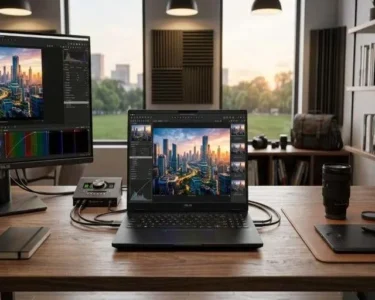
For gamers and creators: Powerful GPUs can support demanding games, video editing, 3D design and AI-assisted image generation. Specialized graphics technologies can also improve visual quality and performance in supported games.
New computer platforms are increasingly designed to combine productivity, creative work and AI development in one device. Dell India+1
5. Important Challenges to Consider
Despite their advantages, AI-powered computers have some limitations. Devices with advanced processors, powerful graphics hardware and large memory capacities can be expensive.
Privacy is another important consideration. Local processing can reduce the need to share data with online services, but users should still check application permissions, security settings and data-handling policies.
Software compatibility also matters. Not every AI feature works on every computer, and some applications require an internet connection or a subscription.
Before purchasing an AI PC, buyers should compare battery life, RAM, storage, processor capabilities, software support and overall cost.