


 By
Air pollution has become an important public health concern in many cities around the world. Increasing traffic, industrial emissions, construction dust, burning of waste and other sources can release pollutants into the air we breathe. While many people associate polluted air mainly with coughing and breathing difficulties, its effects may extend beyond the respiratory system.
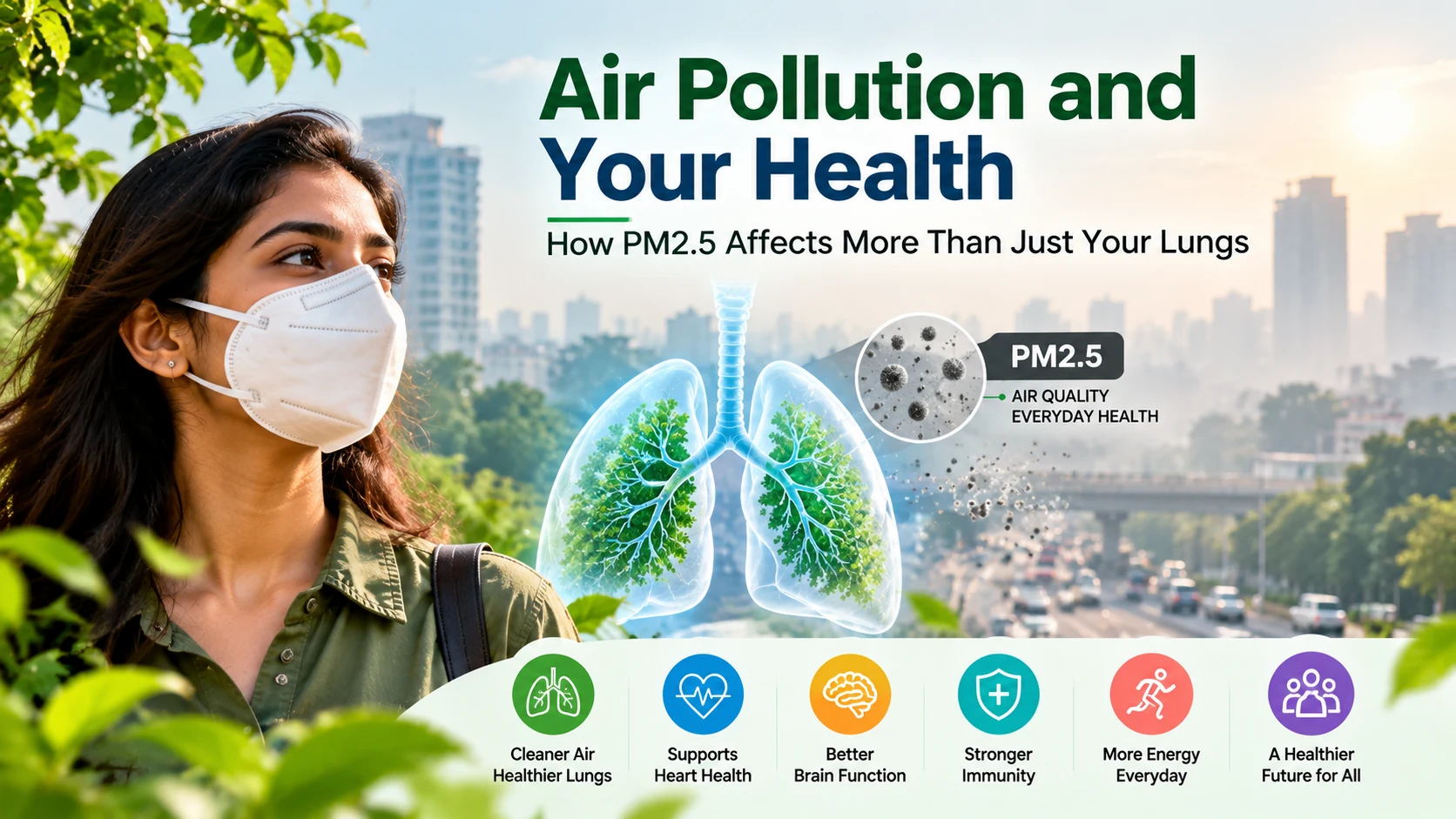
One pollutant receiving particular attention is PM2.5. These extremely small particles can enter deep into the lungs, making them an important concern for public health. Recent health coverage in India has highlighted research into the possible effects of PM2.5 exposure on other parts of the body, including findings from animal studies. These findings are important for further research but should not be interpreted as proof that the same effects occur in every person.
What Is PM2.5?
PM2.5 refers to fine particulate matter with a diameter of 2.5 micrometres or smaller. These particles are much smaller than a human hair and may come from vehicle exhaust, industrial activities, construction, fuel burning and other sources.
Because of their small size, PM2.5 particles can travel deep into the respiratory system. Exposure can be especially concerning when pollution levels remain high over extended periods.
Air quality is commonly measured using the Air Quality Index (AQI). It helps people understand whether outdoor air conditions are good, moderate or unhealthy and whether additional precautions may be useful.
How Air Pollution Can Affect Your Health
1. Respiratory Health
The lungs are among the first organs exposed to polluted air. Fine particles and other pollutants can irritate the respiratory tract and contribute to coughing, wheezing, throat irritation and breathing discomfort.
People with asthma or other existing respiratory conditions may be particularly sensitive to poor air quality. Repeated exposure can also contribute to respiratory health problems over time.
2. Heart and Blood Vessel Health
Air pollution is also associated with cardiovascular health concerns. Research suggests that exposure to fine particles can contribute to inflammation and changes in blood vessel function.
Long-term exposure has been linked with a higher risk of cardiovascular problems, particularly among people with existing health conditions. Reducing exposure is one part of protecting overall health.
3. Brain and Nervous System
Researchers are studying how air pollution may affect the brain and nervous system. Some studies have explored possible links between long-term exposure and changes in cognitive health.
However, research in this area is continuing. It is important to distinguish possible associations from proven cause-and-effect relationships.
4. Effects on Metabolic Health
Recent research has also examined possible connections between air pollution and metabolic health. An October 30 report discussed an animal study in which PM2.5 exposure affected bone marrow cells and bone-related measures in diabetic mice.
This is an early research finding, not proof of the same outcome in humans. More studies are needed to understand how environmental pollution may interact with conditions such as diabetes.
5. Everyday Comfort and Well-Being
Poor air quality can make outdoor activities uncomfortable. Some people may notice eye irritation, headaches, throat discomfort or unusual tiredness when pollution levels are high.
These symptoms can have several possible causes. If they are persistent, severe or concerning, consult a healthcare professional rather than assuming pollution is the only explanation.
Who May Be More Sensitive to Air Pollution?
Although polluted air can affect everyone, some groups may be more vulnerable. These include:
- Children and teenagers whose bodies are still developing.
- Older adults.
- People with asthma or other respiratory conditions.
- People with existing heart or lung diseases.
- Individuals who spend long periods working outdoors.
People in these groups may benefit from paying closer attention to local air-quality information and following appropriate health advice.
Simple Ways to Reduce Exposure to Air Pollution
Check Local Air Quality
Look at the AQI before planning outdoor activities. If air quality is poor, consider moving strenuous outdoor exercise indoors or choosing a time when conditions improve.
Keep Indoor Air Cleaner
Keep windows closed during periods of particularly poor outdoor air quality when practical. Maintain good indoor cleanliness and avoid adding smoke or unnecessary fumes inside the home.
Use Suitable Protection
When outdoor pollution is high and going outside is necessary, a well-fitting, certified particulate-filtering mask may help reduce exposure. Choose appropriate protection and follow local public-health guidance.
Avoid Adding to Indoor Pollution
Avoid smoking indoors, burning waste and using products that create unnecessary fumes. Ensure cooking areas have suitable ventilation.
Support Cleaner Communities
Using public transport when practical, avoiding unnecessary vehicle idling, saving energy and supporting green spaces can contribute to cleaner surroundings.
Why Air Quality Awareness Matters
Air pollution is not only an environmental issue; it is also a public health concern. Understanding the AQI, recognising pollution sources and following practical precautions can help individuals make informed everyday decisions.
Communities, governments and industries also have important roles in reducing emissions, improving public transport, monitoring air quality and creating healthier urban environments.
Conclusion
Air pollution deserves attention because its effects may go beyond the lungs. PM2.5 and other pollutants are associated with respiratory and cardiovascular health concerns, while researchers continue to investigate their possible effects on other body systems.
Small daily precautions, better awareness and community action can all contribute to reducing exposure. Cleaner air is an important part of building healthier communities and improving quality of life.
Remember: This article provides general health information and does not replace medical advice. Anyone experiencing persistent breathing difficulties or other concerning symptoms should seek guidance from a qualified healthcare professional.
Follow Us On Instagaram