

 By
AI-Powered Computers in 2026: How Artificial Intelligence Is Transforming the Future of Computing
Introduction
Technology is evolving rapidly, and computers are becoming smarter with the integration of Artificial Intelligence (AI). In 2026, AI-powered computers, commonly known as AI PCs, are becoming one of the most important developments in the electronics and computer industry.
Traditional computers mainly depend on processors, memory and graphics cards to perform tasks. However, modern AI computers introduce specialized hardware and intelligent software that can understand user activities, automate repetitive tasks and improve overall performance.
From students and software developers to business professionals and content creators, AI-powered computers are changing how people interact with technology.
What Are AI-Powered Computers?
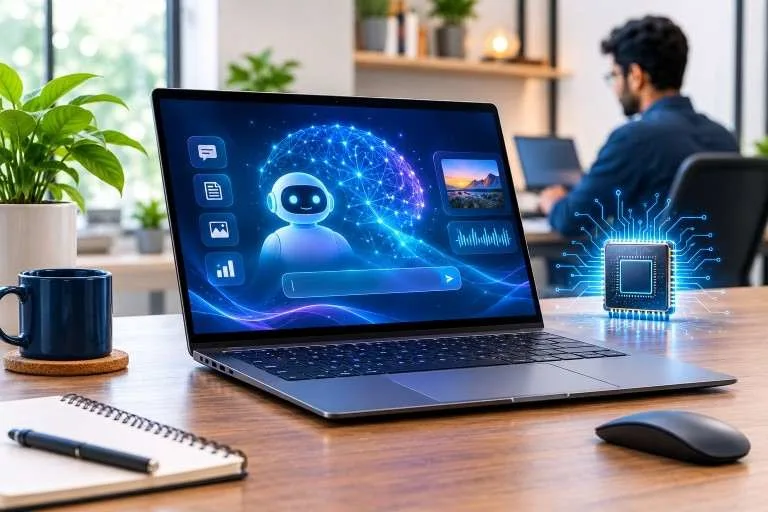
AI-powered computers are modern laptops and desktops designed to perform Artificial Intelligence tasks more efficiently.
Unlike traditional computers, many AI PCs include a specialized hardware component called a Neural Processing Unit (NPU). An NPU is designed to handle AI-related operations while allowing the CPU and GPU to focus on other computing activities.
These systems can support features such as:
- AI-powered voice assistants.
- Automatic background noise removal during video calls.
- Real-time language translation.
- Intelligent image and video editing.
- AI-assisted document creation.
- Smart search and productivity tools.
This combination of hardware and software makes computers more intelligent and responsive.
1. The Rise of NPU Technology
One of the biggest developments in computer hardware is the growing adoption of Neural Processing Units.
A traditional CPU handles general computing operations, while a GPU is designed for graphics and parallel processing. An NPU specializes in accelerating AI workloads.
Many new-generation processors from companies such as Intel, AMD and Qualcomm integrate dedicated AI acceleration capabilities.
For example, an AI PC can use its NPU to process supported background effects, speech recognition and other AI features without continuously depending on cloud-based services.
This can improve energy efficiency and make certain AI features faster.
2. On-Device AI: Smarter Computing Without Constant Internet Access
Another important trend in 2026 is on-device Artificial Intelligence.
Previously, many AI applications required users to send information to remote servers for processing. On-device AI allows compatible computers to perform certain AI operations locally.
This offers several advantages:
- Better privacy: Sensitive information can remain on the user’s computer for supported tasks.
- Reduced latency: Local processing can deliver faster responses.
- Offline functionality: Some AI features can work without an active internet connection.
- Lower cloud dependency: Users can perform selected AI operations without continuously accessing online services.
However, complex AI applications may still require cloud computing, depending on their processing requirements.
3. AI PCs Are Improving Productivity
AI-powered computers are particularly useful for professionals and businesses.
For example, software developers can use AI coding assistants to understand code, identify errors and generate suggestions. Students can summarize study materials, organize notes and improve their learning experience.
Content creators can use AI-powered editing tools to remove unwanted backgrounds, improve image quality and automate repetitive editing operations.
Businesses can also use AI applications to analyze documents, prepare reports and manage everyday workflows.
These capabilities help users spend less time on repetitive activities and more time on important tasks.
4. Improved Security and Privacy Features
Cybersecurity is another important area of computer innovation.
Modern AI-enabled systems can support intelligent security features such as suspicious activity detection, biometric authentication and real-time threat analysis.
On-device AI can also help reduce unnecessary transfers of sensitive information to external servers.
However, AI hardware alone cannot guarantee complete security. Users should continue using updated operating systems, antivirus protection, strong passwords and multi-factor authentication.
5. What Should You Check Before Buying an AI PC?
If you are planning to purchase a new laptop or desktop in 2026, consider more than just the AI branding.
Important specifications include:
- Processor: Choose a recent-generation Intel, AMD or Qualcomm processor according to your requirements.
- NPU: Check its AI processing capability and compatibility with the software you plan to use.
- RAM: 16GB is a practical starting point for many users, while 32GB can be useful for development and demanding workloads.
- Storage: An SSD provides faster startup and application loading.
- Graphics: Dedicated graphics may be important for gaming, 3D design and advanced video editing.
- Battery life: Choose a system that balances performance and power efficiency.
Before purchasing, verify that the AI features you need are supported by the operating system and applications.
6. The Future of AI-Powered Computers
The future of computing will likely involve closer integration between hardware, software and Artificial Intelligence.
Computers may become more personalized by learning user preferences, assisting with daily activities and automating complex workflows.
According to Gartner’s forecast published in August 2025, AI PCs were projected to represent approximately 54.7% of the worldwide PC market in 2026. This indicates the growing importance of AI capabilities in the computer industry. Gartner+1
However, affordability, hardware availability, software compatibility and practical everyday benefits will influence how quickly consumers adopt these devices.